Norway Wealth Fund Models War and Market Shock Risks
A world-class warning system for equities is flashing a familiar message: the biggest risks for investors today are not just valuations, but geopolitics and concentration.
Norway’s sovereign wealth fund, the largest in the world, has published its response to a request from the country’s finance ministry to model how wars, tariffs and an increasingly narrow stock market could hit its portfolio. That matters because the fund is not a speculative trader chasing the next move — it is a long-term owner of global assets, built to protect wealth for future generations. When a portfolio that size prepares for crash scenarios, individual investors should pay attention.
The fund’s exercise is especially relevant now because the S&P 500 remains heavily reliant on a relatively small group of large companies, while global markets are still being jolted by the Ukraine war, conflict in the Middle East and the possibility of wider trade friction. That combination is exactly the kind of setup that can turn an orderly pullback into a fast, disorderly one. For investors, the issue is not whether every scenario comes true; it is whether a portfolio is resilient if one does.
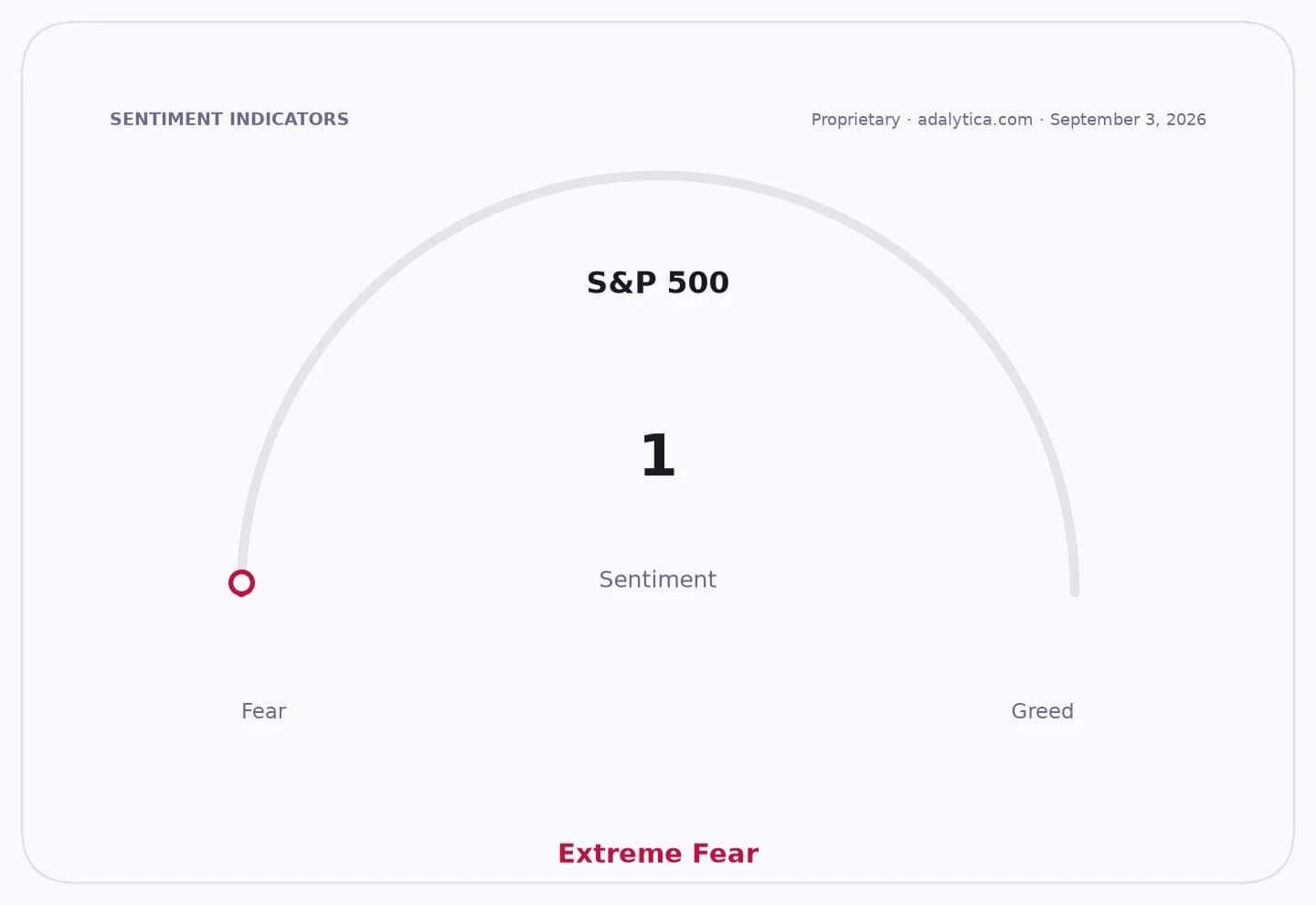
Recent market behavior shows why the concern is more than academic. The S&P 500 ETF, SPY, has been showing signs of stress even after a rebound, with its 50-day moving average still above the latest closing price and RSI readings slipping into weaker territory. Adalytica’s S&P 500 trade signals have also swung to “Extreme Fear,” a reminder that sentiment can turn abruptly when investors start worrying about both war and market breadth at the same time.
At the same time, the Treasury market is not sending the usual clean safety signal. The iShares 20+ Year Treasury Bond ETF, TLT, has drifted below its 50-day and 200-day moving averages, while Adalytica’s bond signals point to “Extreme Fear.” In plain English: investors are uneasy, but they are not yet flocking into long-duration government bonds with conviction. That matters because in a real selloff, cash and Treasurys are often the shock absorbers.
For long-term investors, Norway’s exercise reinforces a simple lesson. Crashes are rarely caused by one thing. They usually emerge when a market that is concentrated, expensive or complacent gets hit by an external shock. Today, the external shocks are obvious: war risk, tariff risk and policy uncertainty. The concentration risk is also obvious, with a handful of mega-cap stocks carrying an outsized share of index returns.
That does not mean investors should panic. It does mean they should build portfolios the way the Norwegian fund does: globally diversified, patient and prepared for scenarios that feel uncomfortable before they arrive. If you own broad index funds, that is already a strong start. If you own a handful of stocks, it is worth asking whether your portfolio can withstand a sharp reversal in the leaders that have carried the market.
The lesson from Norway’s latest risk playbook is not to predict the crash. It is to prepare for the possibility that one bad geopolitical surprise, combined with market concentration, could make a correction much nastier than investors expect. For buy-and-hold investors, that is a reminder to stay diversified, keep cash needs separate from stock exposure and think in years, not days. Worth watching.
| Entity | Gains | Losses |
|---|---|---|
| Diversified index investors | ▲Better risk awareness | ▼False sense of security |
| Cash and short-duration assets | ▲Capital preservation demand | ▼Equity upside participation |
| Mega-cap stocks | ▲Continued index dominance | ▼Concentration backlash |
| Geopolitical shock sellers | ▲Volatility-driven trading | ▼Long-term holders |