NSW Grocery Price Pressure Hits Supermarkets
A push by a New South Wales lawmaker to cut grocery bills lands at a moment when households are still paying far more for food than they were before the inflation surge, and supermarkets are already under pressure to defend traffic with discounts, loyalty offers and price cuts.
The economics are simple: the U.S. consumer price index is still running at 334.131, up 40.72% from a year earlier in the supplied data set, while unemployment sits at 4.1%, a level that leaves shoppers employed but still highly price sensitive. That combination is exactly why food remains politically combustible. When wages are not collapsing but everyday prices stay elevated, voters focus on the most visible bill in the household budget — groceries.
That is the backdrop for the NSW proposal, which frames lower food costs as an “easy solution” not because the supply chain is easy, but because supermarkets are one of the few places where pricing can shift quickly enough to give households immediate relief. The broader message is that grocery inflation is now as much a policy problem as a retail one. Governments want to look responsive; retailers want to avoid being cast as the villains; consumers want relief now, not in a year’s time.
For investors, the message is more nuanced. Grocery chains are entering a period where market share matters more than pricing power. Walmart, Costco and Kroger have all seen volatile trading action, with Walmart closing at $109.51 on Sept. 14 and Costco at $918.47, both well off recent highs after sharp swings in sentiment around consumer spending. Kroger’s recent recovery to $60.65 shows the defensive appeal of food retail, but also the reality that investors are still rotating between value, traffic growth and margin protection.
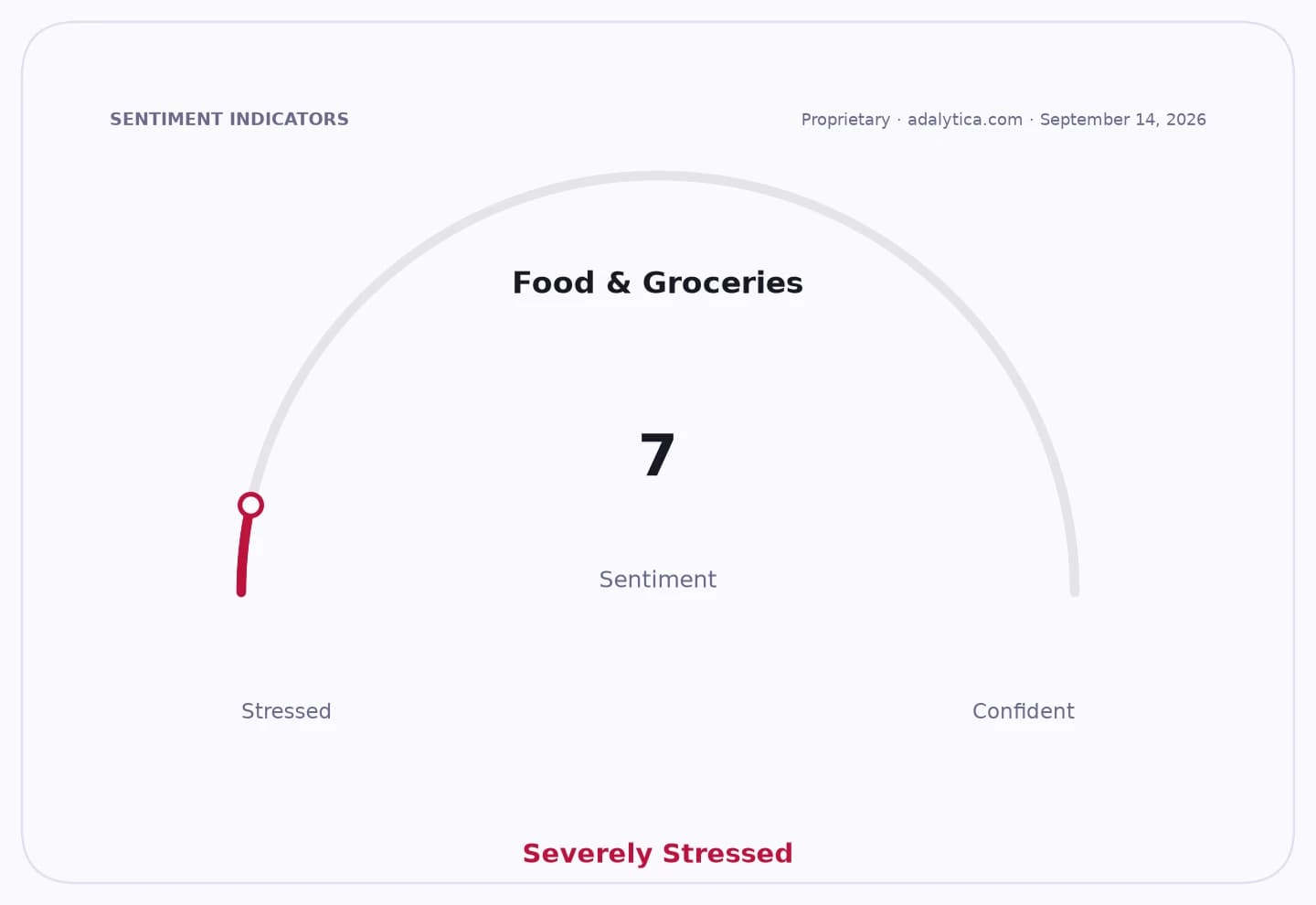
Adalytica’s Food and Grocery Spending Sentiment gauge underlines the strain. It shows “Extreme Fear,” with sentiment at 7 and down 71 points over 30 days, a sign that consumers remain highly sensitive to any perceived overcharge. At the same time, the broader Consumer Spending Sentiment reading sits at 100, or “Extreme Greed,” suggesting shoppers are still spending — but they are selective, and that favors operators with scale, private-label strength and the best loyalty engines.
That is why the real investable story is not simply “lower grocery bills.” It is the next phase of grocery competition, where price transparency, promotions, and efficiency become the battleground. In that environment, the winners are the chains that can absorb margin pressure without losing traffic, and the losers are the operators that rely on inertia or brand loyalty that no longer exists. The market underestimates how quickly policy pressure can accelerate that shift.
If NSW-style pressure on grocery prices spreads, investors should watch for more aggressive discounting, more loyalty spending and heavier use of data and automation to defend margins. That is bullish for the scale leaders and technology providers that help retailers run leaner; it is less favorable for smaller grocers and suppliers with weaker pricing leverage. The next catalyst will be whether politicians turn public frustration into concrete pricing or competition measures — because once that happens, grocery stocks will be trading not just on earnings, but on regulation risk and consumer anger.
| Entity | Gains | Losses |
|---|---|---|
| Walmart | ▲Traffic from price-sensitive shoppers | ▼Gross margin pressure |
| Costco | ▲Membership-driven resilience | ▼Valuation if pricing wars deepen |
| Kroger | ▲Defensive grocery demand | ▼Promoting more to defend share |
| Small grocers | ▲— | ▼Pricing power and foot traffic |