Nvidia AI Cost Cuts Could Expand Adoption
Nvidia is pushing the AI industry toward a more efficient future, and that matters because the biggest risk to the boom has never been demand — it has been cost.
The chipmaker’s NeMo Switchyard approach reserves expensive models for tasks that truly need them, while routing simpler requests to cheaper ones. That sounds technical, but the economic message is plain: if enterprises can deliver useful AI at a fraction of the cost, adoption can spread faster, margins can improve and the next wave of buyers can come from ordinary businesses rather than just deep-pocketed tech leaders.
That is the kind of shift investors should pay attention to. High costs have been one of the main reasons companies slow-roll AI rollouts, cap spending or keep projects confined to pilot programs. Nvidia’s own filing makes clear that AI demand is still hard to forecast and that customers can delay, shift or reduce workloads if adoption does not meet expectations. Lowering the cost of inference and model selection helps remove that brake.
The timing also matters. U.S. rates remain elevated, with the federal funds rate around 3.63% and the 10-year Treasury near 4.7%, so investors are still demanding real returns on AI spending, not just stories. In that environment, the companies that can prove they are turning AI into lower operating costs, higher productivity or new revenue get rewarded. Those that cannot may still spend heavily without seeing the payback.
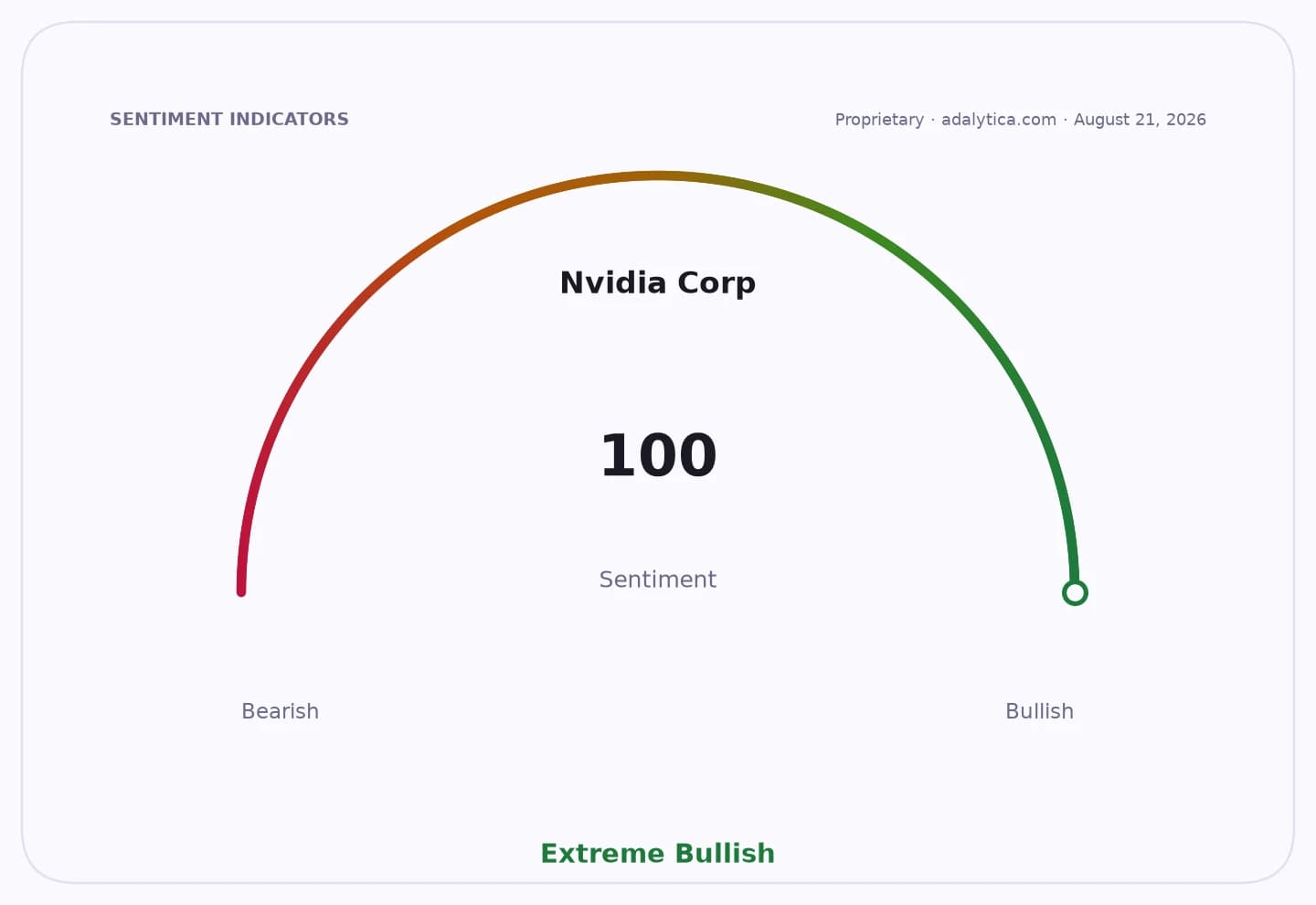
For Nvidia, the longer-term investment case remains intact because cheaper AI usage can enlarge the total market. A lower-cost stack does not necessarily mean less business for Nvidia; it can mean more workloads, more deployments and more reasons for customers to keep buying chips, software and networking gear. Nvidia shares have already reflected that optimism, with the stock holding well above its 50-day and 200-day moving averages and Adalytica’s AI sentiment gauge showing extreme greed around the name. That tells you expectations are high — and that execution will need to keep up.
The same logic ripples across the sector. AMD is also trying to win more AI data-center share, while Super Micro Computer remains tied to the spending cycle on AI infrastructure. If AI becomes cheaper to run, the winners are likely to be the companies that can sell into a bigger, more durable market. The losers are the vendors and customers stuck with premium-priced, all-or-nothing deployments that do not scale.
There is a broader lesson here for investors: the most valuable AI companies may not be the ones with the flashiest models, but the ones that make AI economical enough to use everywhere. That is how a technology moves from hype to habit.
For long-term investors, that is still a compelling setup. The AI buildout is not ending; it is maturing. And in investing, the businesses that make a transformative technology cheaper and easier to adopt often end up with the most durable compounding power. Nvidia remains one to watch, and likely one worth holding for years.
| Entity | Gains | Losses |
|---|---|---|
| Nvidia | ▲broader AI adoption | ▼margin pressure on premium pricing |
| Enterprise customers | ▲lower AI operating costs | ▼less need for brute-force compute |
| AMD and peers | ▲larger AI market | ▼slower differentiation vs. Nvidia software stack |
| Super Micro Computer | ▲continued infrastructure demand | ▼weaker spending if AI budgets get tighter |