Nvidia D-Matrix Partnership Focuses on AI Inference
Nvidia’s collaboration with D-Matrix points to the next phase of the AI buildout: not just faster chips, but more specialized systems built to lower the cost of serving inference-heavy workloads. That matters because the AI market is moving from model training toward the far larger commercial opportunity of running models at scale, where power efficiency, latency and total cost of ownership increasingly decide who wins.
For investors, the implication is straightforward. The market still treats Nvidia mainly as a GPU supplier, but its real advantage is widening into an ecosystem play tied to the entire AI stack — accelerators, networking, software and reference systems. The more AI customers optimize around Nvidia’s architecture, the harder it becomes for rivals to dislodge it on price alone. Partnerships like this also reinforce the idea that AI capex is still early, with demand spreading from hyperscalers to startups, enterprises and sovereign buyers.

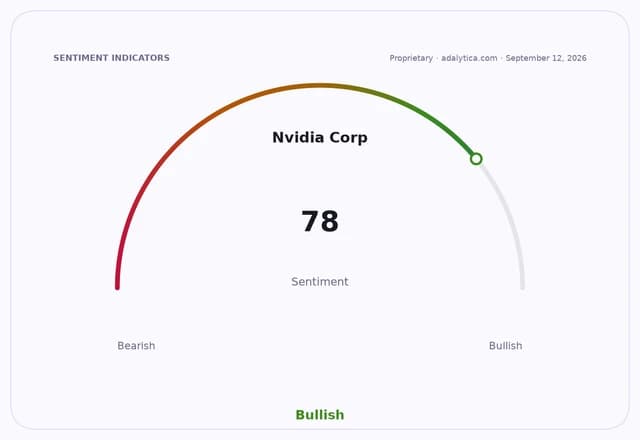
That backdrop helps explain why Nvidia’s shares have remained elevated even after sharp swings. The stock closed at $218.29 on Sept. 11, above its 50-day moving average of $212.36 and well above the 200-day average near $197, suggesting the long-term uptrend remains intact despite recent volatility. Momentum indicators are also constructive, with the 14-day RSI at 52.6 and MACD back above its signal line. In other words, the market is still paying for growth — but not yet fully pricing the second-order beneficiaries of the AI infrastructure boom.
D-Matrix, a smaller specialist focused on inference acceleration, fits the kind of partner Nvidia needs as AI workloads diversify. The strategic value is not just product collaboration, but validation: when an industry leader works with a niche company, it helps define the architecture standards the market may adopt next. That can redirect capital toward the picks-and-shovels names that sit closest to deployment, including chipmakers, foundry partners such as TSMC, and suppliers of advanced packaging, networking and power systems.
The broader message is that AI spending is becoming more industrialized. The easy narrative was that training large models would drive the trade; the better thesis is that inference at scale becomes the recurring revenue engine, and that favors the companies controlling the infrastructure. If this partnership is any guide, the next leg of the AI rally may come from firms enabling cheaper, faster deployment rather than only the headline model builders.
| Entity | Gains | Losses |
|---|---|---|
| Nvidia | ▲Ecosystem lock-in | ▼Pure hardware rivals |
| D-Matrix | ▲Validation and distribution | ▼Standalone obscurity |
| TSMC | ▲More leading-edge demand | ▼Idle wafer capacity |
| AI cloud customers | ▲Lower inference costs | ▼Commodity chip margin pressure |