Nvidia Groq Deal Faces U.S. Antitrust Scrutiny
Nvidia’s deal with AI startup Groq is now under U.S. antitrust scrutiny, a reminder that the biggest winner in artificial intelligence is also becoming one of Washington’s most closely watched companies.
That matters because Nvidia is no ordinary chip supplier. With a market value around $5.4 trillion and a central role in the AI buildout, its partnerships can shape who gets access to inference chips, talent and capital. If regulators decide the Groq arrangement was structured to sidestep traditional review, the message would be clear: the government is willing to look beyond the label on an AI transaction and examine whether the substance looks like a merger in all but name.

The Justice Department’s inquiry reportedly began soon after Nvidia announced the agreement in December, and the company has since received a formal request for information. Officials do not currently expect the deal to be unwound, but a fine remains possible. Even without a harsh penalty, the probe could slow a pattern that has become common across the AI industry: big incumbents taking strategic stakes, licensing access to chips, or recruiting key founders and engineers in ways that can deliver the benefits of acquisition without triggering the same regulatory hurdles.
For long-term investors, that cuts both ways. On one hand, it underscores just how valuable Nvidia’s ecosystem has become. The company is not only selling accelerators; it is helping to define the commercial rails of AI. On the other, the more influence Nvidia gains, the more likely regulators are to question its reach over startups, customers and suppliers. That is a real risk for a stock that has already gone from market darling to the benchmark for the entire AI trade.
Groq is also important here because it shows the kind of counterparty regulators are likely to focus on. The startup continues to operate independently and had been valued at $7 billion before the Nvidia arrangement, with backers including Samsung, BlackRock and 1789 Capital. Nvidia’s expected participation in Groq’s planned $350 million fundraising round suggests the relationship is not just historical; it may deepen further, putting even more attention on how these AI partnerships are structured.
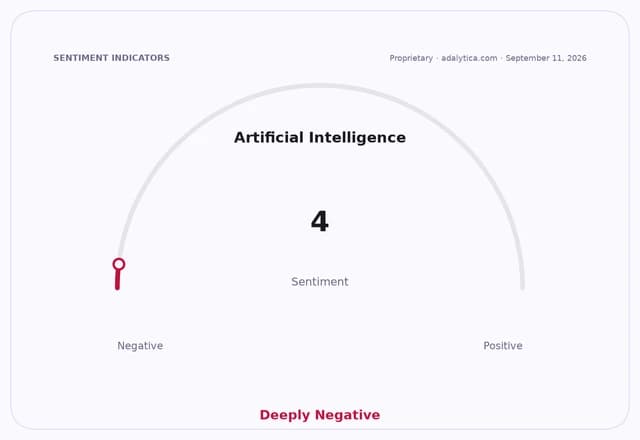
Adalytica’s proprietary Nvidia Earnings Sentiment snapshot still shows strong investor enthusiasm, even as awareness has sunk into extreme fear, a combination that often accompanies headline-driven uncertainty. In plain English: investors still want exposure to Nvidia’s growth story, but they are increasingly wary of the policy overhang. The stock’s recent trading has also stayed well above its 200-day moving average, which suggests the long-term trend remains intact even if the near-term narrative is clouded.
That is why this probe matters beyond one deal. It is a test case for the next phase of the AI boom: not just who can build the best chips, but how far the largest players can stretch the rules while assembling their ecosystems. If you own Nvidia for the long haul, this is not a reason to panic. It is a reason to watch how regulators treat the new playbook for AI partnerships. For patient investors, Nvidia remains a formidable business — but this is another sign that even the strongest moats can invite closer inspection.
| Entity | Gains | Losses |
|---|---|---|
| Nvidia | ▲strategic AI access | ▼antitrust scrutiny |
| Groq | ▲Nvidia capital and chips | ▼independence questions |
| Regulators | ▲oversight credibility | ▼limited deal latitude |
| Long-term investors | ▲clearer rules eventually | ▼headline volatility |