Nvidia H200 chips resume use by ByteDance, Tencent

After an eight-month pause, ByteDance and Tencent can once again use Nvidia’s H200 artificial-intelligence chips in China, a regulatory shift that could ease a bottleneck for the country’s biggest internet groups while reopening a high-value market for Nvidia.
The move matters because the H200 sits near the top of Nvidia’s product stack and remains central to training and running large AI models. For Chinese buyers, regaining access to that hardware reduces the need to rely on less capable domestic alternatives or on stockpiles of older chips, both of which can slow model development and raise computing costs. For Nvidia, the approval widens demand in one of the world’s largest AI build-outs just as U.S.-China technology restrictions continue to fragment the semiconductor market.
The timing also lands against a volatile backdrop for semiconductor equities. Nvidia shares were last at $209.34 on Aug. 24, down from a recent peak above $235 in the technical range implied by its Bollinger Band upper boundary, but still above both the 50-day and 200-day moving averages. The stock’s RSI reading of 47 suggests momentum has cooled from overbought levels rather than breaking down outright, while the MACD has eased from earlier strength. That points to a market that still values Nvidia’s long-term AI demand but is becoming more selective on how much export-related upside to price in.
For ByteDance and Tencent, the restored access is strategically important because AI infrastructure has become a competitive necessity, not a discretionary expense. Both companies are racing to improve search, content recommendation, cloud services and agent-style applications, all of which consume large amounts of compute. Better chips can shorten training cycles, support larger models and improve inference economics — a critical factor when monetization remains uneven and capital spending is still under scrutiny.
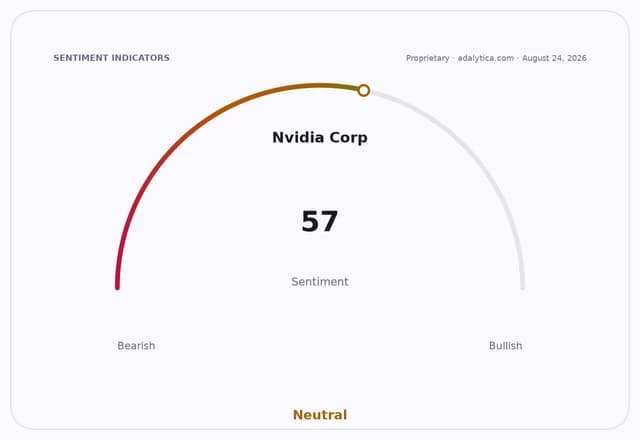
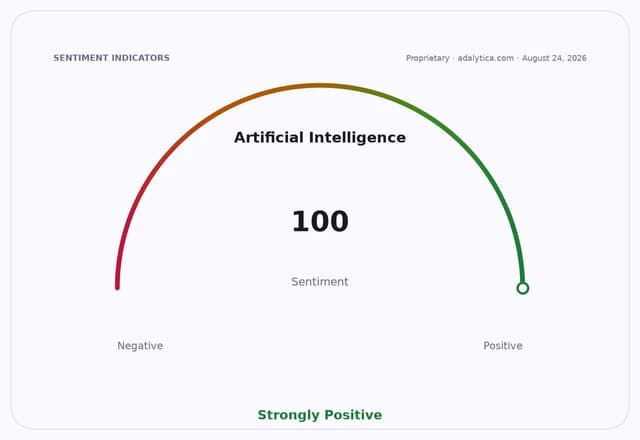
The decision also underscores the uneasy balance between policy and commercial reality in the AI supply chain. Washington has tried to curb China’s access to the most advanced semiconductors, but the market has repeatedly shown that outright bans often create workarounds, delayed demand and political pressure from chipmakers seeking to preserve sales. Nvidia’s fortunes are especially tied to that tension: its earnings sentiment gauge is neutral, but the broader AI sentiment backdrop remains strong, suggesting investors still expect the company to capture demand wherever regulators allow it.
Chinese chip stocks have been mixed as the domestic industry tries to close the gap with U.S. leaders. Local suppliers can benefit from any renewed investment cycle if cloud groups and internet platforms broaden their AI deployments, but the gap in performance and capability remains wide. That means the H200 approval may help Tencent and ByteDance in the near term, while also reinforcing Nvidia’s advantage in the premium end of the market.
Investors will watch whether the access is durable or merely a narrow exception, and whether other major Chinese buyers follow. The larger question is whether Beijing and Washington are moving toward a manageable, if unstable, balance in AI trade — one that preserves enough commerce to keep chipmakers selling, but not enough to restore the pre-restriction market.
| Entity | Gains | Losses |
|---|---|---|
| ByteDance | ▲Better AI compute access | ▼Greater capex pressure |
| Tencent | ▲Faster model deployment | ▼Reliance on foreign chips |
| Nvidia | ▲Reopened China demand | ▼Export-policy uncertainty |
| Domestic chip rivals | ▲Spillover investment interest | ▼Premium AI market share |