Nvidia Hark tie-up points to enterprise AI demand
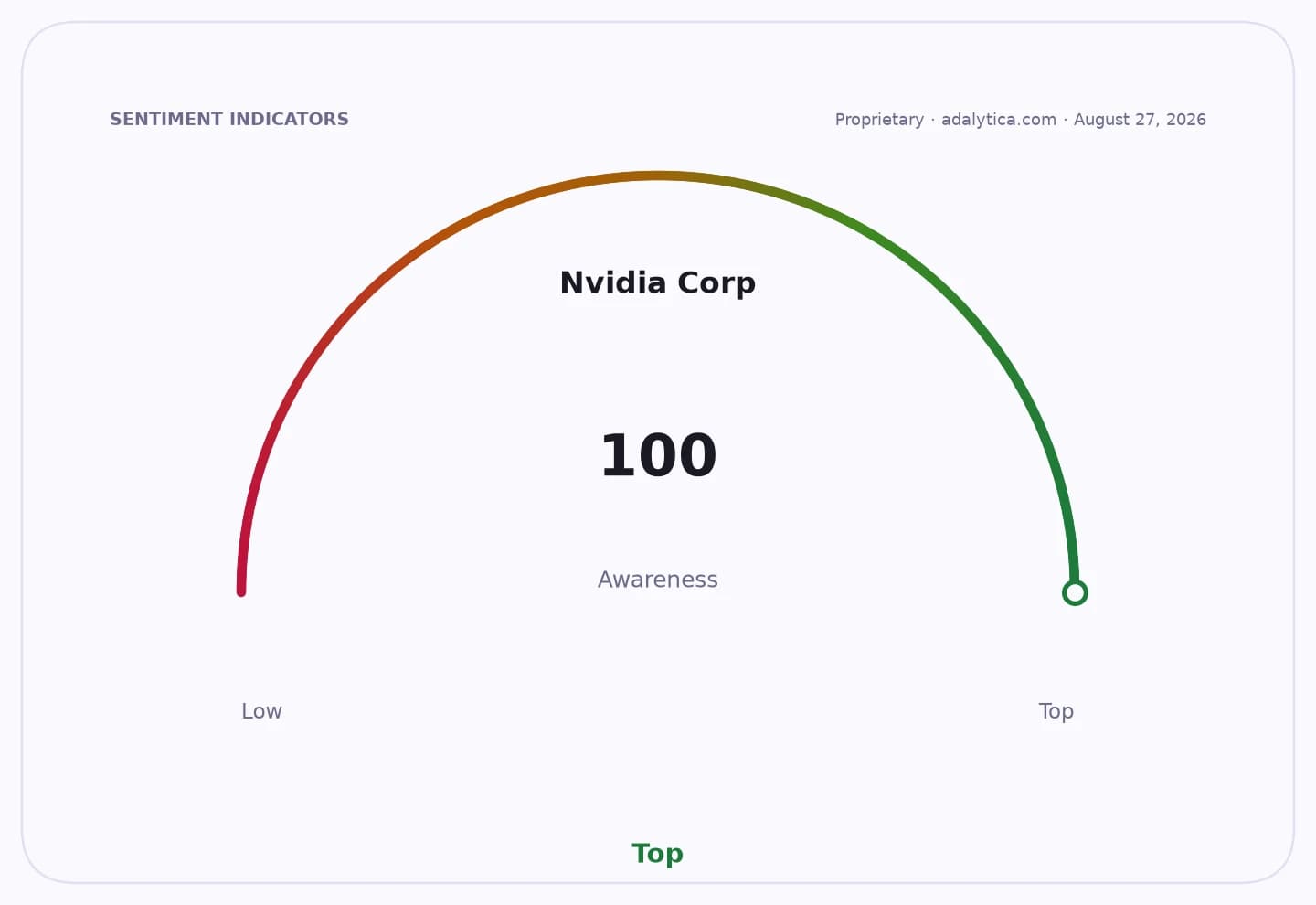
Nvidia’s tie-up with Hark underscores where the AI market is heading next: away from generic chatbots and toward personalized agentic systems that can actually carry out work, and that shift matters because it expands the commercial case for AI infrastructure beyond model training into recurring enterprise deployment.
That is the real investment story. The market has spent two years pricing Nvidia mainly as the king of AI compute, but the bigger opportunity is the build-out of a full stack of tools, cloud partnerships and software workflows that make AI useful inside businesses. If companies can push agentic AI into customer service, internal operations and decision support, the capex cycle does not end with one generation of chips. It becomes a longer, stickier spending cycle tied to inference, orchestration and data-center capacity.
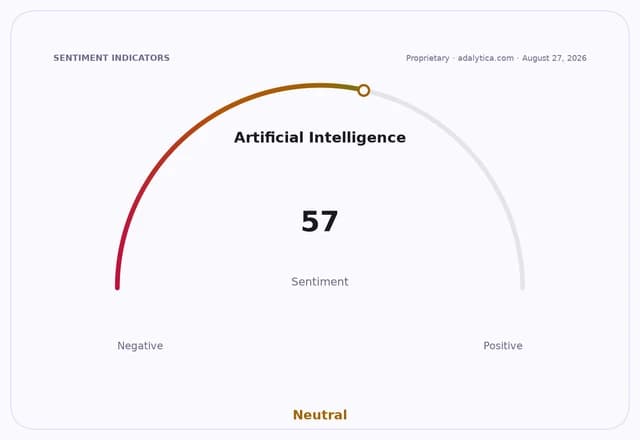
Nvidia has already been signaling that pivot in its filings. In its latest 10-Q, the company said it introduced a new business model with select AI cloud partners to broaden access to its data-center infrastructure for AI startups, model builders, enterprises, research organizations and sovereign customers. It also disclosed six-year commitments totaling $36 billion as of July 26, a reminder that the buildout is becoming more industrial and less speculative.
That is why partnerships like Hark matter. Personalized agentic AI is exactly the kind of application that can move artificial intelligence from experimentation to workflow embedding. The economics are attractive for Nvidia because every layer of that adoption path tends to consume more compute, networking and storage, while also strengthening the company’s position with cloud providers and enterprise buyers. The market underestimates how much of the next leg of AI spending will be driven not by model training headlines, but by the less glamorous need to run agents at scale.
The tape is already starting to reflect renewed conviction in the name. Nvidia shares closed at $225.65 on Aug. 27, near the top of recent trading and above both the 50-day and 200-day moving averages, while RSI readings show the stock has recovered from earlier oversold conditions. The move came as technical momentum improved, but the more durable driver is fundamental: investors are rotating back toward the companies that can monetize AI deployment, not just AI ambition.
There is also a broader industry signal here. Certinia’s recent study suggests successful AI adoption depends less on flashy predictions than on integration, governance and human oversight. That aligns with where enterprise buyers are headed. They do not want abstract AI demos; they want systems that can be embedded in existing workflows, supervised by IT, and tied to measurable productivity gains. That favors infrastructure vendors, integration partners and software enablers over consumer-facing AI labels.
For investors, the thesis is straightforward: follow the enterprise stack. Nvidia remains the primary way to own the compute layer, but the second-order winners may be the cloud partners, data-center developers, networking suppliers and power infrastructure names that feed agentic AI at scale. The losers are the companies still treating AI as a feature rather than an operating model.
In other words, Hark is not just another partnership headline. It is a signal that the AI capex cycle is entering a more profitable phase, where real-world automation, not demo-day hype, becomes the catalyst. I believe that is where the asymmetric upside still sits, and investors who position early in the picks-and-shovels ecosystem could be looking at the next major leg of the AI trade.
| Entity | Gains | Losses |
|---|---|---|
| Nvidia | ▲Deeper enterprise demand | ▼Pure training-cycle narrative |
| Hark | ▲Faster product adoption | ▼Generic AI vendors |
| AI cloud partners | ▲Higher inference utilization | ▼Underused capacity |
| Enterprise buyers | ▲Workflow automation | ▼Manual processes |