Nvidia, Micron, Broadcom Await AI Guidance

Nvidia, Micron and Broadcom are still being priced against the same question: whether the AI chip boom is turning into a durable compounder story or reverting to a more cyclical trade, with investors now looking squarely at forward guidance rather than recent share-price momentum.
That debate matters because the entire semiconductor rally is increasingly tied to whether hyperscale AI spending keeps compounding or starts to normalize. If guidance confirms sustained demand, margin expansion and capacity discipline, the stocks can continue to command premium valuations; if not, the sector risks another sharp rerating toward classic cyclicals.
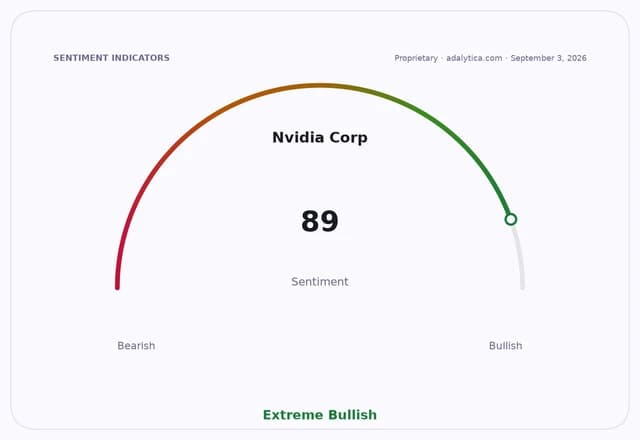
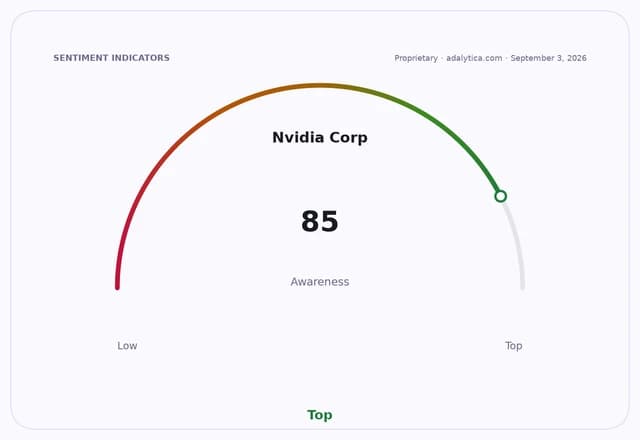
Nvidia closed at $224.41 on Sept. 2, up from $220.78 the day before, and remains well above its 50-day moving average of $209.28 and 200-day average of $196.11. The stock’s RSI reading of 49.3 suggests it is not stretched, while Adalytica’s NVIDIA earnings sentiment snapshot jumped to 89, labeled “Extreme Greed,” from 78 a day earlier and 33 at the end of August.
Micron has been the most volatile of the group, but its share price at $956.08 still sits far above its 50-day average of $944.00 and its 200-day average of $598.91. Broadcom ended at $367.24, below its 50-day average of $384.58 and just under its 200-day average of $368.86, with an RSI of 24.1 pointing to oversold conditions even as the stock has weakened for three straight sessions.
The setup reflects how much of the market’s AI thesis now rests on forward commentary from chip makers and their customers. Nvidia’s recent filing said Blackwell Ultra has improved gross margin mix, while operating expenses rose 55% from a year earlier, underscoring the tension between explosive revenue growth and heavier investment in the next wave of AI infrastructure.
For Micron, the market is still digesting a more explicit shift from boom-bust memory economics toward longer-cycle pricing discipline. Broadcom, meanwhile, remains in the cross-current of AI networking, custom silicon and weaker technicals, making its outlook especially important for investors trying to decide whether the semiconductor group is a cyclical peak or the early innings of a multi-year platform shift.
South Korea’s record semiconductor profits and export gains are reinforcing the same narrative globally, showing how AI demand is widening beyond chip designers into packaging, machine tools and industrial suppliers. That broader ecosystem support helps the compounder case, but it also raises the bar for guidance: investors want proof that spending is broadening, not just intensifying.
The next catalyst is still earnings season and any update on AI capex from Nvidia, Broadcom and Micron. Until then, the market is likely to keep rewarding companies that frame demand as durable and punishing any sign that the supercycle is cooling into a more ordinary cycle.
| Entity | Gains | Losses |
|---|---|---|
| Nvidia | ▲premium multiple if AI demand stays durable | ▼valuation if guidance cools |
| Micron | ▲if pricing discipline holds | ▼if memory demand normalizes |
| Broadcom | ▲if AI networking/custom silicon momentum resumes | ▼if growth looks cyclical |
| Shorts / skeptics | ▲if guidance disappoints | ▼if AI capex stays strong |