Nvidia Falls as Microsoft Plans 300,000 AI Chips
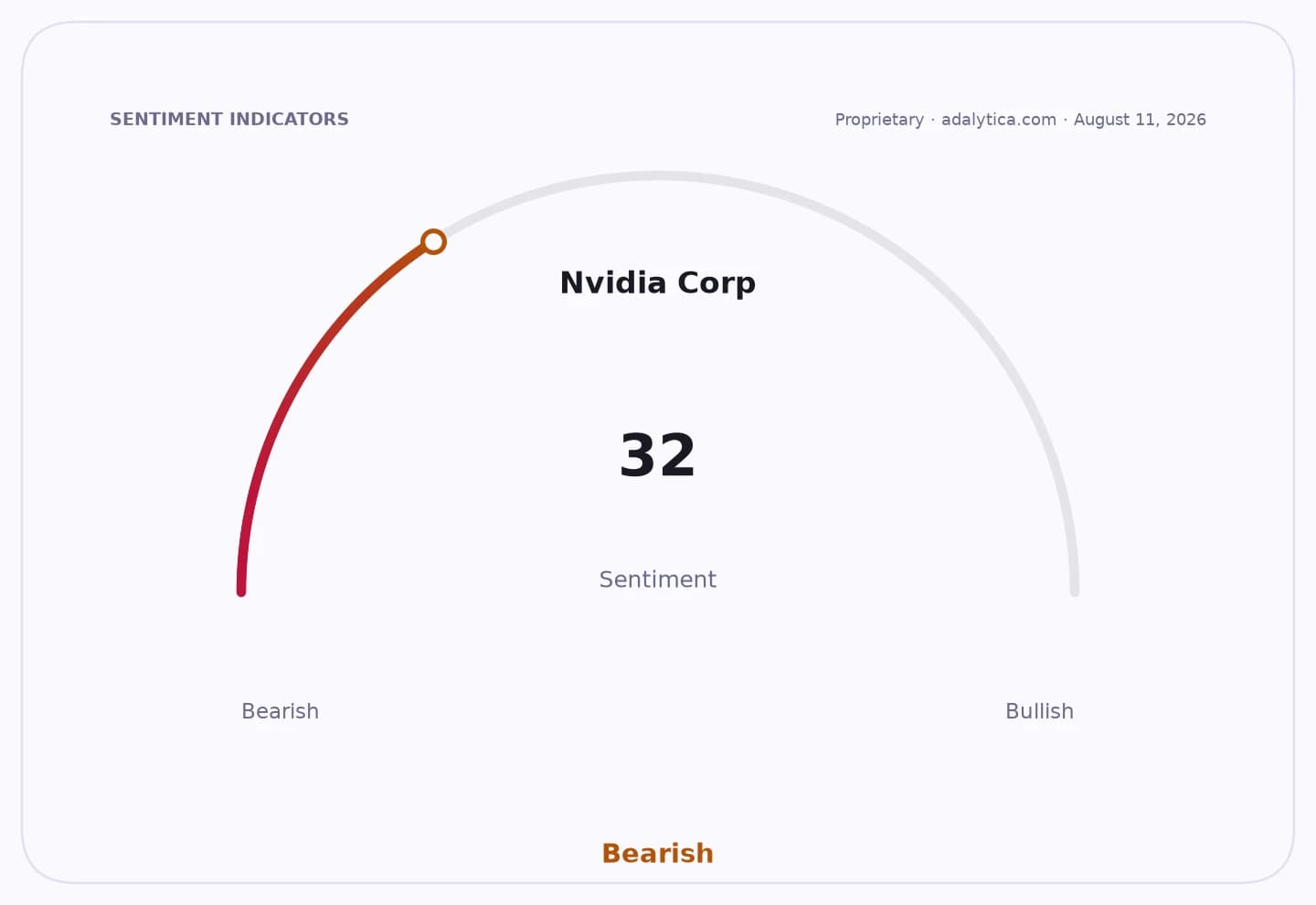
Nvidia’s stock fell even after a powerful run because investors are starting to price in a harder truth: the AI buildout is no longer just a one-chip story, and Microsoft is moving to reduce its dependence on Nvidia with a massive in-house push.
That matters because Nvidia has been valued not just as the dominant supplier of AI accelerators, but as the toll road for the entire boom in model training and inference. When one of its biggest customers begins talking about deploying more than 300,000 AI chips by 2027, the market has to confront a second-order effect: the biggest spender in AI infrastructure is also becoming a potential competitor.
The move is especially important because Microsoft is not acting from weakness. The company remains one of the most aggressive capital allocators in the AI race, and its push into custom silicon suggests the economics of the sector are shifting from scarcity to control. That can pressure Nvidia’s long-term mix, even if near-term demand stays enormous. Investors are no longer just asking how fast AI spending grows. They are asking who captures the margin pool when hyperscalers decide they want more of the stack.
Nvidia still has the better near-term fundamentals. Its shares closed at $217.55 on Aug. 10, after touching $223.96 the previous session, and the stock remains well above its 200-day moving average at $193.98. But momentum has cooled from the May peak near $235.47, and the recent pullback fits a pattern of a market that is still bullish on AI but less willing to pay any price for the obvious winner. The decline also came as Microsoft shares surged to $506.06, underscoring where capital is rotating: into the platform owners that can both buy and eventually build.
The broader backdrop has only sharpened the debate. Taiwan Semiconductor’s strong sales have reinforced the durability of AI capex, and that has kept a floor under the whole supply chain. But export restrictions on China and tighter scrutiny of Chinese AI buyers remain a drag on Nvidia’s addressable market, while hyperscaler custom-chip programs create a separate, longer-term threat to pricing power. In other words, the demand story is intact, but the distribution of that demand is becoming less favorable for the pure-play chip leader.
I believe the market is missing the real investment takeaway: Nvidia is still the core AI infrastructure winner today, but the next leg of alpha may come from the picks-and-shovels around it, not just the name itself. Microsoft’s chip strategy is a reminder that the AI boom is entering the industrialization phase, where bargaining power shifts toward the firms with the deepest balance sheets and the most control over deployment. That is bullish for the AI ecosystem, but it is not unambiguously bullish for Nvidia’s multiple.
For investors, the message is to stay constructive on AI capex, but be more selective on where to own it. Nvidia remains a high-quality leader, yet the asymmetric opportunity may increasingly sit with suppliers, foundries, networking, power, and other infrastructure names that benefit whether the chips come from Nvidia, Microsoft, or the next custom-silicon rival. The next catalyst will be whether more hyperscalers follow Microsoft’s path, turning today’s AI spending wave into a broader scramble for control of the stack.
| Entity | Gains | Losses |
|---|---|---|
| Microsoft | ▲More chip control | ▼Nvidia reliance |
| Nvidia | ▲Near-term AI demand | ▼Pricing power |
| TSMC | ▲Foundry volume | ▼Margin concentration risk |
| Hyperscaler customers | ▲Lower supplier dependence | ▼Higher capex burden |