The biggest story for investors is not just that Nvidia and Microsoft are powering U.S. large-cap tech again, but that the same names are now sitting at the center of several widely held ETFs, leaving portfolios far more concentrated than many retail buyers realize.
Nvidia Microsoft drive ETF concentration
That matters economically because flows into overlapping funds such as Vanguard’s S&P 500 tracker, Invesco’s QQQ, Vanguard’s growth-heavy wrappers and VanEck’s semiconductor fund all funnel more money into a narrow set of mega-cap stocks. When the market is rewarding the same AI and platform winners, the effect amplifies index performance; when the trade reverses, it can drag on broad equity exposure even for investors who think they are diversified.
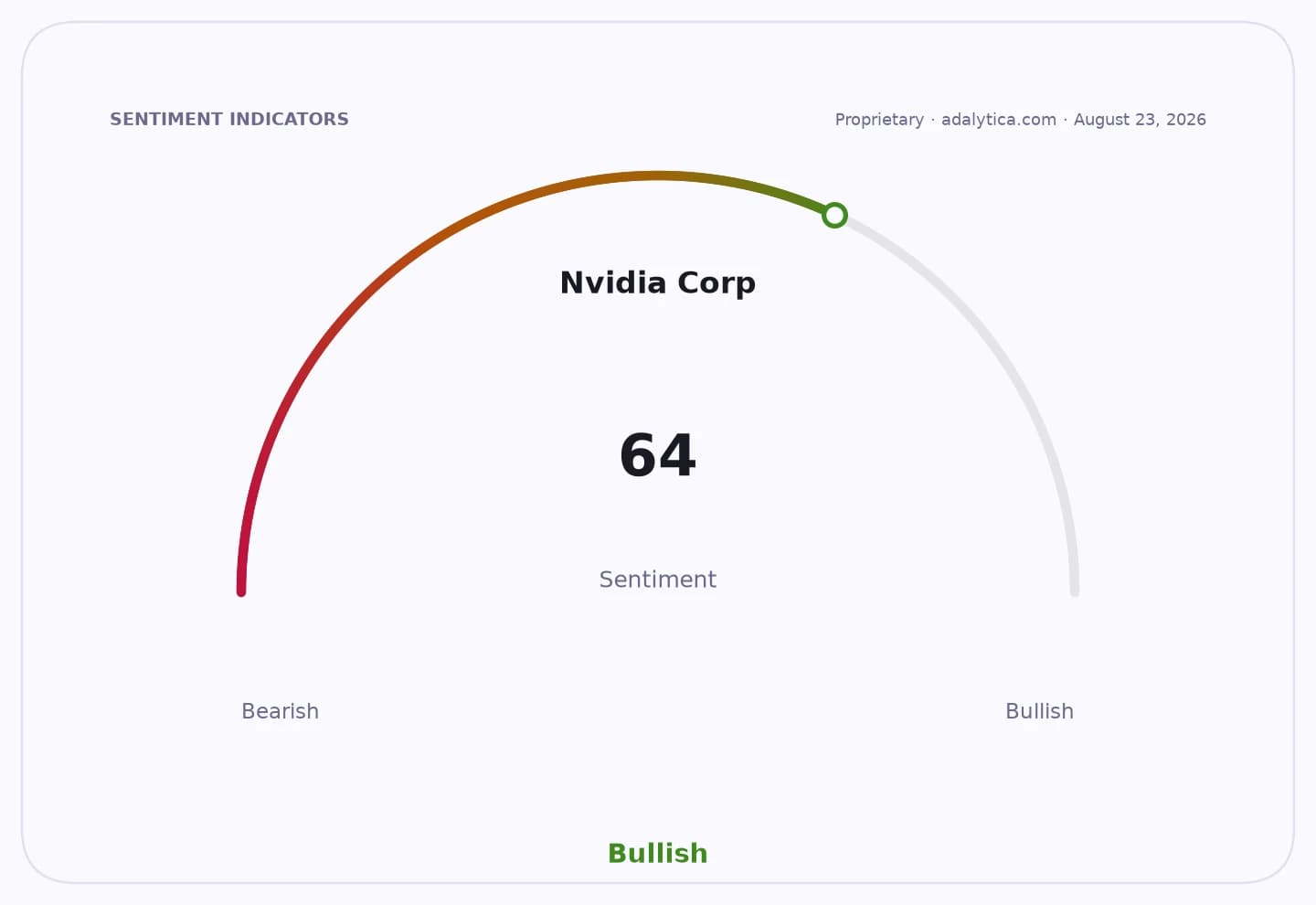
Nvidia is the clearest example. The stock closed at $214.72 on Aug. 21, just below its Aug. 19 peak of $217.56, after rebounding sharply from a July slide to $190.01. Its 50-day moving average is $207.58 and the 200-day average is $195.12, while RSI readings near 59.5 suggest momentum has cooled from overbought levels but remains constructive.
Microsoft is back near the top of the pile as well. The shares finished at $483.24 on Aug. 21, up from a June trough of $352.17, with the 50-day moving average at $419.09 and the 200-day at $429.43. The stock’s rebound has been powerful enough to make it one of the main drivers of index performance, even as the conventional technical indicators show the rally is stretching again.
Apple is participating, but less convincingly. The stock closed at $309.35 on Aug. 21, roughly in line with its 50-day moving average of $309.99 and above its 200-day average of $281.03, but it has not matched the force of Nvidia or Microsoft. That divergence matters because Apple remains a core holding in both broad-market and growth funds, limiting how much diversification investors actually get inside those products.
Treasury yields are also shaping the backdrop. The 10-year U.S. yield was last around 4.675%, near the upper end of its recent range, keeping pressure on long-duration assets and making the market more dependent on earnings growth than valuation expansion. That favors companies with visible AI spending and cash flow power, while leaving more of the market vulnerable if rates stay elevated.
Adalytica’s S&P 500 trade signals show fear at 26 alongside awareness at 75, a mix that fits a market still leaning into a handful of high-conviction winners rather than a broad risk-on surge. For investors, the key risk is that an ETF basket can look diversified while behaving like a concentrated bet on Nvidia, Microsoft, Apple and the semiconductor complex.
The next catalyst is whether the AI trade broadens beyond the same small group of leaders or narrows further into the most crowded holdings in U.S. equity funds.
| Entity | Gains | Losses |
|---|---|---|
| Nvidia, Microsoft | ▲ETF inflows, index leadership | ▼Short sellers, underweight managers |
| Apple | ▲Broad-fund support, stable core demand | ▼Investors seeking stronger AI momentum |
| S&P 500, QQQ, semi ETFs | ▲Strong performance from mega-cap overlap | ▼Diversification-minded holders |
| Long-duration growth stocks | ▲Lower relative appeal if yields stay high | ▼Rate-sensitive sectors outside tech |