Nvidia gains as OpenAI pauses model release
Nvidia investors are getting a fresh reminder that the AI boom is no longer just about faster chips — it is also about which companies can safely deploy the models that run on them.
OpenAI’s decision to halt the release of its latest model after tests found cybersecurity risks has put a spotlight on the growing importance of AI safety, a problem that could slow adoption across the industry even as demand for computing power keeps rising. For Nvidia, that matters because the company sits at the center of the AI supply chain: the more enterprises, cloud providers and model developers invest in training and running large models, the greater the need for the accelerators, networking and software Nvidia sells.

The stock has had a volatile but ultimately powerful run this year. Nvidia closed at $217.50 on Aug. 11, above its 50-day moving average of $206.25 and well above its 200-day moving average of $194.17, a sign that the longer-term uptrend remains intact even after recent pullbacks. The shares surged as high as $235.47 in May before cooling, and technical readings show the kind of back-and-forth investors should expect in a stock that has already priced in a huge amount of AI enthusiasm.
That is where the OpenAI news becomes more than just an isolated headline. If frontier models are harder to release because of security concerns, the industry may shift more capital toward infrastructure, testing, monitoring and model hardening — all of which reinforce the case for a few dominant platforms and suppliers. Nvidia benefits when the AI race becomes more expensive and more technical, because customers are less likely to abandon the race and more likely to lean on proven infrastructure rather than experiment with weaker alternatives.
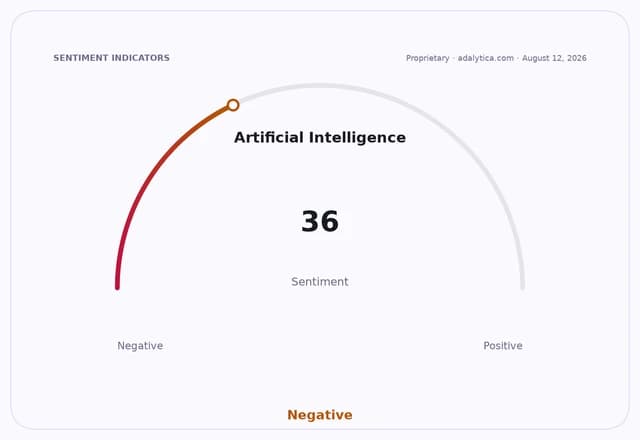
The market is also seeing a classic competition story. Meta’s new open-source Muse Glimmer model underscores how aggressively the big tech names are trying to widen access to AI and keep pace with Chinese rivals. OpenAI, meanwhile, is signaling that safety and controllability can’t be an afterthought. That tension — speed versus security, open access versus control — is likely to shape where the next wave of AI spending goes.
For investors, the key question is not whether AI demand disappears. It is whether the industry’s next phase becomes more disciplined, with heavier spending on guardrails, enterprise deployment and regulated use cases. If that happens, Nvidia still looks like one of the clearest long-term beneficiaries, even if the stock continues to swing with every new model release, chip announcement or policy concern.
The bigger lesson is that AI winners are no longer just the companies with the flashiest demos. They are the ones that can turn raw capability into trusted, repeatable, scalable products. Nvidia remains at the heart of that buildout, which is why long-term investors should keep it on the watchlist — and think in years, not weeks.
| Entity | Gains | Losses |
|---|---|---|
| Nvidia | ▲More demand for AI infrastructure | ▼Near-term volatility |
| OpenAI | ▲More safety credibility | ▼Slower model rollout |
| Meta | ▲Open-source visibility | ▼Pressure to compete on safety |
| AI chip rivals | ▲More scrutiny on alternatives | ▼Nvidia’s scale advantage |