Office REITs Face AI Demand Risk
Office landlords are heading into a new demand setback as artificial intelligence begins to reshape how companies use space, even after the market had stabilized from the hit of homeworking.
A Raiffeisen study published Thursday says office demand has recovered and vacancy has shrunk again, but economists at the Swiss lender expect AI to trigger a noticeable decline in demand over the next five years. The warning matters because office property had only just regained footing after years of pressure from hybrid work, higher financing costs and weaker leasing activity.
The issue is not just fewer desks. If AI lets companies automate more back-office and knowledge-work tasks, tenants may need less floor space per employee and may delay renewals, expansions or new leases. That would hit rental growth, occupancy and asset values across the sector, especially for owners reliant on urban office towers and longer lease-up cycles.
For investors, the timing is critical. Shares of major office landlords have already been volatile, with Boston Properties recently trading near $67.10, below its 50-day moving average of $68.34, while Vornado Realty Trust has slipped to $36.57 from an August peak above $40 and sits below its 50-day average of $39.09. SL Green Realty, though still above its 200-day average, has also pulled back to $55.17 from a late-August high near $59.83.
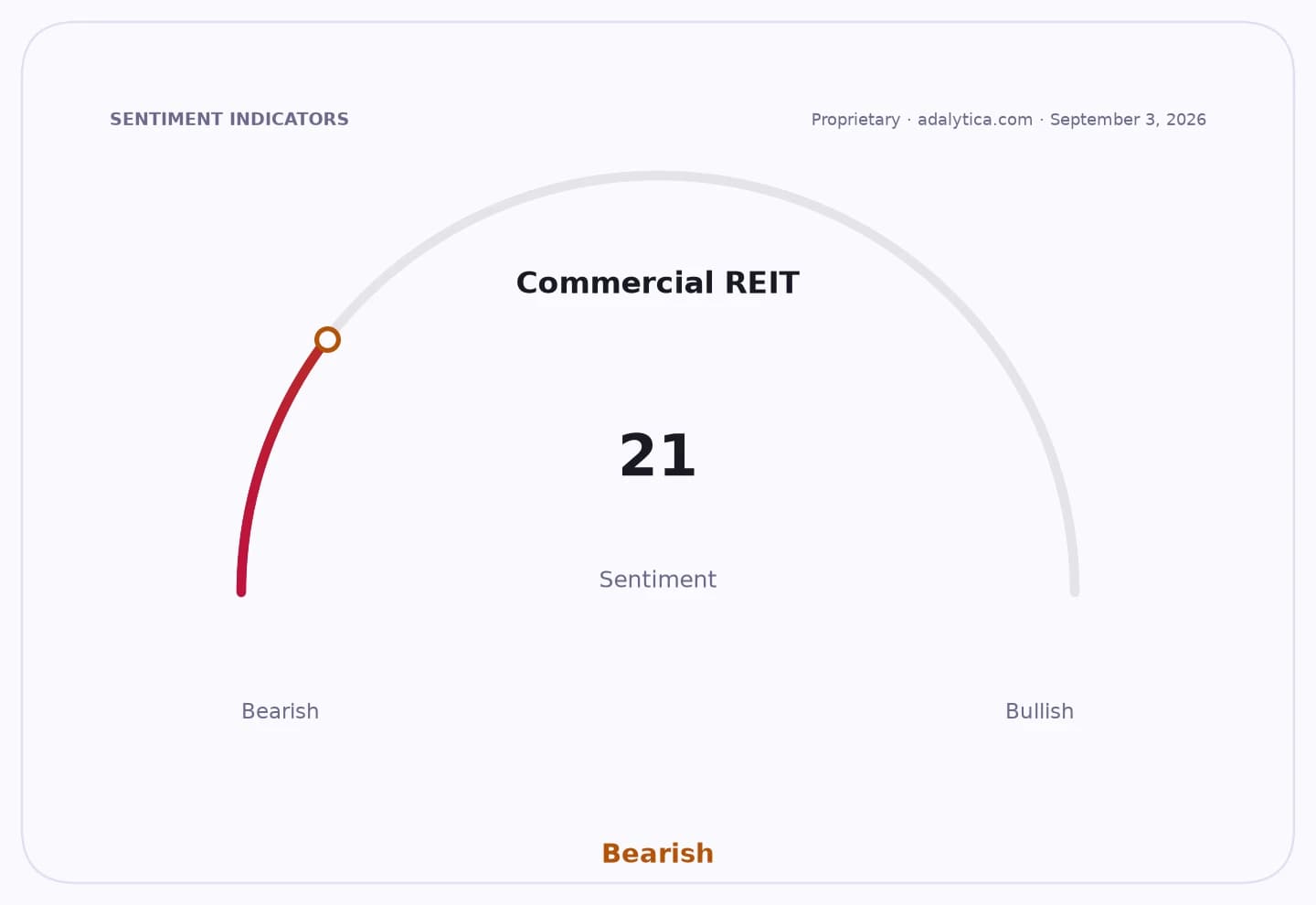
That price action reflects a market that has not fully priced in a second demand shock after the pandemic. Adalytica’s Commercial REIT Sentiment gauge is at 21, in “Fear,” after a 78-point drop over seven days, underscoring how quickly investor confidence can turn in the face of fresh structural risk.
The broader macro backdrop is mixed. U.S. home sales have been resilient, and 10-year Treasury yields near 4.82% keep borrowing costs elevated, which limits refinancing flexibility for property owners. But for office real estate, the bigger question now is whether AI becomes a productivity boost that reduces office footprints faster than landlords can convert space, re-tenant buildings or raise rents.
The next catalyst is leasing data and management commentary from office REITs, which will show whether AI-related efficiency gains are already feeding into occupier demand and whether the recent stabilization in vacancies can hold.
| Entity | Gains | Losses |
|---|---|---|
| AI-enabled tenants | ▲Lower space needs | ▼Higher lease commitments |
| Office landlords | ▲Higher-quality buildings only | ▼Vacancy, rent growth |
| Boston Properties, Vornado, SL Green | ▲Asset differentiation | ▼Demand and valuation pressure |
| Office REIT investors | ▲Selective winners | ▼Broad sector sentiment |