O'Higgins Jobs Push Signals Chile Labor Strain
O'Higgins has activated a pro-employment roundtable to blunt rising unemployment, a sign regional officials are trying to get ahead of a weakening labor market before it feeds deeper into household spending and local growth.
The move matters because Chile’s labor indicators are flashing more stress even as payrolls keep expanding on paper. The national unemployment rate is forecast at 4.18% for July, down only marginally from 4.2% in June, while formal employment is expected to edge up to 159,170.9 in July from 158,984 in June, suggesting hiring is still growing but not fast enough to absorb labor-force pressure.
The sharper warning comes from job openings. Vacancies are projected at 7,656.9 in June, up from 7,594 in May, but still well below the labor market’s post-pandemic peak and far from enough to signal broad-based acceleration in recruitment. That gap helps explain why policymakers are moving from passive monitoring to a more explicit jobs-response framework.
For investors, the roundtable underscores a familiar Chile story: labor weakness can constrain consumer demand, while policy support may stay targeted rather than broad-based. That argues for caution on domestic retailers, consumer lenders and other cyclical names tied to wage growth, even as employers in sectors with staffing shortages could benefit from faster coordination with local authorities.
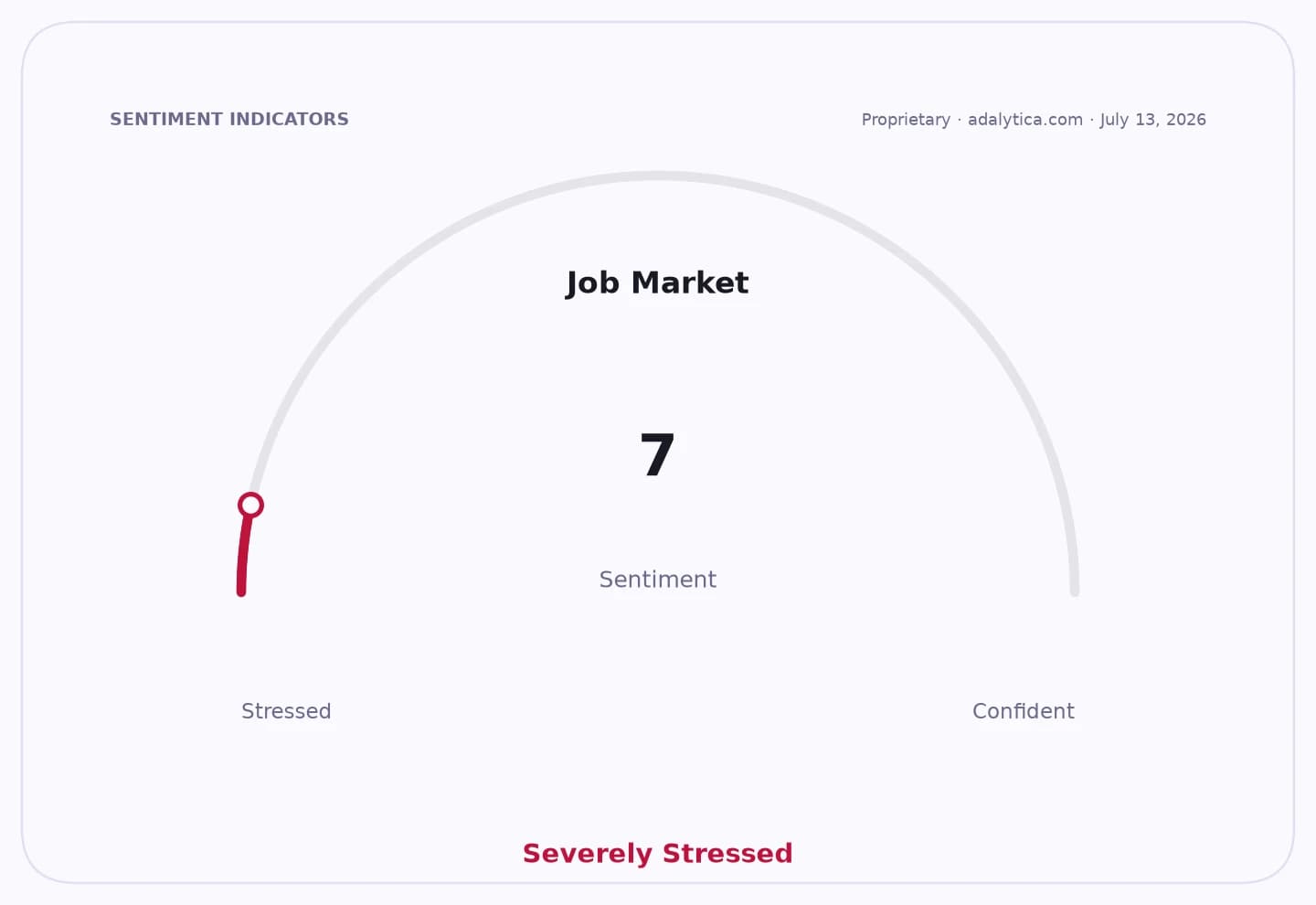
The timing also reflects a softer mood around the labor market. Adalytica’s Job Market Sentiment gauge sits at 7, or “Extreme Fear,” after a steep weekly drop, while consumer confidence-related sentiment remains fragile despite a recent rebound. That combination points to households and employers still feeling the lagged effects of slower hiring and tighter credit conditions.
The policy backdrop matters too. Officials are trying to support employment without a large direct stimulus, using tax and credit measures aimed at preserving fiscal room. If the roundtable produces faster placement, training or hiring incentives, it could stabilize sentiment; if not, pressure will build for more forceful intervention as unemployment data and payroll figures are updated in the coming month.
| Entity | Gains | Losses |
|---|---|---|
| O'Higgins government | ▲Political control | ▼Blame for inaction |
| Job seekers | ▲Faster hiring access | ▼Prolonged unemployment |
| Local employers | ▲Coordination on staffing | ▼Higher labor pressure |
| Consumer-facing companies | ▲Stabilized demand if jobs improve | ▼Weaker spending if joblessness rises |