Oil and chip selloff threatens ASX open

Australian shares look headed for a weaker open as a sharp drop in oil and another leg down in semiconductor stocks hit the market’s two most crowded trades at once, a reminder that the global rally is still vulnerable to violent rotation.
That matters because Australia sits at the crossroads of both forces: the resources-heavy ASX is exposed to commodity swings, while local risk appetite is tethered to Wall Street’s appetite for AI and growth. When Brent sinks below $US89 a barrel and Nvidia, the stock that has come to define the AI boom, loses more than 5% intraday, the message is not just about one day’s price action. It is that investors are again questioning whether peak optimism in energy and chip demand has outrun fundamentals.
The move in crude is economically important because oil is still one of the market’s cleanest inflation signals. A sustained slide can ease pressure on transport, manufacturing and consumer costs, but it also points to softer growth expectations and weaker demand at the margin. That combination is awkward for investors: lower energy prices can help inflation-sensitive bonds and cyclical consumers, yet they often come hand in hand with a cooler global economy and less earnings momentum for commodity producers.
For Australia, the implications are immediate. Energy and materials stocks can drag on the benchmark when crude retreats, even as lower input costs may eventually help airlines, retailers and industrials. The bigger read-through, though, is for sentiment. The ASX tends to track global risk swings closely, and a weak tone in U.S. futures or Asian semiconductor names can quickly spill into Sydney, where investors have spent much of the year balancing the benefits of higher commodity prices against the risk of tighter financial conditions.

The selloff in chip stocks is the more consequential signal for portfolio positioning. Nvidia’s pullback, coming alongside weakness in the broader semiconductor complex, suggests the market is still highly sensitive to any hint that AI enthusiasm has run ahead of near-term earnings delivery. Our thesis remains that this is not a reason to abandon the theme, but a reason to focus on the picks-and-shovels winners: data-center infrastructure, power equipment, cooling, networking, and the industrial suppliers that benefit from the capex cycle regardless of which model wins the AI race.
Technically, Nvidia and the semiconductor ETF SMH have both slipped back after earlier momentum, with recent price action showing the sort of whipsaw that often marks a crowded trade trying to reset. For investors, that kind of volatility usually creates the best entries in the strongest secular stories — but only if they distinguish between long-term compute demand and short-term multiple compression.
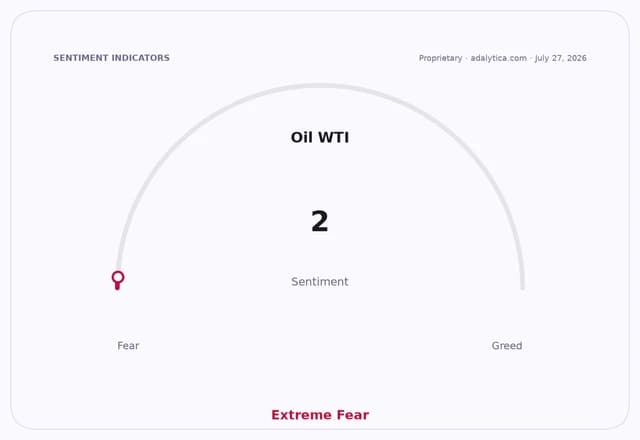
There is a broader macro message here too. Oil weakness, rising caution around chips, and a softer tone in equities all point to a market that is no longer willing to price in a frictionless growth rebound. Adalytica’s oil signals show extreme fear even as awareness remains elevated, a classic setup for sharp trading swings. In other words, the market is not calm — it is repricing.
The opportunity, in our view, is to lean into quality exposure while the crowd is busy de-risking. For Australian investors, that means owning energy names selectively rather than blindly chasing the oil tape, staying constructive on miners with strong balance sheets, and using weakness in semiconductor-linked names to target the infrastructure layer of the AI buildout. The next catalyst will come from whether crude stabilizes and whether chip stocks can hold support after this latest washout. If they do not, the risk-off move can broaden quickly. If they do, this selloff will look more like a buying opportunity than a regime change.
| Entity | Gains | Losses |
|---|---|---|
| Oil consumers | ▲Lower input costs | ▼Energy price pressure |
| Australian airlines and retailers | ▲Cheaper fuel and freight | ▼Slower demand risk |
| Energy producers | ▲None in a falling tape | ▼Softer crude revenues |
| Semiconductor bulls | ▲Potential reset entry points | ▼Near-term multiple compression |