Oil Markets Rise on Iran Sanctions Pressure
Washington’s shift back toward economic pressure on Iran is rippling straight through oil markets, where Brent’s latest climb and a jump in energy shares suggest investors are pricing in a tighter supply backdrop even before any formal sanctions move is announced.
That matters because the market had been leaning toward the idea that military escalation alone could force Tehran to retreat. Instead, the lack of progress, combined with ammunition constraints and low cooperation with US military operations, is pushing the White House toward the more familiar playbook: choke the cash flow, squeeze exports and force the issue through oil and sanctions.
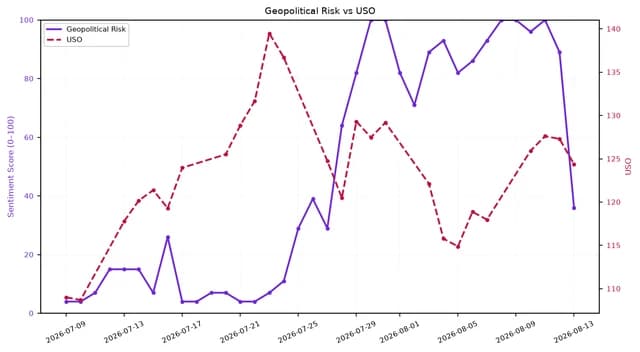
Crude is already reacting. USO, the oil ETF, has surged to 124.37, far above its 50-day moving average of 120.63 and 200-day average of 102.55, even as its RSI sits near 48.5, showing the move has cooled from overheated levels but remains elevated. XLE, the energy sector ETF, is holding near 60.84, above both its 50-day and 200-day moving averages, a sign that the market continues to favor producers and integrated majors over consumers that face higher input costs.
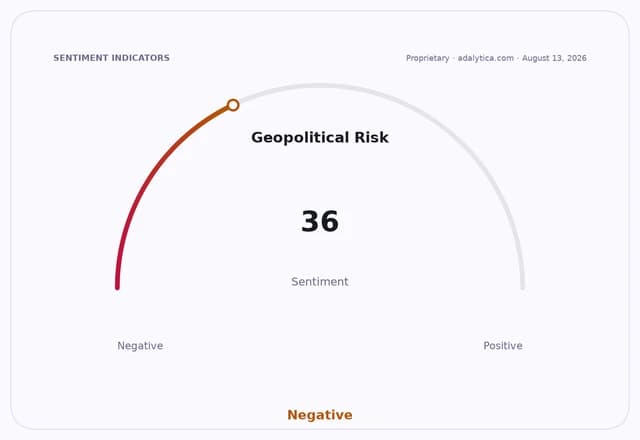
The macro backdrop reinforces the trade. The 10-year Treasury yield is at 4.7%, with the curve still modestly positive at 0.48 percentage point, a setup that leaves energy one of the few sectors with both inflation protection and geopolitical optionality. Adalytica’s Global Stability Sentiment has fallen to 36, while awareness remains at an extreme 89, a combination that points to investors watching the risk closely even if they have not yet fully repriced the downside scenarios.
The bigger point is that “maximum pressure” is not just a slogan. It is a market structure event. If Washington leans harder on sanctions, Iran’s oil exports become more vulnerable, and the beneficiaries are clear: US producers, offshore service firms, refiners with better feedstock leverage and companies with spare capacity that can fill any gap. The losers are importers, transport users and economies most exposed to crude spikes, especially if the Strait of Hormuz becomes even more contested.
There is also a second-order trade developing in the region. Pakistan has tied trade prospects with Iran to sanctions relief, India is still exploring Chabahar Port options, and Oman has struck a tentative understanding on the Strait of Hormuz. Those talks underscore the same reality: regional players are positioning for either sanctions easing or a prolonged pressure campaign, and the market is starting to price both.
For investors, the message is straightforward. The market underestimates how durable an energy bid can be when geopolitical strategy shifts from force to financial suffocation. That argues for staying long the oil complex on pullbacks, favoring XLE over broad market exposure, and keeping a close eye on service names and exporters that benefit if Iran’s supply is constrained longer than consensus expects. In this setup, the trade is not about predicting peace; it is about owning the toll roads before the traffic gets heavier.
| Entity | Gains | Losses |
|---|---|---|
| US energy producers | ▲Higher crude prices | ▼None in this setup |
| XLE / oil equities | ▲Momentum and inflows | ▼Consumers’ margins |
| Iran | ▲None | ▼Export revenue, leverage |
| Oil importers | ▲None | ▼Higher input costs |