Oil rises as U.S.-Iran tensions lift Brent to $89

Oil prices are surging as fresh attacks between the United States and Iran raise the odds of a wider disruption to Middle East supplies, with Brent climbing to about $89 a barrel and U.S. crude and energy stocks joining the rally.
That matters because the oil market is no longer trading just on demand; it is pricing a geopolitical risk premium that can quickly spill into inflation, transport costs and earnings forecasts. When crude moves this fast, the first-order effect is obvious — higher fuel costs — but the second-order effect is bigger: tighter financial conditions, pressure on importers and a new bid for producers, refiners and energy infrastructure names.
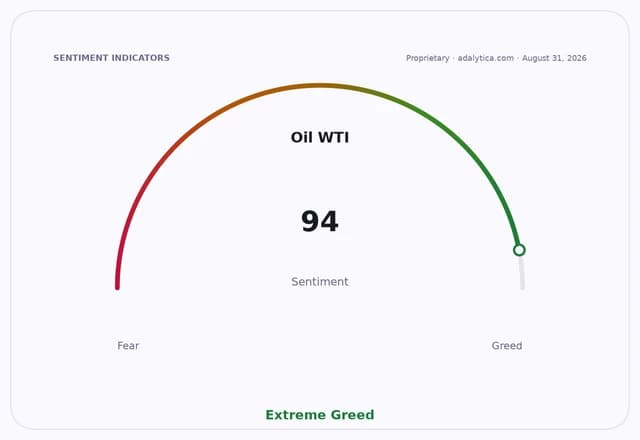
The move has all the hallmarks of a supply shock. Adalytica’s oil trade signals show extreme greed in the sector even as awareness remains low, a combination that often appears when positioning is chasing a fast-moving geopolitical headline. Brent’s push toward $89 also fits a market already primed for volatility after repeated disruptions across key energy corridors, including refinery fires and attacks on regional infrastructure.
U.S. benchmark crude has been firm as well, and energy equities are confirming the message. The Energy Select Sector SPDR Fund has pushed higher alongside crude, while U.S. Oil Fund shares remain elevated, reflecting demand for direct exposure to a market that can gap violently when supply fears intensify. Technicals reinforce the strength: USO is trading well above its 50-day and 200-day moving averages, with momentum still positive even after a sharp run-up, a sign that investors are not yet pricing an orderly retreat.
For investors, the key question is not whether oil can spike further — it can — but whether the market is underestimating how long the premium can persist. If tensions between Washington and Tehran keep shipping lanes and regional refining assets in play, the beneficiaries are clear: upstream producers, integrated majors, oilfield services and select energy ETFs. The losers are just as plain: airlines, chemical makers, transport names and economies that rely on imported crude.
The broader macro risk is that a temporary geopolitical flare-up turns into a more durable inflation impulse just as markets had hoped energy volatility was easing. That could keep Treasury yields sticky, preserve demand for the dollar at times of stress, and force central banks to stay cautious longer than investors expect. For now, the trade is straightforward: own the energy exposure before the market fully reprices the next supply shock, and be selective on the consumers that will pay the bill.
| Entity | Gains | Losses |
|---|---|---|
| Oil producers | ▲Higher realized prices | ▼None |
| Energy ETFs | ▲Inflows and momentum | ▼Volatility if crude reverses |
| Airlines and transport firms | ▲None | ▼Jet fuel and diesel costs rise |
| Oil importers | ▲None | ▼Larger trade and inflation burden |