Rising crude prices are strengthening the Canadian dollar and tilting the balance against the US dollar, with the latest oil move reinforcing a classic Canada trade: firmer energy revenues tend to support the currency and pressure USD/CAD lower.
Rising Oil Supports Canadian Dollar, Pressures USD/CAD
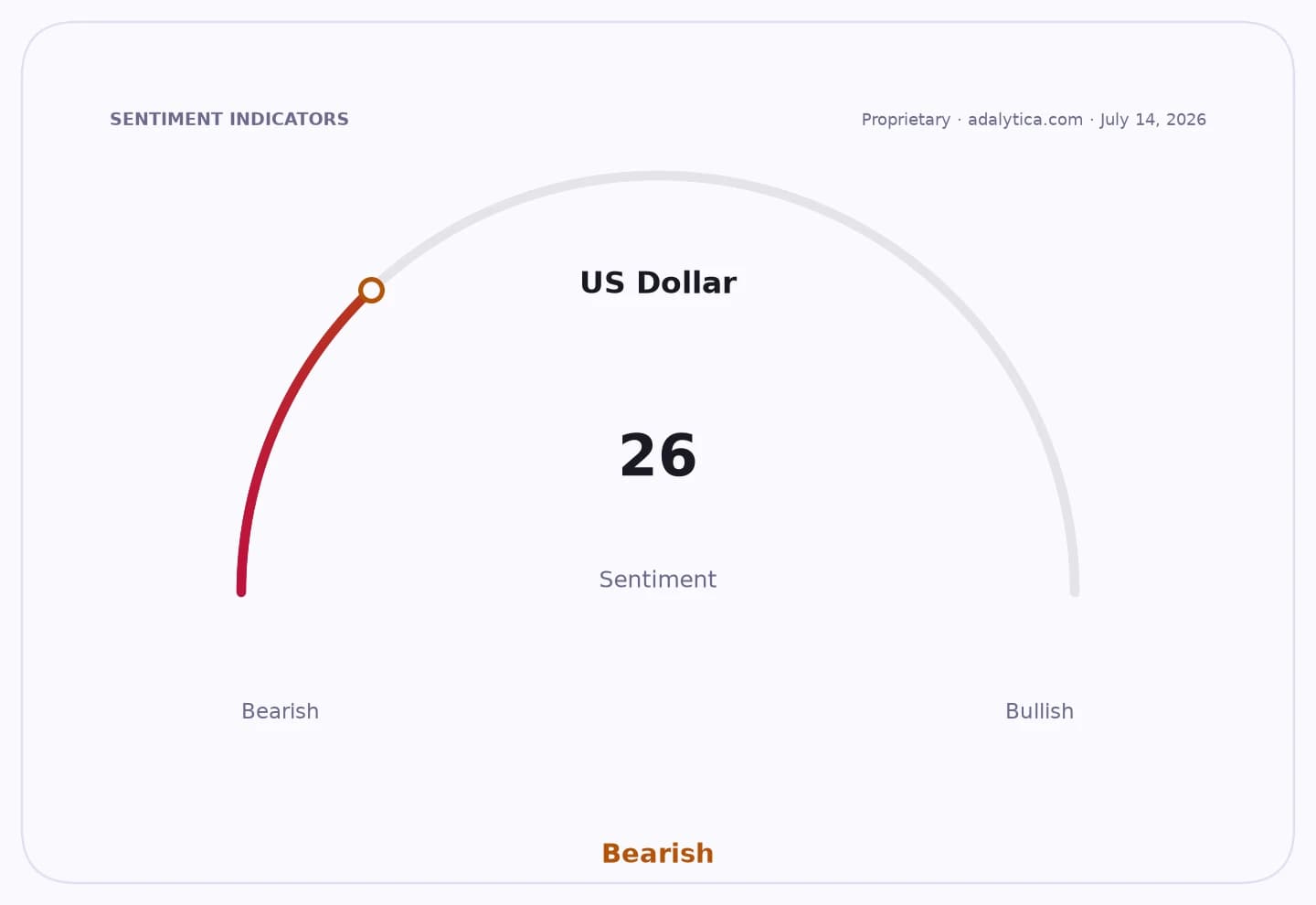
The link matters because Canada remains a major exporter of crude, and oil still drives a meaningful share of trade flows, corporate earnings and fiscal income. When WTI climbs, the immediate effect is usually better terms of trade for Canada, stronger demand for Canadian exports and a modest improvement in capital inflows to energy-linked assets. That can translate quickly into a softer USD/CAD profile, especially when the US dollar is not getting a decisive macro boost of its own.
Sentiment IndicatorsⓘProprietary · adalytica.com · July 14, 2026
This is a snapshot — live sentiment, awareness and momentum for 130+ markets update continuously in the dashboard.Open AlphaPulse

That backdrop is evident in the latest market data. WTI has rebounded sharply from a July 1 low of $69.74 a barrel to $80.20 on July 14, a gain of more than 14% in less than two weeks. The move has pushed crude back above its 200-day moving average of $74.37 and lifted it toward the upper end of its recent Bollinger Band range, even as the RSI has risen to 63, indicating improved momentum without yet flashing extreme overbought conditions. The rebound follows a brief correction from May levels above $100, leaving oil still elevated enough to matter for the Canadian trade channel, but below the peaks that would imply a full-blown supply shock.
For Canada, higher oil typically means stronger revenue for producers, improved cash flow across the energy patch and better support for the loonie through trade and portfolio channels. That is why USD/CAD often trades as a split story between the US dollar and commodities: when oil firms and the greenback softens, the Canadian dollar tends to outperform. The latest Adalytica US dollar trade signals point to that second half of the equation as well, with USD sentiment in “Fear” and awareness in “Extreme Fear,” suggesting the dollar lacks strong momentum support.

The macro mix also favours the Canadian currency at the margin. The 10-year US Treasury yield has edged up to 4.56%, but that has not translated into clear dollar strength, while crude’s rebound offers a direct fundamental offset. In practical terms, the better oil backdrop can narrow the gap between the two currencies even if US rates stay relatively high, because Canada’s external balance and energy sector earnings improve at the same time.
For investors, the implication is less about a dramatic move and more about directional bias. A firm oil market can cap USD/CAD rallies, encourage positioning in Canadian assets and help energy-heavy equities outperform. It also raises the stakes for any pullback in crude: if oil loses momentum, the currency support can fade just as quickly, particularly if the US dollar catches a bid from yields or risk aversion.
The bull case for the Canadian dollar is straightforward: oil holds above recent support, Canada’s export terms improve and USD demand stays subdued. The bear case is just as clear: crude rolls over, global growth concerns return or higher US rates reassert themselves as the dominant FX driver. For now, the market is rewarding the oil link, and that keeps the bias tilted toward a stronger Canadian dollar and a lower USD/CAD rate.
| Entity | Gains | Losses |
|---|---|---|
| Canadian dollar | ▲Terms-of-trade support | ▼USD/CAD upside |
| Canadian energy producers | ▲Higher cash flow | ▼Cost of hedging rises |
| US dollar | ▲Relative stability | ▼Safe-haven demand premium |
| Importers of oil | ▲No immediate benefit | ▼Higher input costs |




