Oilfield services shares rise as WTI holds near $88.70
Oilfield services shares are pressing higher as crude holds near levels that support more drilling, stimulation and enhanced recovery projects, keeping investors focused on whether producers turn recent price strength into a fresh round of upstream spending.
West Texas Intermediate is forecast at $88.70 a barrel for July 28 and Brent at $97.72, levels that keep cash flows for producers elevated enough to fund reservoir stimulation, well intervention and enhanced oil and gas recovery work. The backdrop matters because these projects are among the first to get funded when operators see durable oil prices and better economics for squeezing more barrels out of mature fields.
The sector already shows that optimism in the market. The XLE energy ETF closed at $59.55 on July 31, well above its 50-day moving average of $56.50, while the technical picture remains constructive with RSI at 68.0 and MACD above its signal line. The oil services ETF OIH was trading at $384.81 on July 31, also above its 50-day and 200-day moving averages, suggesting investors are still positioning for stronger activity rather than a near-term pullback.
For services companies, the narrative is straightforward: higher crude prices usually translate into more spending on the technologies that boost recovery from existing wells, especially when companies want to extend field life instead of chasing entirely new discoveries. That is why operators such as Halliburton, SLB and Baker Hughes are closely tied to any sustained move in benchmark prices.
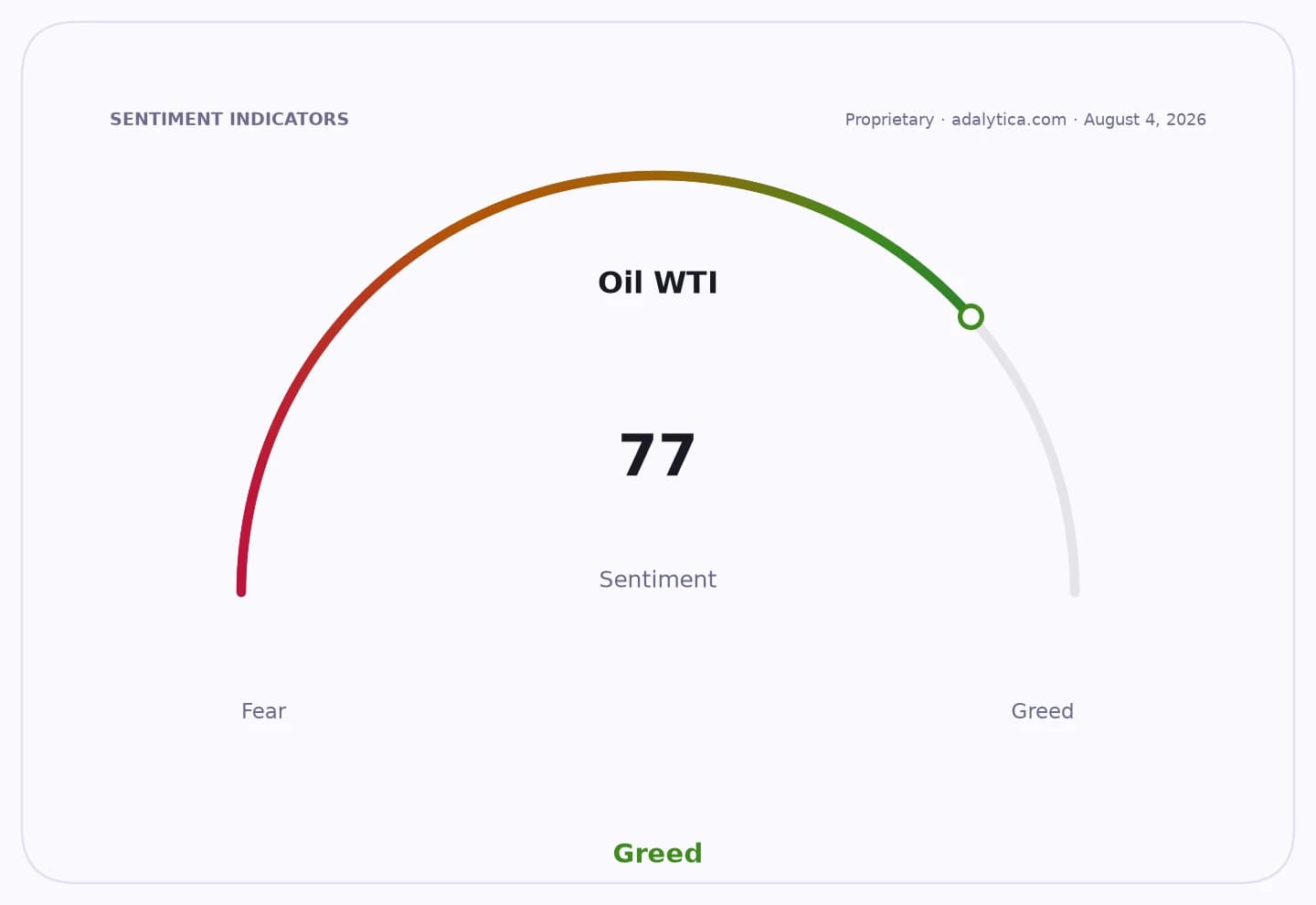
Adalytica’s USO oil trade signal is showing “Greed” at 77, with the 7-day change jumping 76 points, underscoring how quickly sentiment has turned as prices recover. The S&P 500 signal is also at “Extreme Greed,” which helps explain why energy equities are drawing flows even as broader markets remain extended.
The risk for the trade is that a slide in oil would quickly pressure the case for enhanced recovery spending, especially at smaller producers with tighter capital budgets. Traders will watch whether WTI can hold near the high-$80s and Brent near the high-$90s, along with upcoming upstream spending commentary from major producers and service companies.
| Entity | Gains | Losses |
|---|---|---|
| Oilfield services firms | ▲More stimulation and intervention work | ▼Spending pullback if oil weakens |
| Upstream producers | ▲Higher cash flow and field recovery | ▼Higher service costs if activity rises |
| Energy ETF holders | ▲Momentum and sector inflows | ▼Valuation risk if crude stalls |
| Short crude traders | ▲Higher squeeze risk | ▼Losses on continued price strength |