Old Dominion Freight Line Shares Fall on Diesel Costs

Old Dominion Freight Line’s shares have been hit hard as diesel prices climb back toward record territory, raising the risk that higher fuel costs will squeeze margins across the less-than-truckload industry just as freight demand remains uneven.
The stock fell to $187.61 on Sept. 2 after closing at $186.72 a day earlier, leaving it well below its recent levels and erasing part of a powerful run earlier in the year. The move comes with US benchmark diesel and broader energy markets signaling renewed pressure on transport costs, a development that matters because fuel is one of the most important variable expenses in trucking and can quickly change profit dynamics even when carriers use surcharge mechanisms.

For investors, the key issue is not simply that diesel is expensive, but that the cost spike arrives at a sensitive point in the cycle. Old Dominion, one of the highest-quality operators in the parcel and freight space, relies on pricing discipline and network efficiency to defend returns. When fuel rises sharply, the company can recover some of the hit through fuel surcharges, but not always immediately or fully, and the lag can compress operating margins. That is especially relevant in a market where industrial activity and shipping volumes have been patchy, limiting how much pricing power carriers can pass through without risking volume loss.
The technical picture in the stock also points to stress. ODFL’s latest price sits far below its 50-day moving average around $215.64 and has slipped under its 200-day average near $195.44, while the RSI reading of 16.5 suggests the shares are deeply oversold. That combination often reflects forced selling or a rapid reassessment of earnings expectations rather than a slow-moving fundamental shift. The question for the market is whether the selloff is overdone or whether it is pricing in a more durable hit to earnings quality.
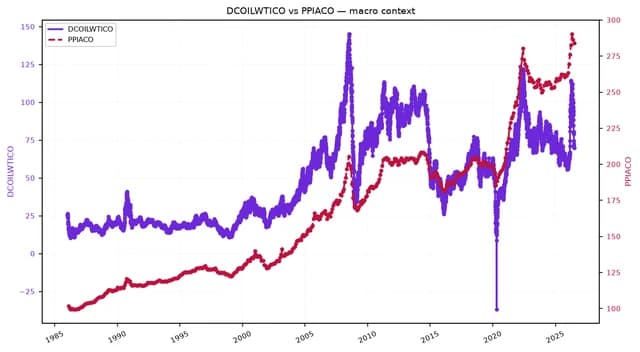
Energy markets are reinforcing that caution. US crude has rebounded to around $91.75 a barrel in the latest forecast, while the Energy Select Sector SPDR, XLE, has rallied to about $65.10, underscoring investor concern that transport and industrial cost inflation may not fade quickly. Diesel’s move is particularly important because freight operators feel it directly, unlike some other inflation categories that hit consumers first and companies later. Higher diesel also feeds through the wider economy by lifting shipping costs, which can keep a floor under goods inflation even if consumer demand softens.
There is a bullish counterargument. Old Dominion has historically been one of the best-managed carriers in the sector, with a reputation for disciplined pricing, strong service levels and above-average profitability. If diesel spikes prove temporary, the company should be able to recapture much of the pressure through surcharges and pricing gains. But the bear case is that fuel is rising alongside a still-unsettled freight backdrop, leaving less room for carriers to absorb near-term cost shocks.
For investors, the near-term catalyst is whether Old Dominion’s third-quarter operating update shows that surcharge recovery is keeping pace with fuel inflation. If not, margin estimates may need to come down further, and the stock could remain under pressure even if the broader market stabilizes.
| Entity | Gains | Losses |
|---|---|---|
| Diesel producers | ▲Higher realized prices | ▼Freight operators’ margins |
| Oil and energy stocks | ▲Better earnings momentum | ▼Transport equities |
| Old Dominion Freight Line | ▲Fuel surcharge recovery potential | ▼Near-term profit margins |
| Shippers and importers | ▲None | ▼Higher logistics costs |