OPEC Cuts Oil Demand Forecast as Crude Weakens
OPEC’s decision to cut its oil-demand forecast matters because it confirms the market’s biggest fear: the world is still consuming crude, but not fast enough to absorb supply and keep prices elevated.
The revision lands at a delicate moment for energy markets. Brent and WTI have been pinned by a tug-of-war between Middle East supply risk and weakening consumption expectations, and this latest downgrade tips the balance toward demand. Even with geopolitical tensions still hanging over flows, the Organization of the Petroleum Exporting Countries now sees a softer path for global oil use, echoing the International Energy Agency’s own downward adjustment and reinforcing the view that growth is slowing just as producers rely on firmer prices to defend revenues.
That is economically important because oil still sits at the center of inflation, transport costs and industrial input pricing. When demand forecasts come down, the entire chain feels it: exporters face less pricing power, importers get some relief, and central bankers may see a little less upside pressure on headline inflation. But for producers, the message is harsher. A weaker demand curve means less room for OPEC to manage the market simply by talking it up, especially if inventory builds continue and U.S. supply stays resilient.
The price action says investors are already leaning that way. U.S. crude-linked USO has been volatile, with the fund jumping above $150 in late April before sliding sharply, even after a recent rebound to around 126.6. The 50-day moving average has started to recover, but the broader setup is still fragile: RSI has cooled from overheated levels and the commodity remains well below its spring peaks. By contrast, the energy equity complex has held up better, with XLE and OIH still near highs, showing the market is favoring balance-sheet strength and cash returns over a simple bet on surging crude.
That divergence is where the opportunity sits. If OPEC is right that demand is weakening, the easy trade is not to chase barrel prices. It is to own the businesses that can still make money in a more subdued price environment: integrated majors with scale, disciplined upstream names with low break-evens, and oil services companies with backlog and capex exposure that can outperform even if crude cools. ConocoPhillips and Chevron both flagged how sensitive earnings and operating cash flow remain to commodity prices in their recent filings, while refiners and drillers face a different mix of risk and reward as margins and activity reset.
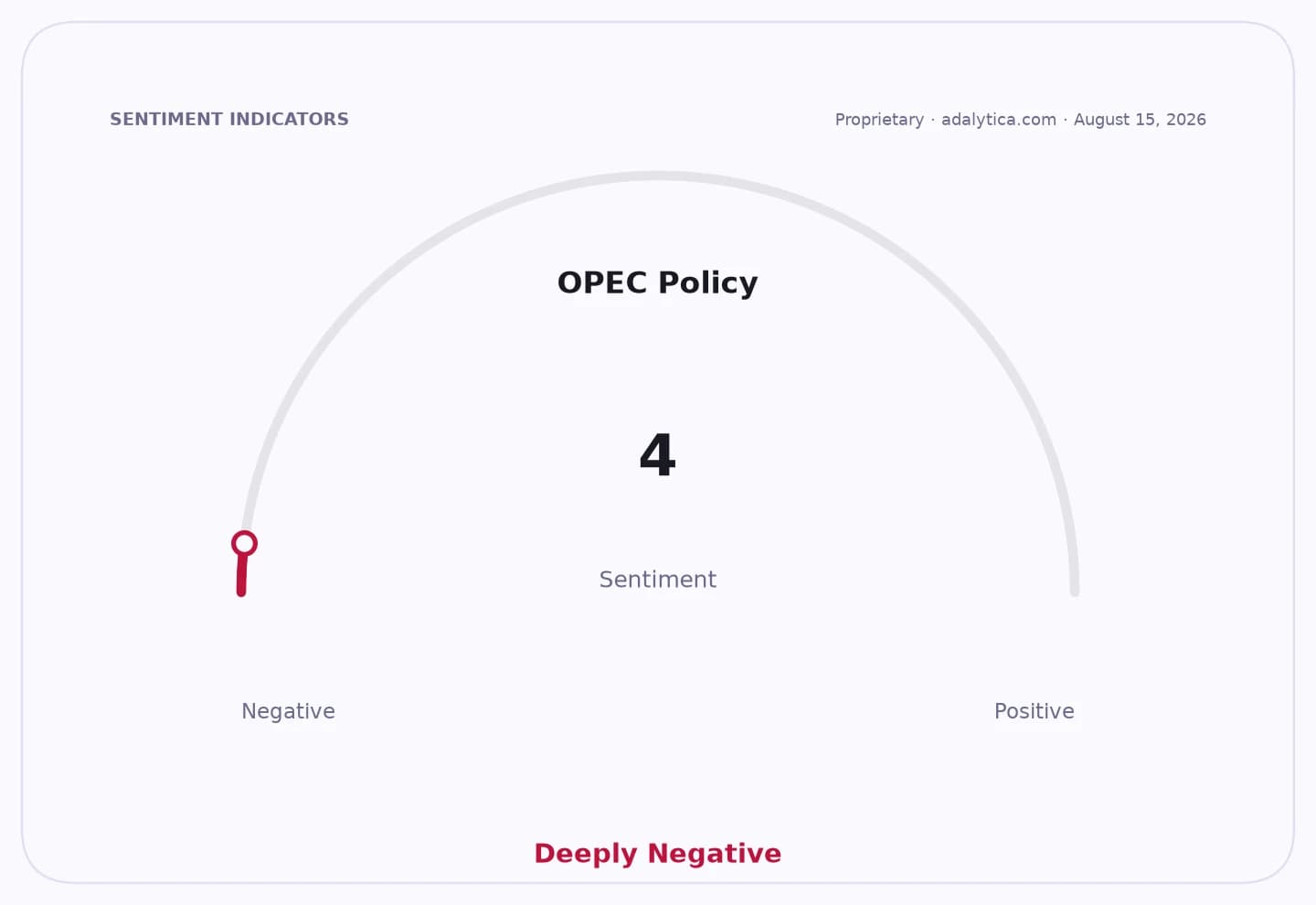
Adalytica’s OPEC Policy Sentiment gauge underscores how quickly the narrative has turned, with the reading at “Extreme Fear.” That does not mean oil is headed straight down, but it does mean the consensus is shifting away from scarcity and back toward demand discipline. In energy markets, that usually marks the point where investors stop paying for the headline and start looking for the toll roads underneath it.
The next catalyst is whether inventories keep building and whether OPEC’s next move is a deeper cut in its outlook or a production response to defend prices. Until then, I believe the market underestimates how quickly weaker demand expectations can compress crude’s upside and separate the winners from the rest of the energy trade. For investors, that argues for selective exposure to cash-generating energy leaders, not broad-bet oil optimism.
| Entity | Gains | Losses |
|---|---|---|
| Oil consumers | ▲Lower input costs | ▼Less urgency for hedges |
| OPEC producers | ▲Short-term output discipline | ▼Pricing power |
| Integrated majors | ▲Relative cash-flow resilience | ▼Smaller upside from crude spikes |
| USO / crude bulls | ▲Trading volatility | ▼Momentum and sentiment |