OPEC+ Keeps October Output Quotas as Oil Nears $100
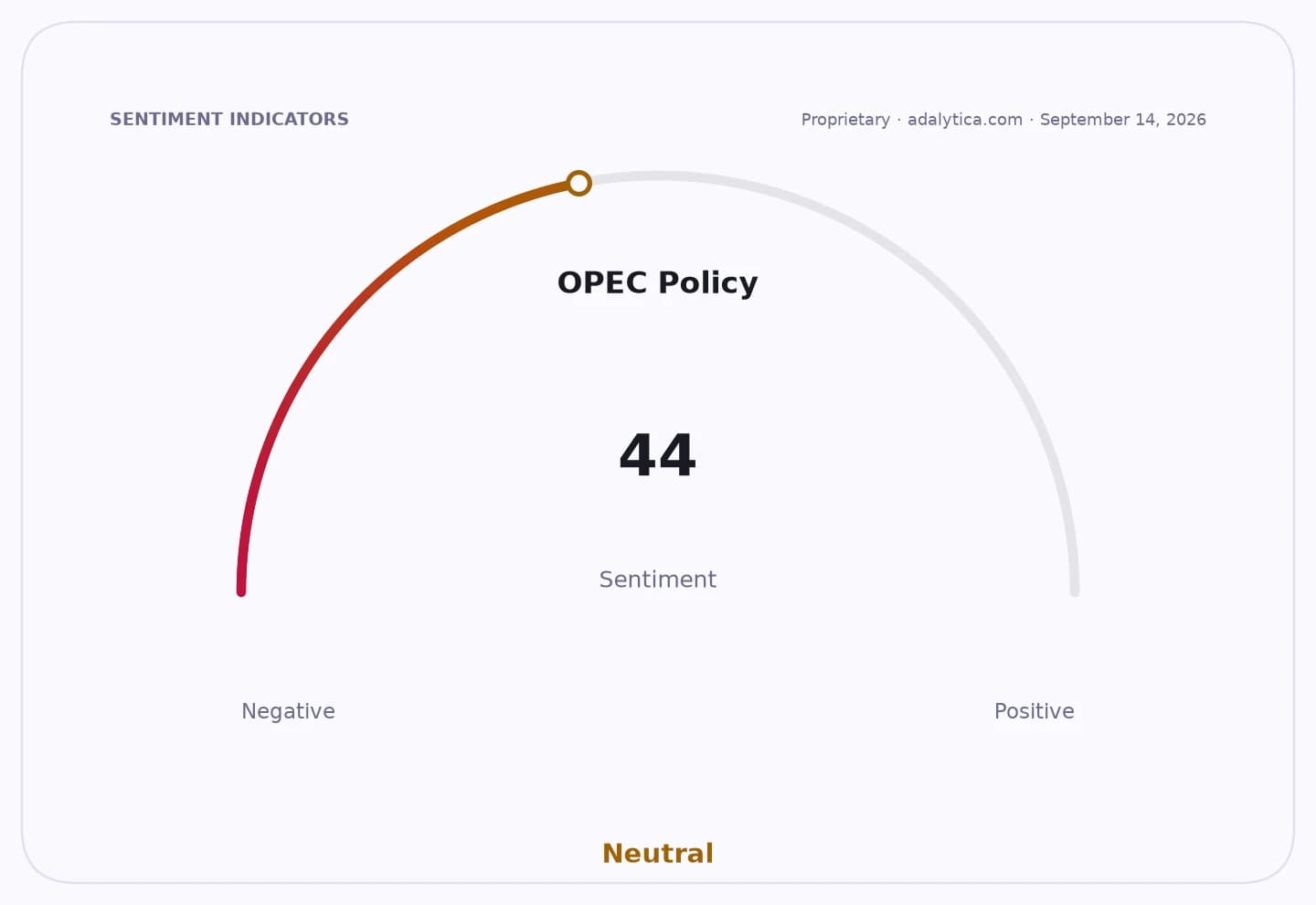
OPEC+ is keeping a tight grip on supply just as crude prices push back toward the psychologically important $100-a-barrel mark, a decision that supports oil producers but threatens to keep pressure on importers, transport costs and inflation.
The cartel’s choice to maintain October output quotas, even after Iraq asked for a bigger production share, reinforces the message that OPEC+ still prefers price support over a rapid return of barrels to the market. That matters because oil is one of the economy’s biggest swing factors: when supply stays constrained, fuel bills rise, businesses face higher input costs and central banks are given less room to ease policy.
West Texas Intermediate was last around $97.34 a barrel in the data provided, up from $92.69 just days earlier and well above the levels seen earlier this year. That kind of move can ripple far beyond the energy patch. For households and manufacturers, higher crude tends to filter quickly into gasoline, diesel and freight costs. For governments, especially large importers such as India, it can worsen trade balances and add to inflation worries.
The backdrop also helps explain why OPEC+ is not rushing to loosen taps. Saudi Arabia’s oil output hit its lowest level since 1990 in August, underscoring how little spare supply may be available. At the same time, OPEC trimmed its oil-demand growth forecast for 2026, a sign the group sees a market that is still vulnerable to slower growth ahead even if prices are firm today.
For investors, the message is clear: energy remains a sector where supply discipline can overpower macro uncertainty. The Energy Select Sector SPDR Fund, or XLE, has climbed to about $64.97 from below $58 in early August, while the United States Oil Fund, or USO, has surged to $158.86, both reflecting the market’s embrace of higher crude. Energy producers and oilfield service firms tend to benefit when prices stay elevated and capital spending holds up, while refiners, airlines, shippers and fuel-intensive industries usually absorb the hit.
There is a caveat. Oil prices that run too hot can eventually damage demand, especially if global growth slows or consumers get squeezed. That is why the market will keep watching OPEC+ closely for any sign that the alliance is shifting from price defense to market-share defense. For long-term investors, the better lesson is not to chase the next daily move in crude, but to understand how supply restraint can create powerful earnings tailwinds for energy companies with strong balance sheets and disciplined capital returns.
| Entity | Gains | Losses |
|---|---|---|
| OPEC+ producers | ▲Higher oil prices | ▼Weaker demand if prices stay elevated |
| Energy stocks | ▲Better cash flow and earnings | ▼Valuation risk if crude reverses |
| Oil importers | ▲None | ▼Higher energy bills and inflation |
| Airlines and fuel users | ▲None | ▼Rising operating costs |