OPEC+ leaves October oil output unchanged
OPEC+ agreed to leave crude production unchanged in October, a move that keeps a floor under oil prices at a time when geopolitical risk is already tightening the market.
The decision matters because the group is choosing restraint after a series of gradual supply increases, signaling that Saudi Arabia, Russia and their allies are not in a hurry to test demand conditions or force prices lower. With crude already near six-week highs, the alliance’s pause reduces the risk of an immediate supply surprise and leaves traders more exposed to headlines from the Middle East.
For investors, the message is straightforward: oil remains supported by policy as well as politics. U.S. crude ETF USO was last around $141.96, while the energy-heavy XLE closed at $64.06 and the exploration-focused XOP finished at $190.71, underscoring how producers and oil-linked funds have benefited from the recent run-up in prices.
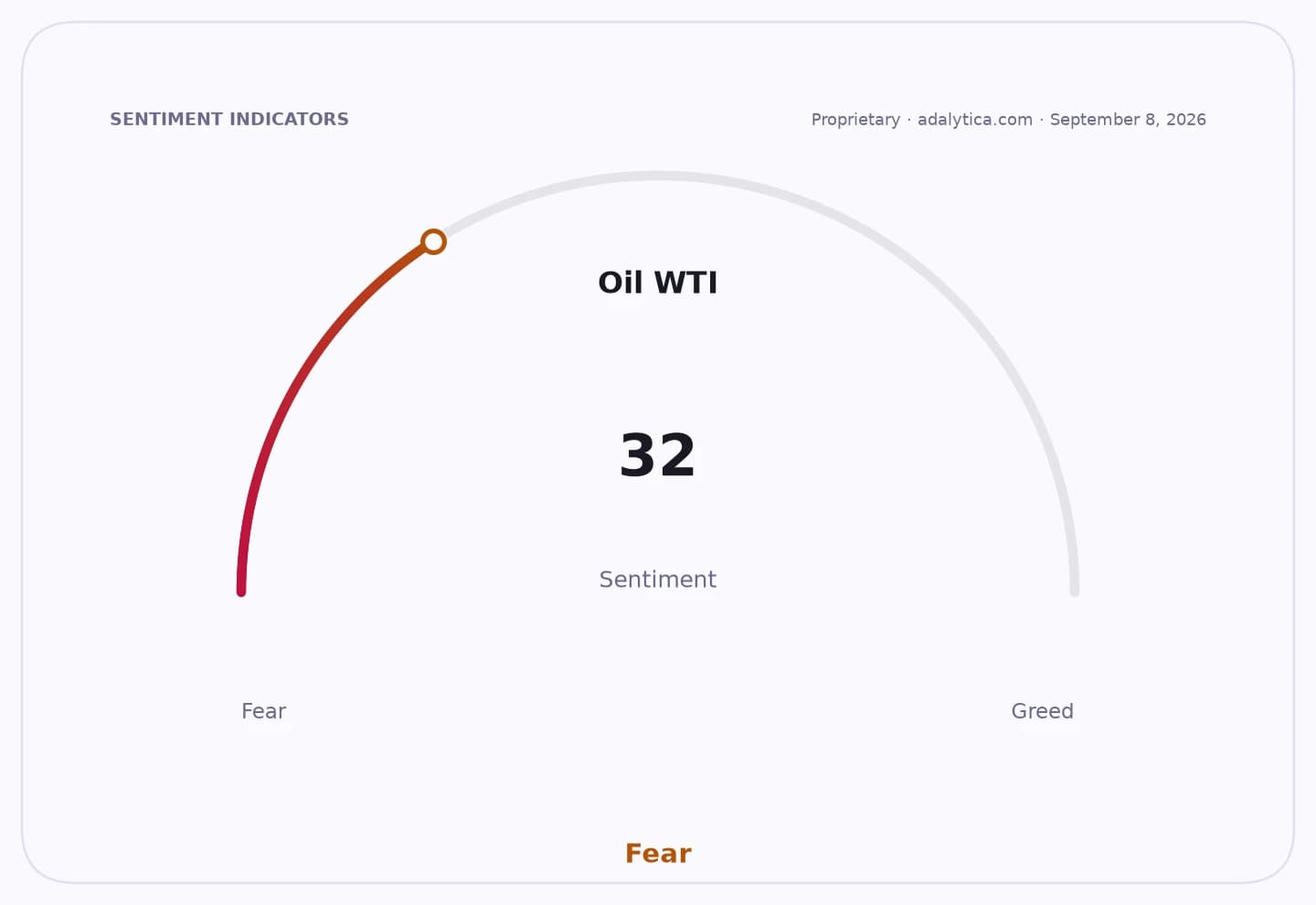
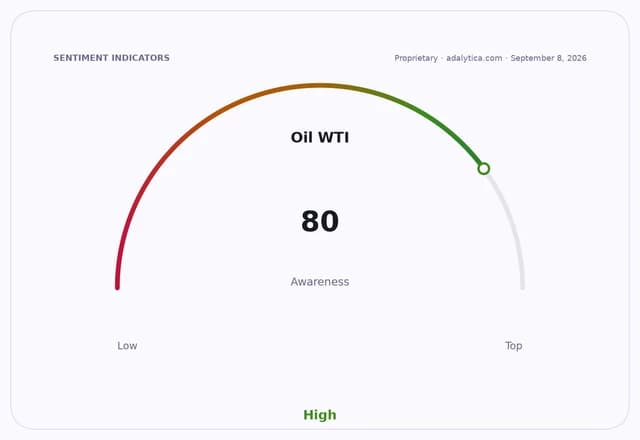
The backdrop is an OPEC+ market that has been managing quotas more cautiously as the Iran conflict and broader supply concerns keep volatility elevated. Adalytica’s Oil WTI Trade Signals snapshot shows sentiment at 32, labeled neutral, with awareness at 80, labeled greed, while the 7-day and 30-day changes point to a sharp swing in positioning as traders price in tighter supply.
Technically, USO has extended well above its 50-day moving average and was close to its upper Bollinger Band in the latest data, while XLE and XOP also traded above their 50-day and 200-day moving averages. That leaves the group vulnerable to a pullback if geopolitics cool or if OPEC+ decides to reverse course later this year, but for now the October hold keeps the burden on demand-side data and Middle East headlines to move the market.
| Entity | Gains | Losses |
|---|---|---|
| OPEC+ producers | ▲Support firmer prices | ▼Less room to raise output |
| Oil funds like USO | ▲Near-term price support | ▼Fade if risk premium eases |
| Energy stocks XLE/XOP | ▲Stronger cash flow outlook | ▼Higher volatility if crude slips |
| Fuel buyers/importers | ▲None | ▼Higher input and pump costs |