OPEC+ Keeps Oil Output Unchanged for October

OPEC+ is keeping oil production levels unchanged for October, a move that reinforces the cartel’s decision to defend supply discipline just as the Iran conflict pushes crude back toward the $100-a-barrel threshold.
The pause matters because it leaves the market reliant on geopolitics rather than extra barrels to balance demand, tightening the outlook for refiners, airlines and other fuel-sensitive industries. With WTI around $91.48 a barrel and Brent elevated near $100, the group is choosing not to risk a price break from higher output while supply disruption fears remain elevated.

The decision also extends a year in which crude has already swung sharply on war risk and OPEC+ policy. WTI has climbed from $84.57 on Aug. 28 to $91.48 in the latest trading, while the 50-day moving average for the front-month U.S. benchmark sits at $81.40, underscoring how quickly the market has repriced tighter conditions.
Energy equities are responding to the firmer backdrop. The Energy Select Sector SPDR Fund, XLE, has risen to $64.06 from $57.31 a month ago, while the U.S. Oil Fund, USO, is holding near $141.96 after a run that took it well above both its 50-day and 200-day moving averages. That suggests investors are still positioning for a supply-constrained market even as the broader U.S. 10-year Treasury yield sits near 4.79%, keeping the macro cost of higher energy prices in view.
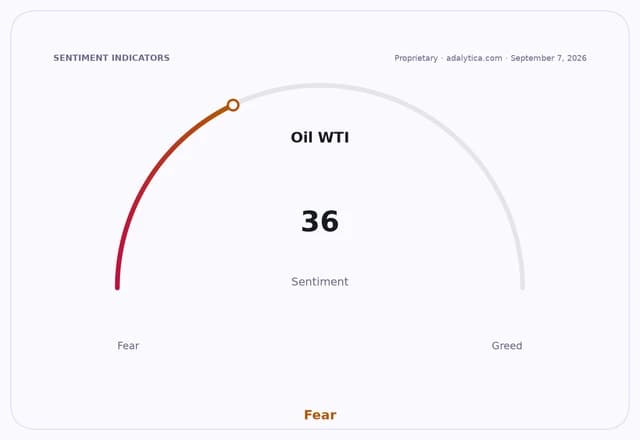
For producers, the calculus is straightforward: steady OPEC+ output supports cash flow, but it also keeps pressure on consuming economies and raises the risk of demand destruction if prices stay elevated too long. For importers and refiners, the unchanged policy means little relief from an oil market that is already pricing in geopolitical stress.
The next catalyst is whether the Iran conflict broadens further or cools enough to remove the premium now embedded in crude. Until then, OPEC+ appears content to wait and let the market do the tightening.
| Entity | Gains | Losses |
|---|---|---|
| OPEC+ producers | ▲Higher oil prices | ▼Risk of demand backlash |
| Energy stocks | ▲Firmer cash flows | ▼Volatility if prices reverse |
| Consumers/importers | ▲None | ▼Higher fuel costs |
| Airlines/refiners | ▲None | ▼Margin pressure from expensive crude |