Open AI Policy Could Boost Nvidia, Microsoft

Nvidia and Microsoft are urging Washington not to clamp down on open source AI, a fight that matters because the rules set now could shape who builds, distributes and profits from the next generation of software.
For investors, this is about far more than a policy letter. Open source AI lowers the cost of adoption, broadens the customer base and speeds up experimentation across the economy. That usually helps the biggest infrastructure providers first, because more developers, startups and enterprises need more chips, more cloud, more networking and more software tools to train and run models. It also helps preserve the open ecosystem that has made AI a faster-moving, more competitive market than many regulators expected.
The timing is important. Artificial intelligence remains one of the market’s strongest secular themes, but governments in the U.S. and abroad are under pressure to respond to concerns over safety, misuse and competition. Nvidia and Microsoft are effectively arguing that a heavy-handed approach could slow innovation at the very moment businesses are moving from pilots to deployment. If policymakers restrict open source too aggressively, the winners could narrow to a few closed platforms with the scale to absorb compliance costs. If they leave it open, the whole supply chain — from chipmakers to cloud operators to software developers — can keep compounding.
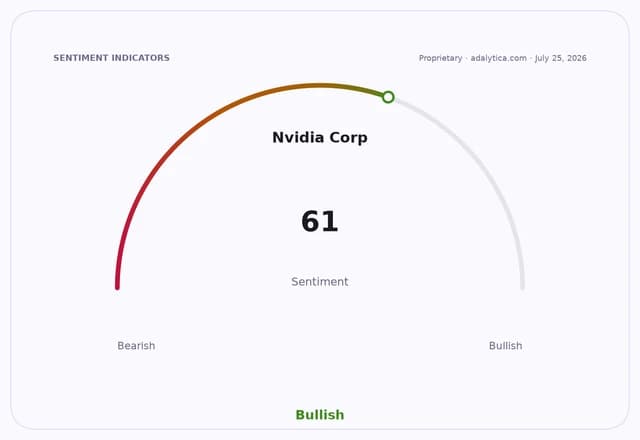
That helps explain why these companies have every reason to speak up. Nvidia has been one of the clearest beneficiaries of the AI buildout, and its stock has reflected that, with the shares still trading above both the 50-day and 200-day moving averages even after recent volatility. Microsoft, meanwhile, sits at the center of enterprise AI adoption through Azure and its software stack, giving it a direct stake in whether open models remain widely available and easy to deploy. The broader semiconductor ETF SMH has also shown how powerfully AI spending has supported the group, even as recent trading has been choppy.
The market backdrop suggests investors are still sorting through the balance between enthusiasm and policy risk. Nvidia’s recent price action has been volatile, but technical readings such as RSI and MACD show the shares remain in a consolidation phase rather than a broken long-term trend. Microsoft has also pulled back from earlier highs, a reminder that even the best AI franchises are not immune to valuation resets. But over a multi-year horizon, that is the kind of volatility long-term investors should expect in a powerful secular trend, not a reason to abandon it.
The real question is which model of AI wins out: one dominated by a few tightly controlled platforms, or one built on wider access and faster experimentation. Nvidia and Microsoft are betting that openness will produce more demand, not less, and history suggests broad adoption tends to reward the companies that sell the picks and shovels.
For investors, the takeaway is straightforward: keep an eye on the policy debate, but focus on the businesses most likely to benefit if open source AI remains a major part of the ecosystem. That includes Nvidia, Microsoft and the wider semiconductor stack, all of which still look worth watching for patient, long-term portfolios.
| Entity | Gains | Losses |
|---|---|---|
| Nvidia | ▲More chip demand | ▼Tighter AI rules |
| Microsoft | ▲Broader Azure usage | ▼Closed ecosystem rivals |
| Open source developers | ▲Faster adoption | ▼Compliance burdens |
| Investors in AI infrastructure | ▲Longer growth runway | ▼Policy-driven uncertainty |