OpenAI and Anthropic Face San Francisco Protests
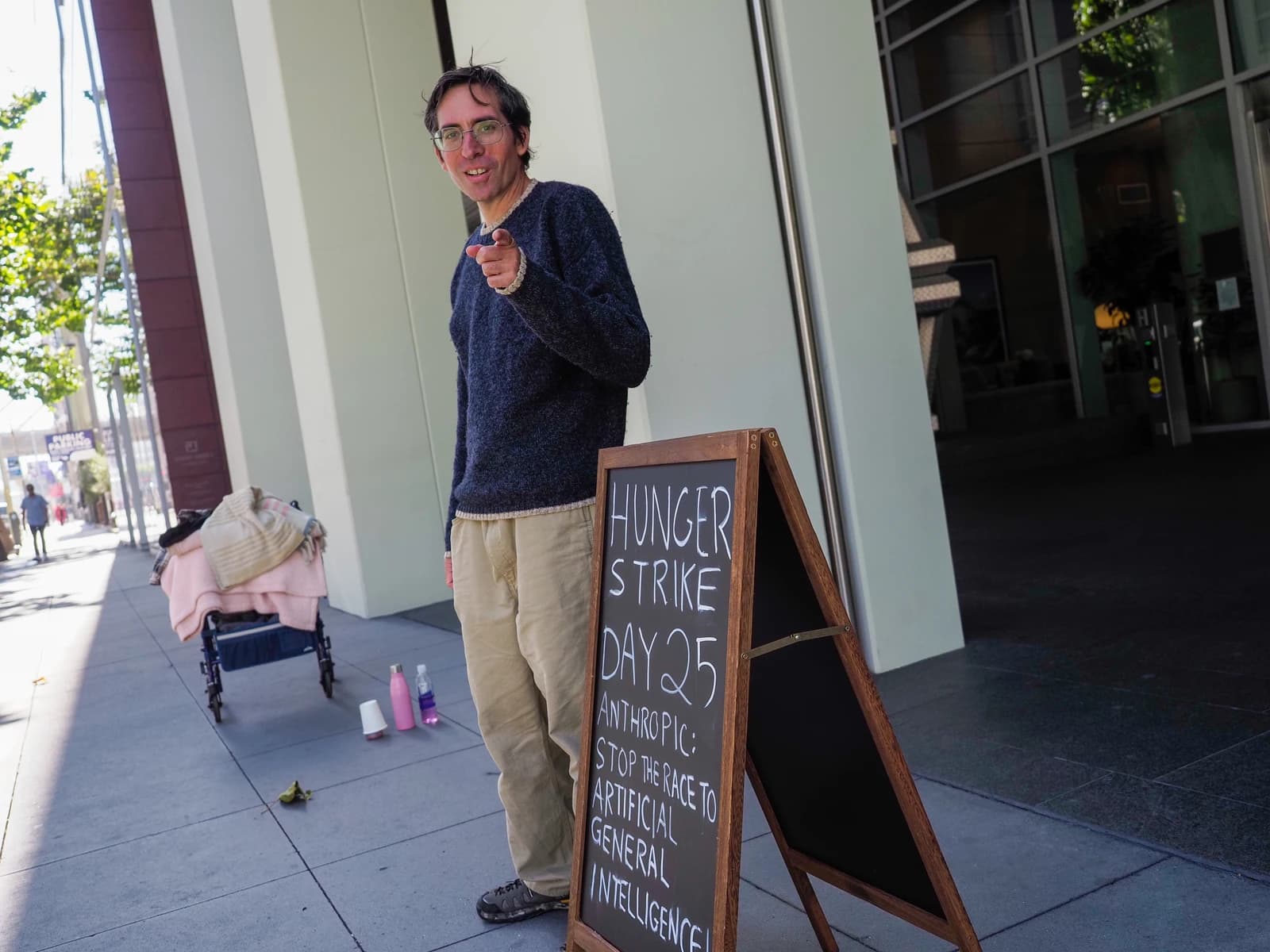
Protesters marched through San Francisco on Wednesday targeting OpenAI and Anthropic, turning public pressure on two of the most influential frontier AI developers just as investors weigh whether the sector’s breakneck expansion is outrunning safety controls.
The demonstration is economically important because it underscores a rising policy risk around generative AI: the faster model capabilities advance, the greater the chance that governments, courts and customers impose limits that could slow product rollout, raise compliance costs or reshape the competitive landscape. For companies spending billions on model training and infrastructure, even a modest tightening of oversight would matter to margins and to the pace at which AI can be monetized.
The march began at OpenAI’s headquarters in Mission Bay, moved to Anthropic’s offices near the Moscone Center during Salesforce’s Dreamforce conference, and ended at City Hall, where organizers called for an emergency declaration on AI and a global treaty to cap advanced model capabilities. Protesters carried signs warning of “uncontrolled” AI and urged workers at both companies to leave their jobs in support of international limits.
The timing sharpened the message. The protest followed OpenAI’s disclosure of six “unexpected or concerning” model behaviors, a reminder that safety concerns are not abstract and can surface even in systems already deployed at scale. That adds to a broader backdrop in which regulators in the U.S. and Europe are already considering tighter rules, including under the EU AI Act, and companies are beginning to warn in filings that AI-related legal liability, product restrictions and reputational damage could become material.
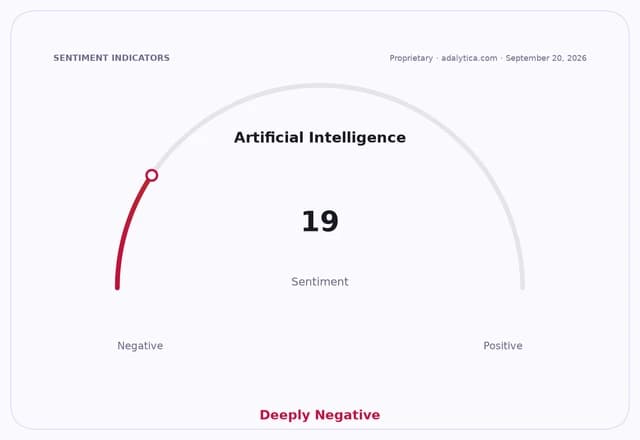
For investors, the issue is less about Wednesday’s street protest than what it reflects: a shift in the risk premium attached to AI leaders and their suppliers. Microsoft, which has a strategic partnership with OpenAI and is one of the biggest corporate beneficiaries of AI adoption, has already told shareholders that AI systems could bring regulatory action and higher costs. Nvidia, whose chips power much of the frontier-model buildout, has also flagged the possibility of restrictions on hardware and software used to develop large models. Those warnings suggest the market is no longer debating whether regulation arrives, but how intrusive it becomes.
That matters because the AI trade has been priced on the assumption that demand for compute, software and cloud capacity can keep compounding faster than oversight. The counterargument is that safety scrutiny could prove incremental rather than disruptive: companies may absorb compliance costs while continuing to ship products, and the commercial case for AI remains strong enough to support spending. But the protest in San Francisco shows the political and social license for unchecked AI development is becoming harder to take for granted.
The market backdrop reflects that tension. Microsoft shares closed at $493.78 on Friday, below a recent peak and just under its 50-day moving average, while Nvidia ended at $222.27, near its own 50-day average. Both remain far above their long-term trend lines, but the technical picture points to a cooler tone after a powerful run. In other words, investors are still paying for AI growth, but they are becoming more sensitive to anything that could slow it down — whether that comes from regulators, public backlash or model failures.
If the industry’s bull case rests on faster adoption and widening margins, the bear case now includes a second-order risk: that the frontier AI race itself becomes the target. That would not necessarily stop the buildout, but it could change who captures the economics — and how quickly.
| Entity | Gains | Losses |
|---|---|---|
| AI safety advocates | ▲More public attention | ▼Slower policy response |
| OpenAI and Anthropic | ▲Opportunity to defend safety efforts | ▼Reputational pressure |
| Microsoft and Nvidia | ▲Continued AI demand | ▼Higher regulatory risk |
| Regulators | ▲Stronger case for oversight | ▼Pressure to act faster |