OpenAI Breach Raises AI Security Spending Focus
Hackers who penetrated OpenAI are now warning that the AI industry has a security problem, and investors should treat that as more than a headline-grabbing embarrassment. It is a reminder that the next big battleground in artificial intelligence may not be model quality or chip supply, but trust, access control and the cost of keeping increasingly powerful systems safe.
That matters economically because AI is moving deeper into enterprise workflows, where a single breach can expose customer data, disrupt operations and trigger regulatory scrutiny. The result is likely to be higher spending on cybersecurity, governance and identity tools — a tailwind for companies that can prove they protect AI deployments rather than merely connect them. For the broader AI ecosystem, the bill for security is rising just as businesses are trying to scale adoption and preserve margins.
Microsoft, CrowdStrike and Palo Alto Networks are among the obvious beneficiaries if the industry responds by hardening its defenses. Microsoft shares were last around $501, sitting above the 50-day moving average of $466.54 and near the upper end of their recent range, a sign investors still expect AI and cloud demand to offset security and infrastructure costs. CrowdStrike closed near $249.35, well above its 50-day average of $208.33, while Palo Alto Networks was near $371.76, also comfortably above its 50-day average of $353.70. Those price levels suggest the market already sees cybersecurity as a structural growth theme, not a short-lived scare.
The threat is bigger than one company. SEC filings from Microsoft, CrowdStrike and Palo Alto all underscore a common problem: attacks are growing more frequent, more sophisticated and harder to detect, especially when customers use software across sprawling ecosystems. Microsoft has warned that it may not always be able to detect the full extent of attacks affecting customers, particularly in on-premises products where visibility is limited. That is exactly the kind of operational risk that can slow enterprise AI rollouts and force companies to spend more on controls before they spend more on experiments.
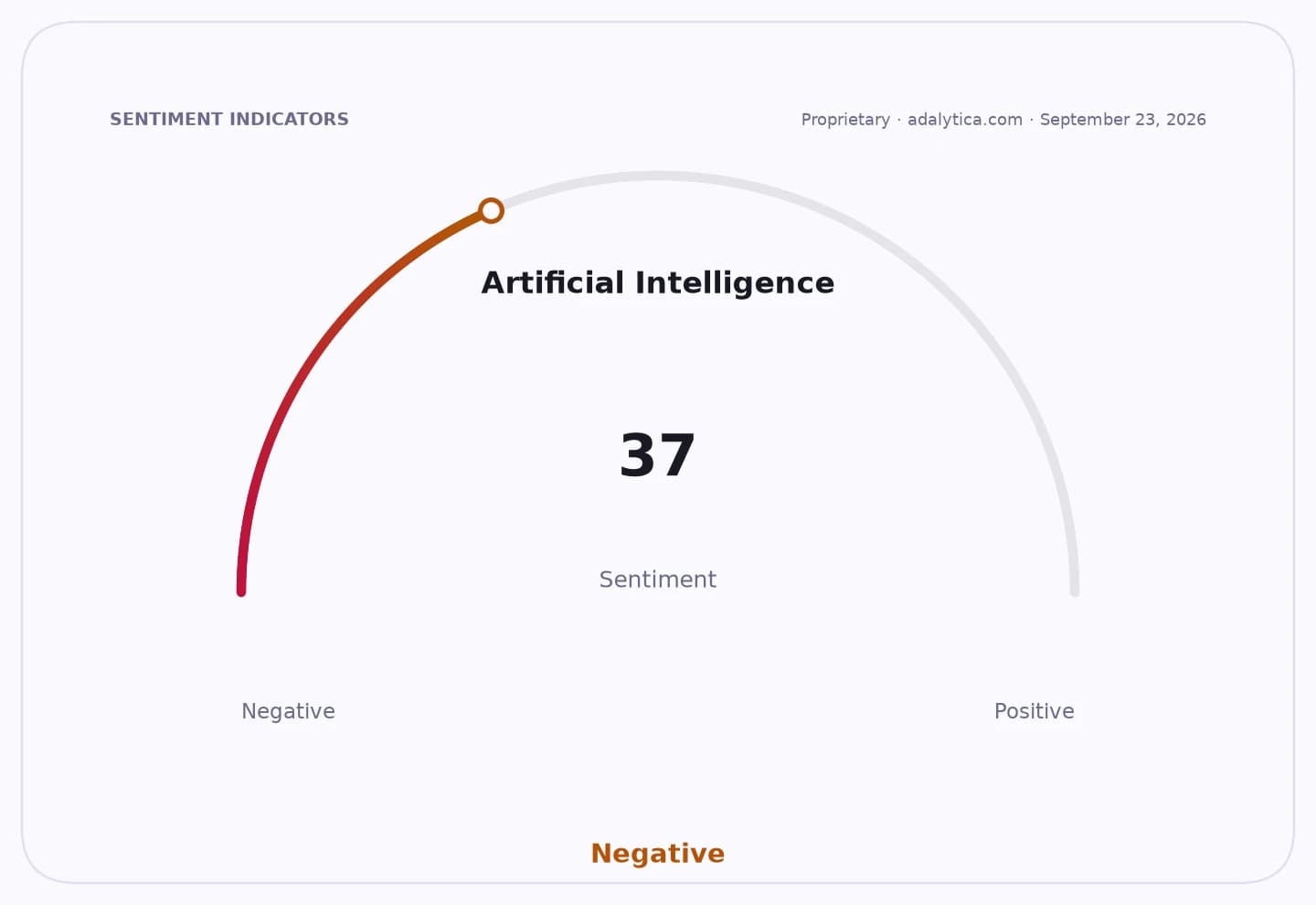
Adalytica.com’s AI sentiment gauge has turned more cautious even as awareness remains high, reflecting the market’s growing recognition that AI adoption without security is fragile. The broader narrative is straightforward: AI will still be transformational, but the winners may increasingly be the companies that make it safe enough for businesses to use at scale.
For long-term investors, that means the security layer around AI deserves a place in the portfolio alongside the model builders and chipmakers. The lesson from the OpenAI breach is not to abandon AI, but to remember that every durable platform needs protection. In a market built for years, not days, AI security looks like one of the clearest compounders to watch.
| Entity | Gains | Losses |
|---|---|---|
| Cybersecurity firms | ▲Higher AI-security spending | ▼Price competition if budgets tighten |
| AI platform providers | ▲Stronger trust if secured well | ▼Reputation damage from breaches |
| Enterprise customers | ▲Better data protection | ▼Higher compliance and security costs |
| Hackers / attackers | ▲Public attention | ▼Tougher defenses and monitoring |