Oracle’s stock has been in a near-continuous slide since June 1, and that matters because the market is no longer rewarding the AI infrastructure trade on promise alone. What looked like one of the cleanest beneficiaries of enterprise cloud spending and artificial intelligence capex is now getting repriced as investors question how much of that future growth is already in the stock, and how much execution risk sits underneath it.
Oracle Selloff Signals AI Infrastructure Repricing
The move is economically significant because Oracle sits at the intersection of two of the biggest capital-allocation shifts in technology: cloud migration and the buildout of AI compute. When a company this tied to enterprise software, databases and cloud infrastructure gets hit day after day, it signals a broader rethink of who actually captures the profits from the AI boom. The market is starting to distinguish between the vendors selling the picks and shovels and the operators who must spend heavily just to stay relevant.
The tape shows just how violent that reset has been. Oracle closed at 229.53 on June 3, then 235.52 on June 4, before momentum faded and the stock was cut in half from that early-June peak to 130.15 on July 14. RSI readings collapsed to 14.7, a deeply oversold level by conventional technical standards, while the stock sits far below its 50-day moving average of 181.19 and its 200-day moving average of 192.54. MACD remains firmly negative, underscoring that this is not a one-day washout but a sustained de-rating.
That matters for investors because Oracle had been treated as one of the market’s more credible AI infrastructure names, particularly after a run that suggested the Street was willing to pay up for exposure to cloud workloads and enterprise AI demand. The problem now is that the story is colliding with valuation reality. If the market decides Oracle’s long-term opportunity is real but slower to monetize, the stock can keep compressing even if the company remains strategically relevant. That is exactly how high-multiple infrastructure names get punished: not on collapse in demand, but on a lower confidence that earnings will catch up fast enough.
The broader signal is even more important than Oracle itself. Microsoft and Amazon have also softened from their highs, but neither has suffered the same sort of persistent air pocket. That divergence tells you investors are becoming more selective inside mega-cap tech, favoring the platforms with the deepest distribution and the clearest operating leverage while punishing the names that may need heavier spending to defend their position. Oracle’s slide is a warning that AI spending is still a brutal capital cycle, and not every beneficiary will emerge with the same margin profile or the same multiple.
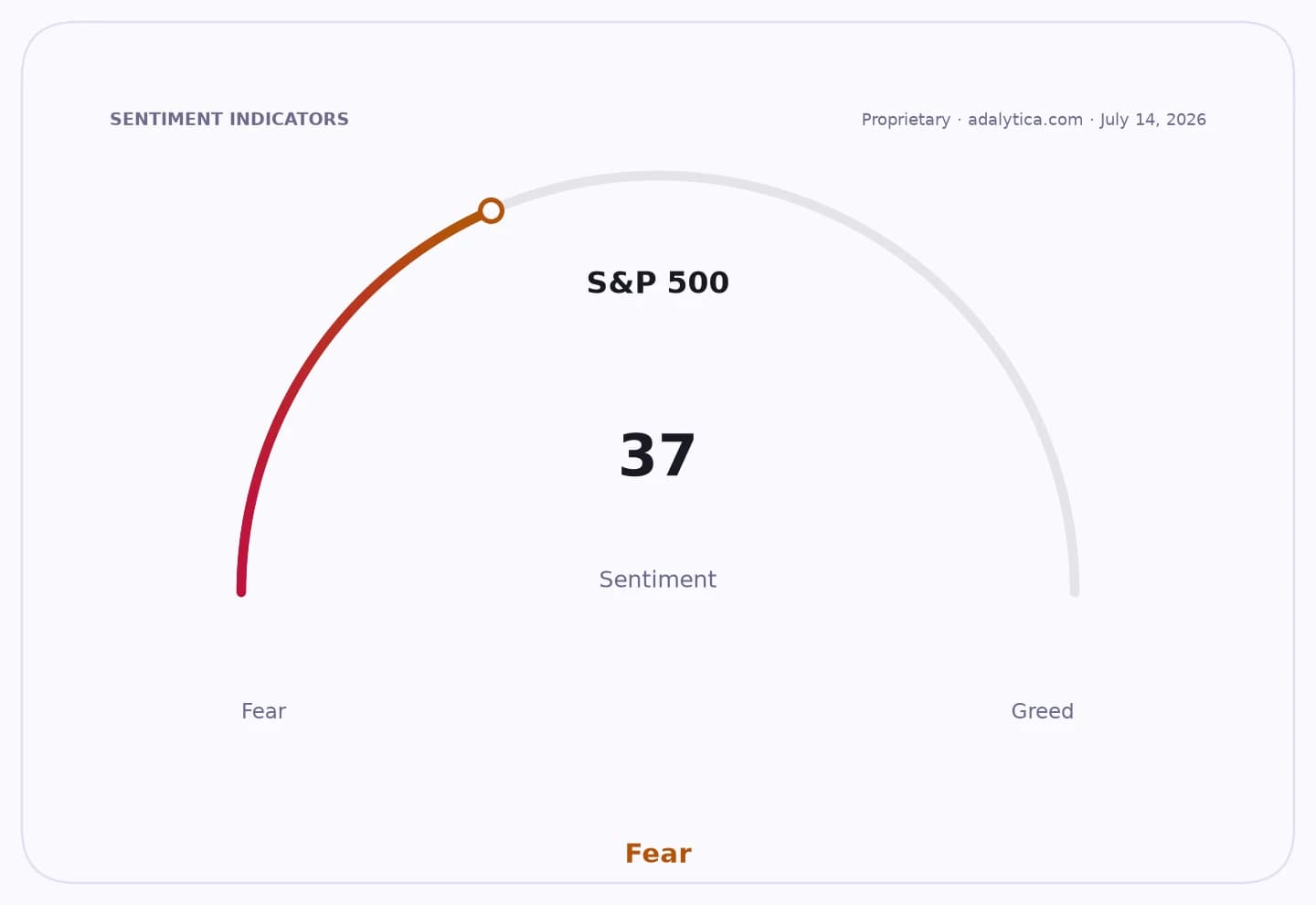
Adalytica’s S&P 500 Trade Signals underscore the shift in mood: the gauge sits at 37 sentiment with awareness in “Extreme Fear,” a backdrop that helps explain why momentum names are being sold hard once the narrative cracks. In that environment, investors should stop treating Oracle as a momentum stock and start treating it as a possible value-and-catalyst trade. If the company can prove that AI-linked cloud demand is translating into durable bookings and margin stability, the stock could rebound sharply from deeply oversold levels. If it cannot, the market is telling you the AI infrastructure premium is not guaranteed.
For now, the asymmetric setup is not to chase the selloff blindly, but to watch for signs of capitulation and operational proof. Oracle is becoming a test case for the next phase of the AI trade: not who talks about compute, but who turns compute into cash flow. That is where the real opportunity will be found.
| Entity | Gains | Losses |
|---|---|---|
| Oracle bears | ▲lower valuation risk | ▼near-term momentum fade |
| Patient contrarian buyers | ▲oversold rebound potential | ▼further de-rating if growth disappoints |
| Microsoft and Amazon | ▲relative quality premium | ▼less room for multiple expansion |
| AI infrastructure sellers | ▲continued capex demand | ▼margin pressure and execution scrutiny |