Pakistan’s stock market tumbles sharply as investors digest stalled policy negotiations at home and a fresh spike in geopolitical risk abroad, while the rupee holds steady and the interbank US dollar rate stays at Rs278.02.
Pakistan Stocks Slide on Policy, Oil and Geopolitical Jitters
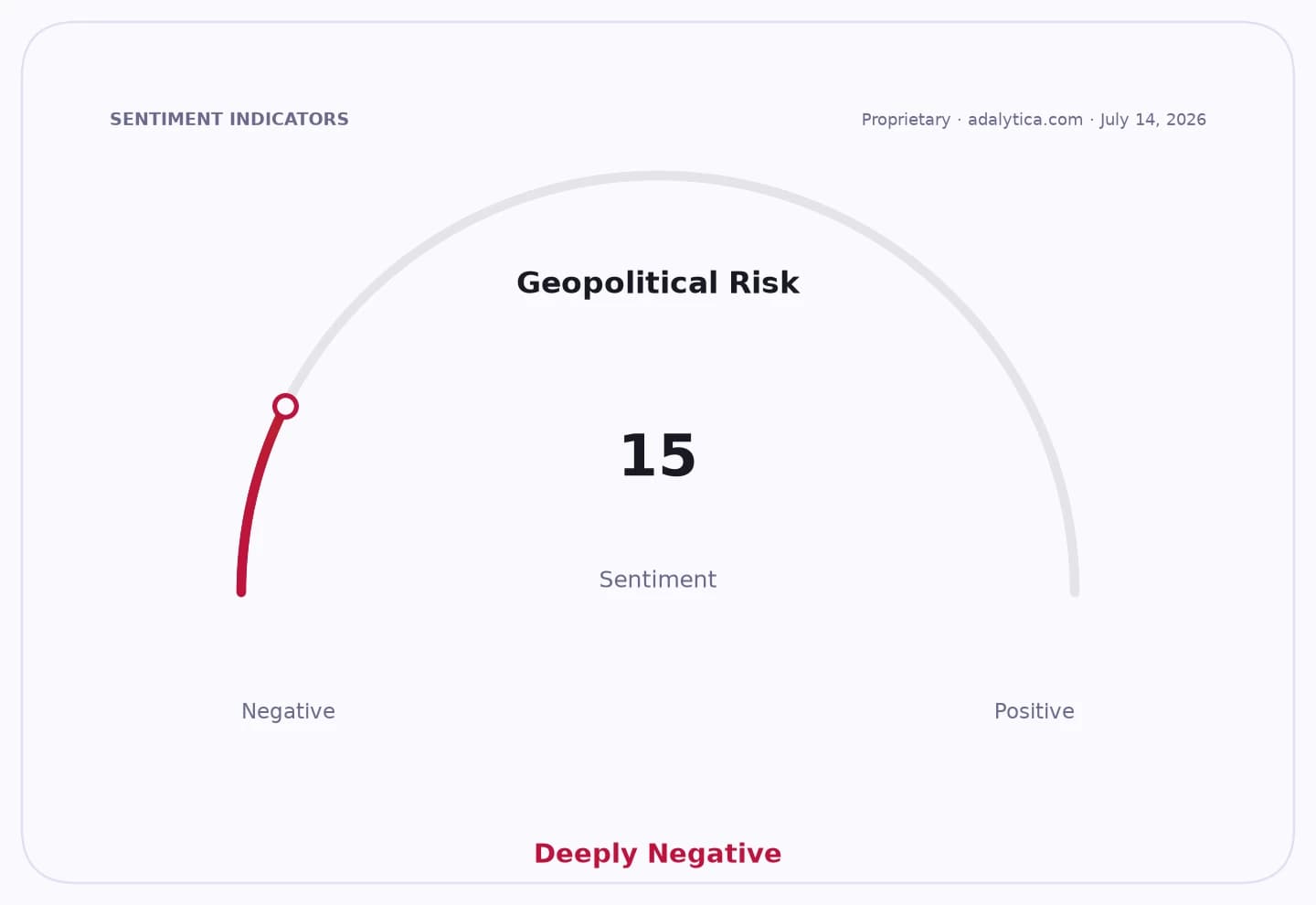
The benchmark Pakistan Stock Exchange index falls 3,460 points, underscoring how quickly sentiment can reverse when fiscal policy, trade rules and external financing questions collide with a jump in oil prices. For an import-dependent economy with fragile reserves, higher crude prices and a firmer dollar typically feed straight into inflation expectations, the current account and corporate margins.
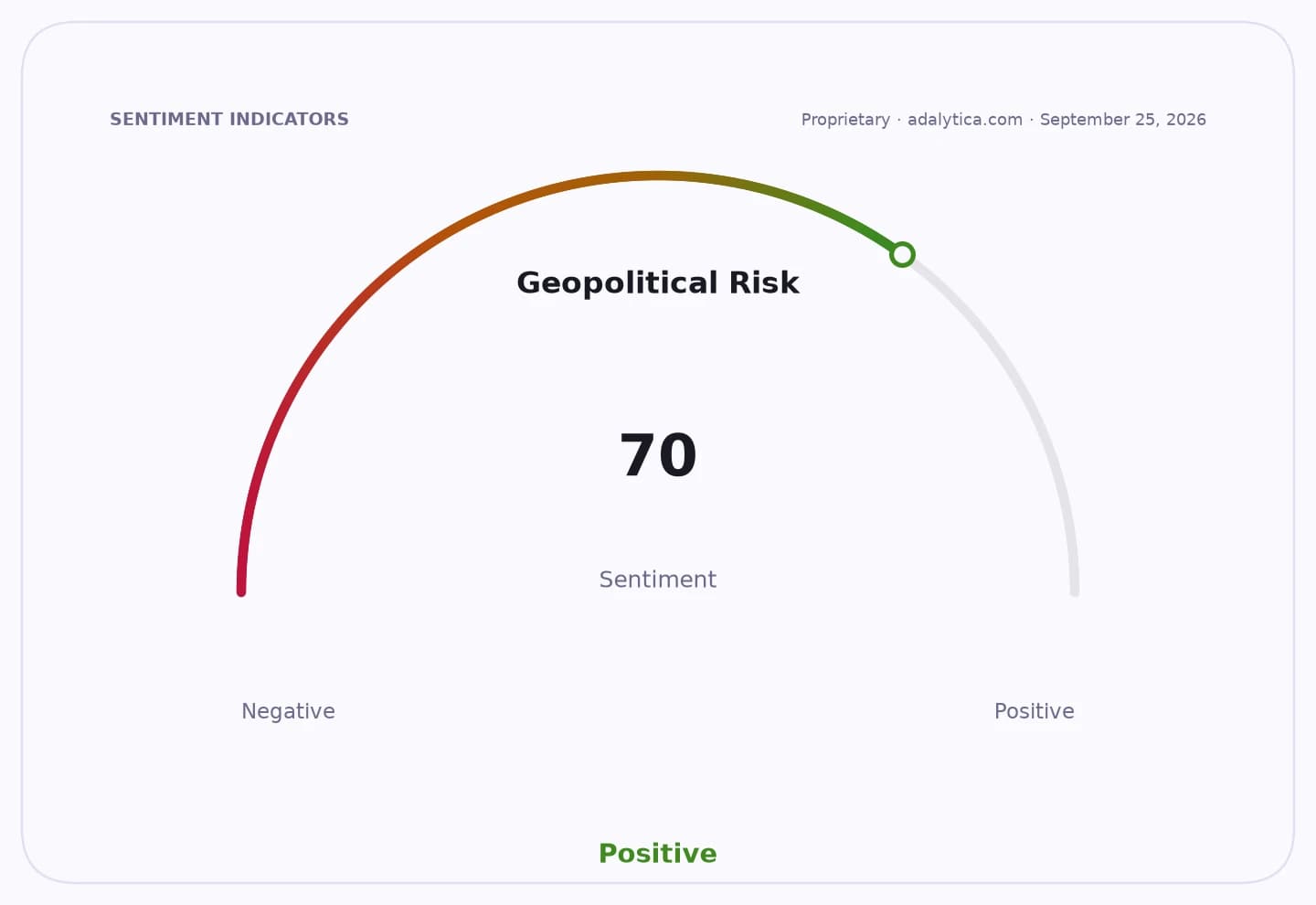
Sentiment IndicatorsⓘProprietary · adalytica.com · July 14, 2026
This is a snapshot — live sentiment, awareness and momentum for 130+ markets update continuously in the dashboard.Open AlphaPulse
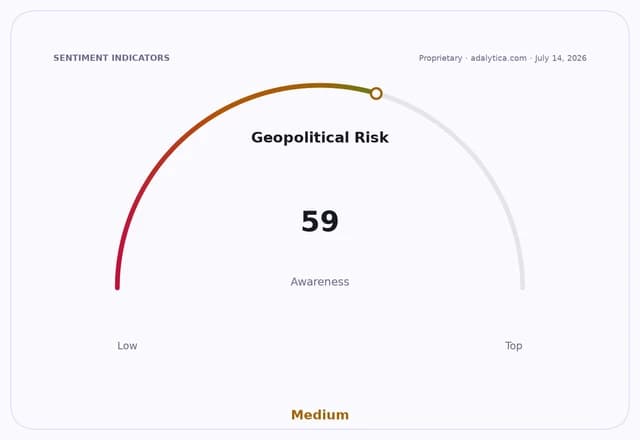
The selloff comes after talks with the IMF and the Tariff Policy Board reportedly fail to produce a breakthrough, leaving the old auto policy in place. That matters for investors because policy continuity was expected to support visibility for local assemblers and related supply chains; instead, the lack of progress reinforces the view that earnings and demand recovery may stay uneven.
Geopolitical pressure adds another layer of stress. Escalating US-Iran tensions and US strikes on Iran have pushed oil to a one-month high, heightening concern over Pakistan’s import bill and fueling caution across equities tied to fuel costs, transport and consumer spending. Adalytica’s Global Stability Sentiment gauge sits in “Extreme Fear,” while FX volatility signals also flash “Extreme Fear,” reflecting how fast risk appetite has deteriorated.
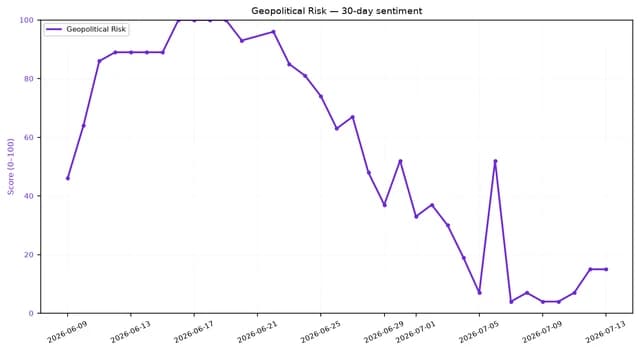
The currency market, however, offers little immediate relief or alarm, with the interbank dollar rate unchanged around Rs278.02. That stability may temper panic for now, but it does not offset the broader investment case: investors are pricing in a tougher macro backdrop, thinner policy support and higher external risk premiums.
For the Pakistan Stock Exchange, the near-term path likely hinges on whether Islamabad can revive IMF talks, clarify tariff and sector policy, and avoid a further oil-driven squeeze on the balance of payments. Until then, traders are likely to treat rallies as fragile and downside volatility as the dominant trend.
| Entity | Gains | Losses |
|---|---|---|
| Rupee / FX market | ▲Steady interbank rate | ▼Importers facing oil-linked costs |
| Exporters | ▲Competitive currency backdrop | ▼Domestic demand weakness |
| Auto assemblers | ▲Policy clarity if restored | ▼Old policy, weaker visibility |
| Equity bears | ▲Lower index, cheaper valuations | ▼Long-only investors |