Palo Alto Networks at 356.13 on China review
China’s reported security review of Palo Alto Networks products underscores how the U.S.-China technology split is moving from rhetoric to procurement risk, with the immediate concern being whether Beijing will curb use of American cybersecurity tools in sensitive organizations.
That matters economically because cybersecurity vendors depend on steady enterprise and government renewal cycles, and China has been a source of both revenue and strategic optionality for global software and hardware suppliers. A formal review, even before any ban or guidance, raises the odds of delayed purchases, tougher approvals and longer sales cycles for U.S. vendors operating in one of the world’s largest IT markets. It also fits a broader pattern of China pushing domestic institutions away from U.S. and Israeli security products, a dynamic Fortinet flagged in its own filings as a competitive and regulatory risk.
For investors, the issue is less about near-term revenue exposure at Palo Alto Networks than about the valuation multiple attached to growth and durability. PANW has rallied sharply this year, climbing to 356.13 on Aug. 6 from 147.02 in late March, and the stock still sits well above its 200-day moving average of 217.33. That kind of rerating leaves less room for policy shocks. Momentum indicators have cooled from extremely stretched levels — RSI fell to 48.8 from 95.7 in May — but the shares remain priced for continued execution, not geopolitical disruption. Any hint that large foreign customers could diversify away from U.S. vendors can pressure sentiment even when the direct financial hit is limited.
The market reaction also highlights the competitive stakes. CrowdStrike and Fortinet, both key peers in the cybersecurity group, have traded through the same geopolitical backdrop, and Fortinet’s latest filing explicitly warned that Chinese press reports suggest domestic firms may have been instructed not to use cybersecurity products made by U.S. and Israeli companies. That makes the story bigger than one company: it is about the fragmentation of the cybersecurity market along national lines, which could favor local vendors in China while forcing U.S. suppliers to lean harder on North America and Europe for growth.
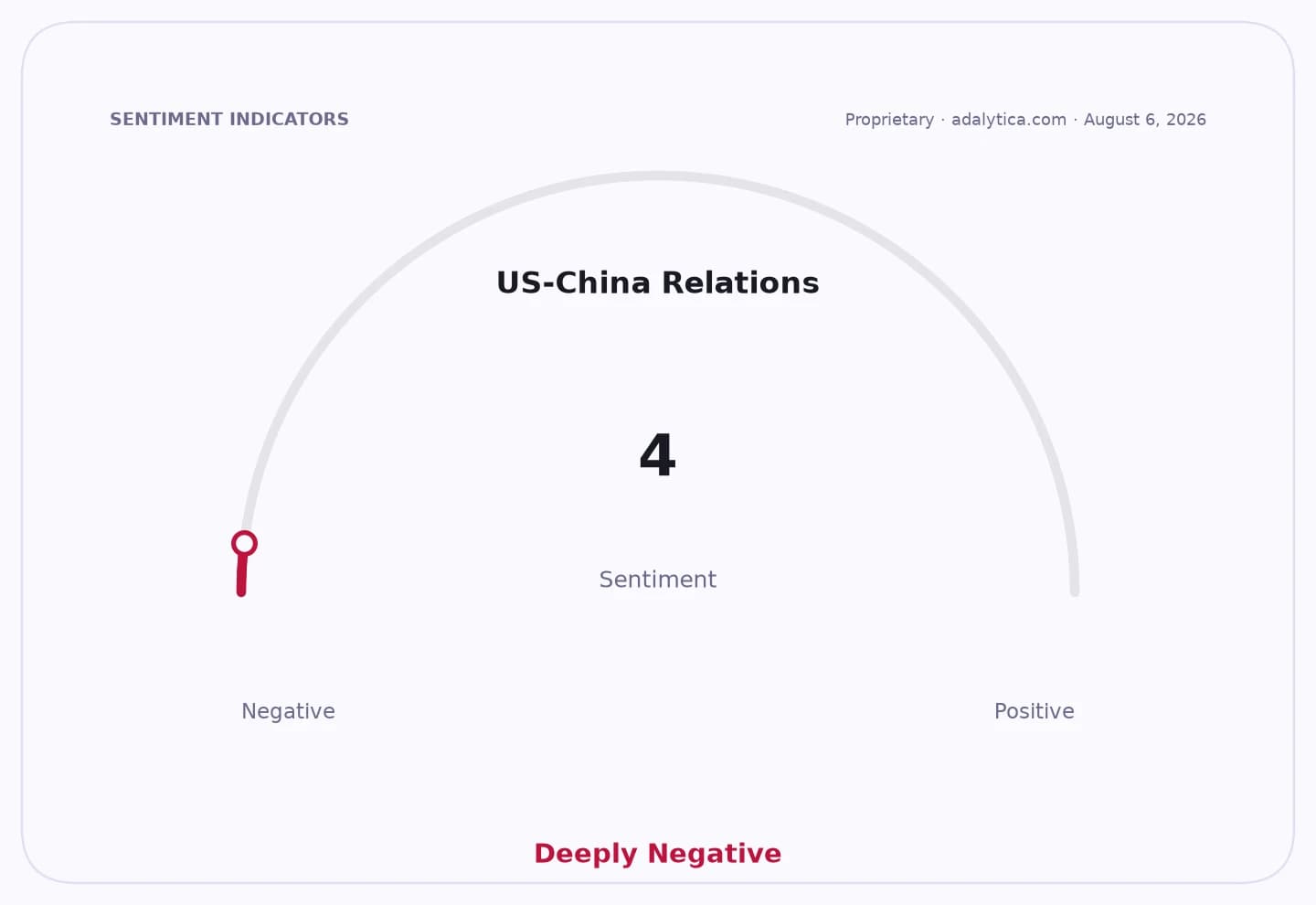
The macro backdrop is worsening for cross-border tech commerce. Adalytica’s U.S.-China relations gauge shows “Extreme Fear,” with sentiment at 4.0 after a sharp drop over the past week, reflecting how quickly policy headlines are becoming a market variable. Japan’s latest defense paper, which described China’s military activity around Taiwan as the most significant strategic challenge, adds to the sense that regional security concerns are broadening, not easing. For multinational tech names, that can translate into tighter procurement scrutiny, supply-chain unease and more explicit risk premia.
The key question now is whether China’s review becomes a narrow compliance check or the start of a wider exclusion campaign. If Beijing limits Palo Alto and similar vendors in government-linked or critical-infrastructure settings, the long-term winner would be domestic Chinese security suppliers; if the review stays symbolic, the main damage would be reputational and incremental. Either way, investors are being reminded that cybersecurity is no longer insulated from geopolitics, and that in the U.S.-China split, even software once considered borderless can become a strategic asset.
| Entity | Gains | Losses |
|---|---|---|
| Chinese domestic cybersecurity vendors | ▲More procurement access | ▼U.S. rivals displaced |
| Palo Alto Networks | ▲Higher risk awareness priced in | ▼China sales optionality |
| U.S. cybersecurity peers | ▲Industry support from security spending | ▼Export and policy risk |
| Chinese government agencies | ▲Greater security control | ▼Fewer U.S. product choices |