Peru Chile Colombia Face U.S.-China Pressure
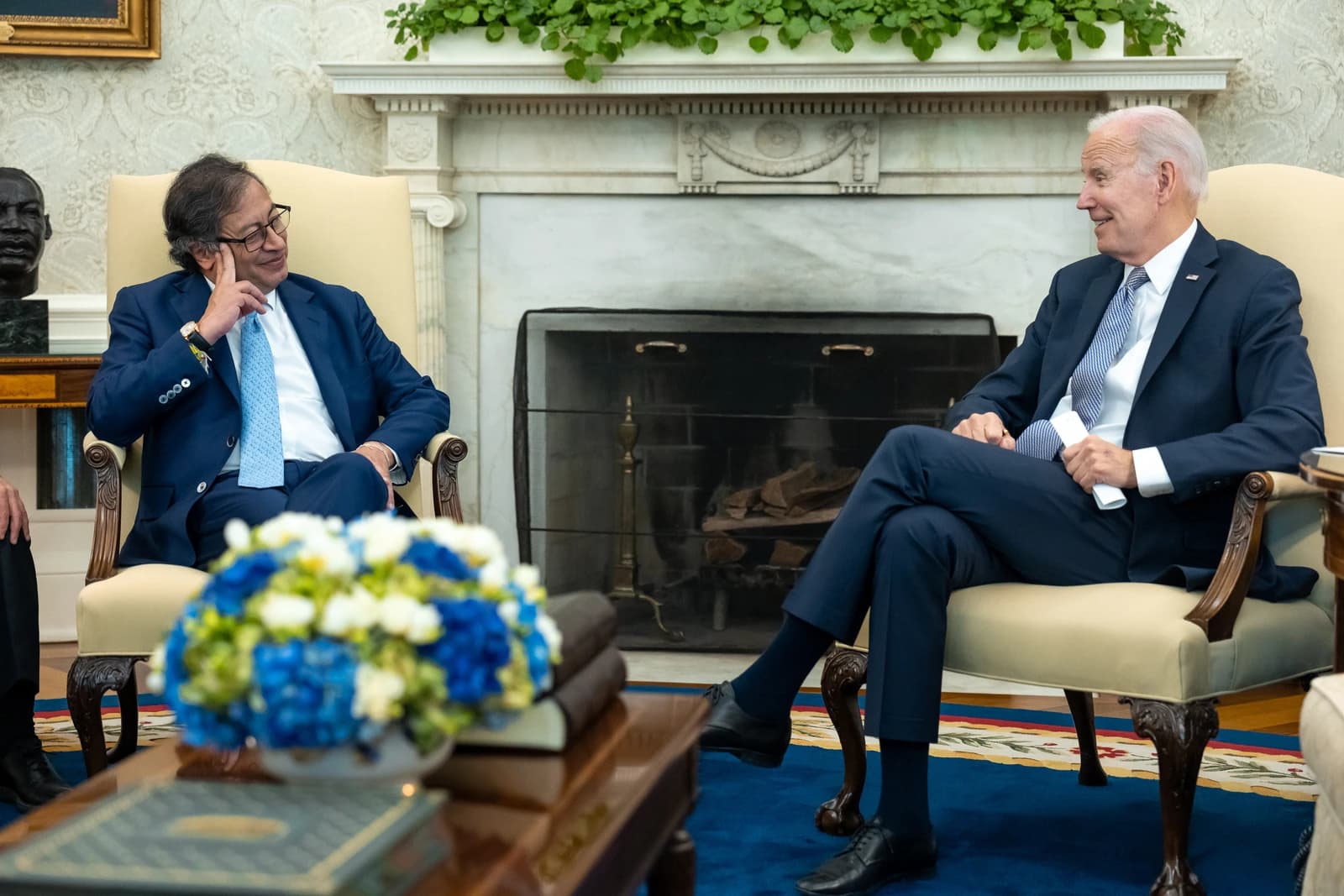
The biggest geopolitical risk for Peru, Chile and Colombia is no longer just commodity cycles or domestic politics — it is pressure from Washington itself, and that could force investors to rethink how exposed the region is to U.S.-China rivalry.
That was the message from economist Ricardo Hausmann, a former chief economist at the Inter-American Development Bank, who said the three countries need to diversify their alliances rather than rely too heavily on the United States. For investors, the warning matters because these economies sit at the intersection of trade, infrastructure, finance and technology, where a sharper U.S. foreign policy can quickly spill into capital flows, project financing and market sentiment.
Hausmann’s remarks come at a sensitive moment for Latin America. The U.S. has been openly challenging Chinese-linked projects in Peru, including the Chancay port, which he called strategically important not only for Peru but for the wider region. That matters economically because infrastructure like Chancay is tied to trade efficiency, logistics costs and long-term export competitiveness. If geopolitical friction slows or complicates such projects, the impact is bigger than diplomacy — it can affect growth, shipping routes and the valuation of regional assets.
The broader issue is that Peru, Chile and Colombia are trying to keep access to the world’s two biggest external partners at once. China is a key buyer of copper, minerals and other raw materials, while the U.S. remains a crucial source of capital, technology, banking access and political influence. When Washington tightens its stance on Chinese involvement, regional governments can find themselves caught in the middle, especially if strategic assets, data systems or procurement contracts become politicized.
That is why Hausmann urged Latin American countries to deepen ties among themselves, pointing to nuam — the holding company that combines the stock markets of Peru, Chile and Colombia — as an example of regional integration. For investors, stronger local alliances can mean deeper markets, better liquidity and more resilient financing channels if global conditions worsen.
The stakes extend beyond ports and trade. Hausmann also flagged sovereignty in areas such as artificial intelligence and payments, warning that countries can become vulnerable if they depend too heavily on U.S.-based systems such as Visa and Mastercard. That is a real investor issue because payment rails, cloud services and digital infrastructure are now part of economic plumbing. Any disruption or policy squeeze can affect consumer spending, cross-border commerce and the ability of businesses to operate normally.
The market backdrop reinforces the caution. The broad emerging-markets ETF EEM has climbed sharply this year, while Brazil’s EWZ and China’s FXI have both shown that geopolitics and sentiment can move prices quickly. EWZ ended the latest session at 38.19, above its 50-day and 200-day moving averages, but with a high RSI reading that suggests the rally has become stretched. FXI, by contrast, was weaker at 34.49 and below its longer-term average, showing that China exposure still carries its own risks. In other words, investors are already paying for growth, but they are not being paid to ignore political risk.
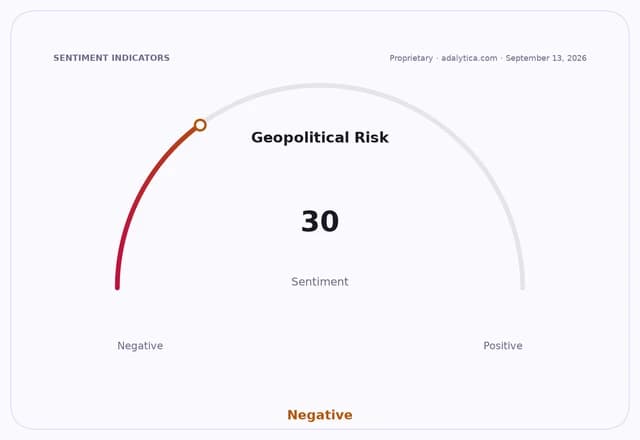
Adalytica’s Global Stability Sentiment gauge also points to rising unease, with the reading at 30, labeled “Fear,” and down 42% over 30 days. That is not a tradable forecast, but it does capture the kind of nervous backdrop in which geopolitical headlines can have an outsized effect on capital allocation.
For long-term investors, the lesson is not to avoid Latin America, but to understand where the real vulnerabilities are. Countries that diversify trade partners, strengthen institutions and keep strategic infrastructure transparent are better positioned to attract capital over a full cycle. Those that get pulled too deeply into great-power rivalry may face higher financing costs and more volatile returns.
The opportunity is still there — especially in trade, ports, mining, financial infrastructure and regional integration — but so is the risk. Investors should keep Peru, Chile and Colombia on the watchlist, and favor businesses and funds with diversified exposure rather than a single-country bet.
| Entity | Gains | Losses |
|---|---|---|
| Peru, Chile and Colombia | ▲More diversified alliances | ▼Dependence on U.S. policy |
| China-linked projects | ▲Strategic market access | ▼U.S. scrutiny |
| Regional integration via nuam | ▲Deeper capital markets | ▼Fragmented liquidity |
| Investors in diversified LatAm exposure | ▲Better long-term resilience | ▼Single-country political risk |