Peru New Party Opposes Minimum Wage Hike Plan
Peru’s New Party is pushing back against the government’s plan to lift the minimum wage in stages by at least 10%, arguing that the move could fan inflation just as price pressures are still working through the economy.
That matters because wage policy is never just a labor issue in an inflationary environment. When lower pay floors rise faster than broader wages, businesses often pass part of the cost into prices, trim hiring, or squeeze margins. If the increase is phased in too aggressively, it can make it harder for Peru to bring inflation fully under control and could leave policymakers with a tougher balancing act between household incomes and price stability.
The concern is especially relevant for investors in consumer-facing sectors. Restaurants, retailers and service companies are typically among the first to feel the pinch from higher wage bills, and they do not always have enough pricing power to offset the hit. That is why even a politically popular pay raise can become an earnings issue: investors have to ask who absorbs the cost, the employer or the customer.
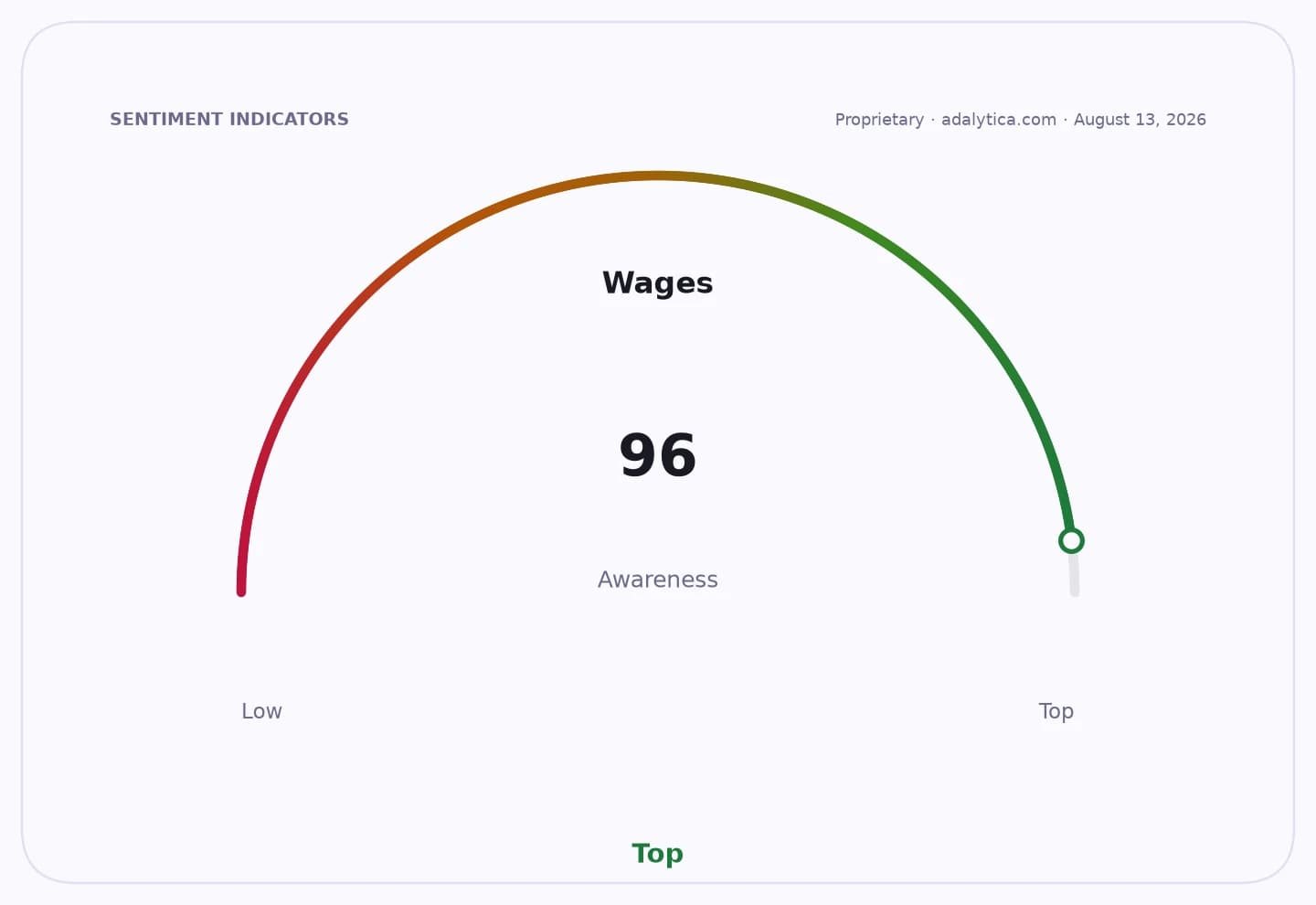
The inflation backdrop helps explain the caution. Consumer prices in Peru have not returned to an easy pre-shock normal, and core inflation remains the more important metric for judging whether wage gains are feeding a broader price spiral. Adalytica’s CPI sentiment gauge shows inflation optimism has risen sharply, with the snapshot now in “Greed” territory and awareness at “Extreme Greed,” while the wage inflation gauge has cooled to a neutral reading. In plain English, markets are watching prices closely, but the pressure from wages is not yet overwhelming.
That combination gives the New Party room to argue that the government is moving too fast. It is also a reminder that wage hikes can help workers only if they do not end up eroded by higher living costs. A staged approach may be less politically dramatic, but it is often better economics: it gives employers time to adjust, reduces the risk of a sudden jump in unit labor costs and lowers the odds of a new inflation flare-up.
For long-term investors, the key question is whether Peru can deliver higher incomes without reigniting the very inflation that hurts workers most. If authorities get the pacing right, the economy can support household spending without damaging corporate profitability. If they do not, the winners will be the few firms with real pricing power, while the losers will be everyone else.
| Entity | Gains | Losses |
|---|---|---|
| Workers | ▲Higher take-home pay | ▼If inflation erodes the raise |
| Government | ▲Political support | ▼Credibility if prices rise |
| Employers | ▲Predictable phased changes | ▼Higher labor costs |
| Consumers | ▲Better wage floor | ▼Higher prices on essentials |