Pew report backs looser mortgage lending rules

A new Pew Charitable Trusts report says post-2008 mortgage rules have swung too far toward caution, leaving would-be homebuyers shut out even as housing affordability remains stretched and lenders, regulators and investors debate how much credit risk the system should tolerate.
That matters because mortgages still finance nearly nine in 10 U.S. home loans through federal backing, so even small changes in underwriting standards can shift demand, home prices and the earnings outlook for lenders, builders and housing-finance firms. Pew is essentially arguing that the market has solved the last crisis by creating a new one: too few qualified borrowers.
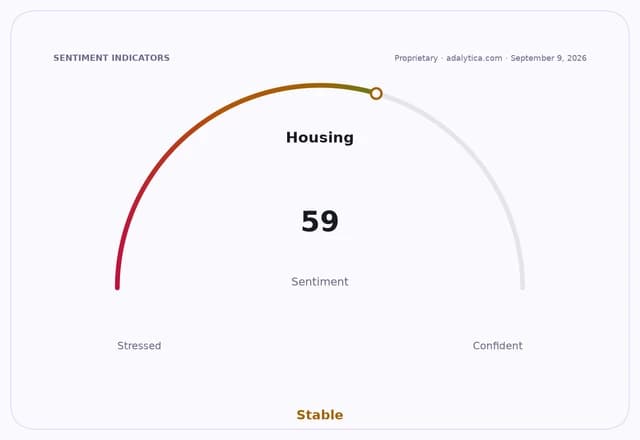
The report says the average credit score of successful mortgage borrowers climbed from 695 in 2006 to 742 in 2024, 29 points above the U.S. average. Loans to borrowers with scores in the 600s have fallen sharply. Pew argues that tighter standards are disproportionately excluding younger, rural and minority households, noting that more than 35% of Black borrowers had scores in the 600s from 2013 to 2023, versus under 20% of borrowers overall.
The policy target is clear: Fannie Mae and Freddie Mac, whose guarantees influence most U.S. mortgages, should loosen requirements enough to broaden access without reopening the door to the no-documentation, high-risk lending that fueled the 2008 crash. That is the economic fault line here. A housing market starved of credit cannot clear at current prices, but a housing market flooded with weak loans can destroy household wealth and force the public backstopping the system to absorb losses.
For investors, the immediate read-through is mixed but important. More lenient underwriting could lift mortgage originations, refinance activity and home sales, supporting lenders, title insurers and homebuilders. But it also raises the risk that lower-credit borrowers are added late in a cycle when mortgage rates remain elevated around 4.8% on the 10-year Treasury and affordability is still poor. That is exactly the kind of tradeoff the market hates: more volume today, potentially more credit losses tomorrow.
The homebuilders are already telling that story in price action. Toll Brothers and D.R. Horton have both been volatile, with Toll recently slipping below its 50-day and 200-day moving averages and D.R. Horton losing momentum after a summer rebound. Lennar has also faded sharply from earlier highs. The sector is behaving as if the market still wants lower rates and easier credit, but does not trust the demand recovery yet.
My view is that this is where the market is underestimating the next phase of the housing trade. If policymakers decide that the pendulum has swung too far toward exclusion, the biggest beneficiaries are not the riskiest lenders, but the toll collectors: the builders, servicers, mortgage insurers and financing platforms that can expand volume without blowing up credit quality. The winners are firms that can underwrite more borrowers while keeping documentation, verification and risk controls intact.
The losers are obvious too. Existing homeowners facing a slower affordability rebound, and policymakers who would have to explain another credit cycle gone wrong if standards loosen too quickly. Investors should watch Fannie Mae, Freddie Mac and the publicly traded housing complex for any sign that Washington is prepared to prioritize access over maximum safety. If that happens, mortgage availability could become a meaningful tailwind for homebuilding and housing-finance stocks over the next cycle, but only for companies that can scale responsibly.
| Entity | Gains | Losses |
|---|---|---|
| Homebuilders | ▲More qualified buyers | ▼Pricing discipline |
| Mortgage lenders | ▲Higher origination volume | ▼Tighter credit spreads |
| Fannie Mae/Freddie Mac | ▲Broader market access | ▼Greater credit risk |
| Prudent borrowers | ▲Easier mortgage access | ▼Higher competition for homes |