Poland, Finland plan military satellite system
Poland and Finland’s plan to develop their own military satellite system underscores how quickly Europe is moving to secure battlefield intelligence and communications in orbit, a shift that matters both for national security and for the continent’s defense-industrial order.
The initiative reflects a broader lesson from the war in Ukraine: space assets have become frontline military infrastructure, not optional support systems. Countries that once relied on allies or commercial providers for imagery, communications and targeting data are now investing in sovereign capability to reduce exposure to disruption, jamming and political dependence. For Poland and Finland, both on NATO’s front line with Russia, the economic logic is clear: defense spending is tilting toward higher-value technology, and space systems can anchor a more durable domestic industrial base.
The move also reinforces a market already being repriced for sustained European defense demand. U.S. contractors with space, sensors and command-and-control franchises stand to benefit from a faster procurement cycle as allied governments try to close capability gaps quickly, while European suppliers of satellites, launch services and ground infrastructure may see fresh orders if governments prefer local content. That is one reason the shares of Lockheed Martin and Northrop Grumman have remained resilient even after recent pullbacks: investors are treating space and missile-defense exposure as a strategic growth segment rather than a cyclical one. Lockheed shares were last around $529.38, down from highs above $660 earlier this year, while Northrop was at $527.39, also well below its recent peak, leaving both stocks sensitive to evidence of new contract wins.
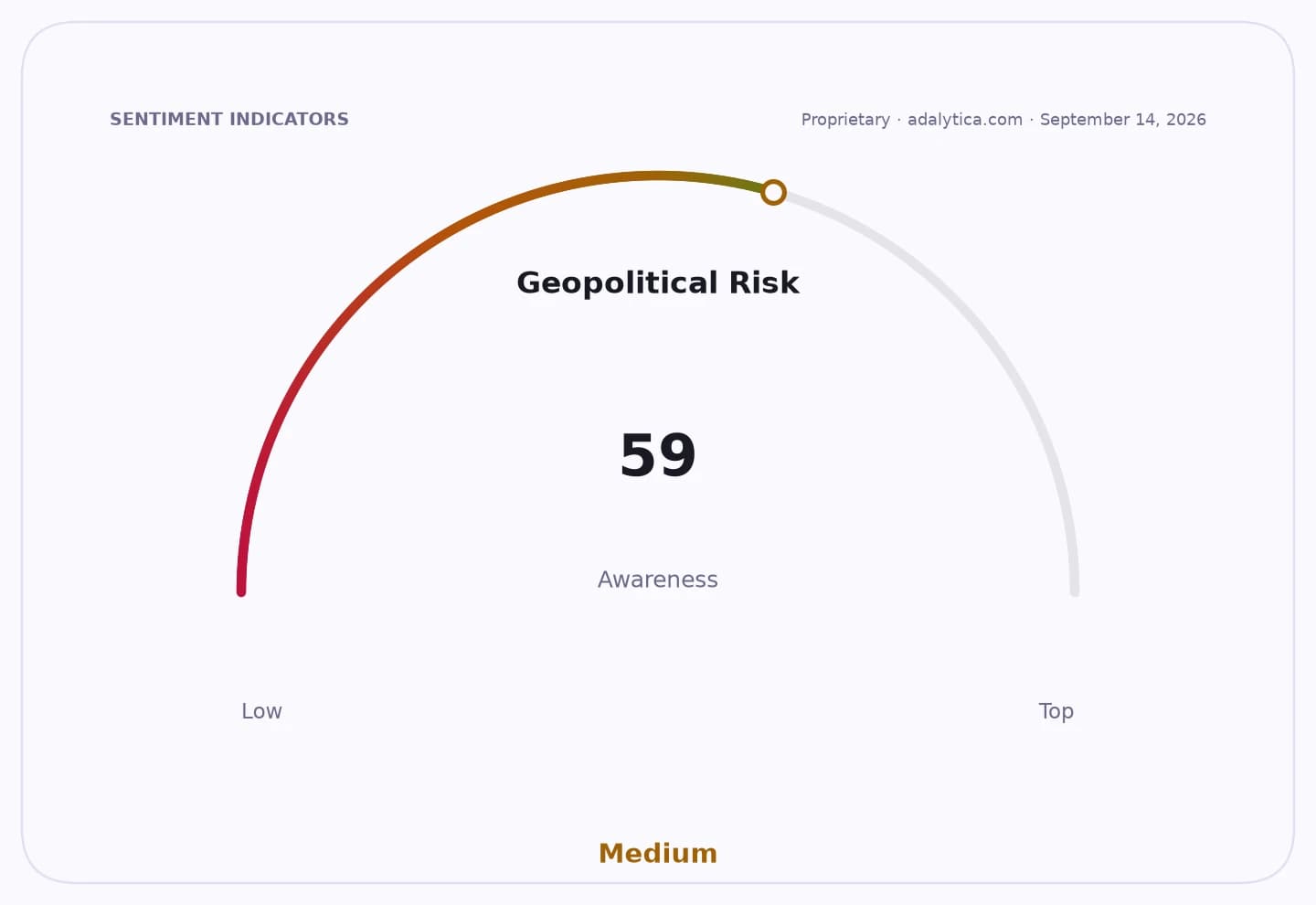
The timing matters as well. Adalytica’s Global Stability Sentiment gauge is at 30, firmly in “Fear” territory, with the 30-day reading down 42 points, a sign that geopolitical risk is still elevated even as markets have adjusted to a higher baseline of defense spending. That backdrop strengthens the investment case for programs tied to surveillance, secure communications and resilient infrastructure, especially as militaries seek systems that can operate when GPS and traditional networks are degraded.
For investors, the key question is not whether Europe will spend more on defense — it will — but where the margin flows. Sovereign satellite programs tend to favor firms that can combine classified payloads, secure software, antennas, data fusion and launch integration. The bull case is that Poland and Finland’s program becomes part of a wider Nordic-Baltic rearmament cycle, creating multi-year orders and service revenue. The bear case is that procurement remains fragmented, local champions capture more of the work than U.S. primes, and budget pressure slows the pace of delivery.
Either way, the story marks another step in the militarization of space and the reallocation of European defense budgets toward systems that can survive contested warfare. The next catalysts will be contract structure, industrial partners and whether the program expands beyond satellite procurement into a wider sovereign space architecture.
| Entity | Gains | Losses |
|---|---|---|
| Poland and Finland | ▲Sovereign surveillance and comms | ▼Reliance on allies |
| NATO defense suppliers | ▲New satellite contracts | ▼Slower legacy spending |
| European space vendors | ▲Local procurement opportunities | ▼Foreign-only sourcing |
| Adversaries/jammers | ▲Less targetable networks | ▼Reduced intelligence edge |