Poland Robot Protest Presses EU AI Regulation
A small crowd of robots staged a mock strike outside Poland’s digital ministry in Warsaw, turning growing anxiety over AI-driven job losses into a visible political message: regulate faster or risk displacing human workers.
The demonstration, organized by the Polish group Democratism, came as Europe already wrestles with the AI Act and its effort to set guardrails around the technology. The protest’s slogans — “Protect jobs” and “Don’t wait, regulate” — underline a broader labor-market debate that is becoming harder for policymakers to ignore as automation spreads from software into manufacturing, logistics and services.
For investors, the significance is not the stunt itself but the direction of policy risk. Faster regulation can slow deployment, raise compliance costs and reshape how quickly companies monetize AI, especially in sectors where headcount reduction is part of the investment case. It also highlights a political counterweight to the market’s enthusiasm for artificial intelligence, which has powered massive capital spending plans and valuations across the technology sector.
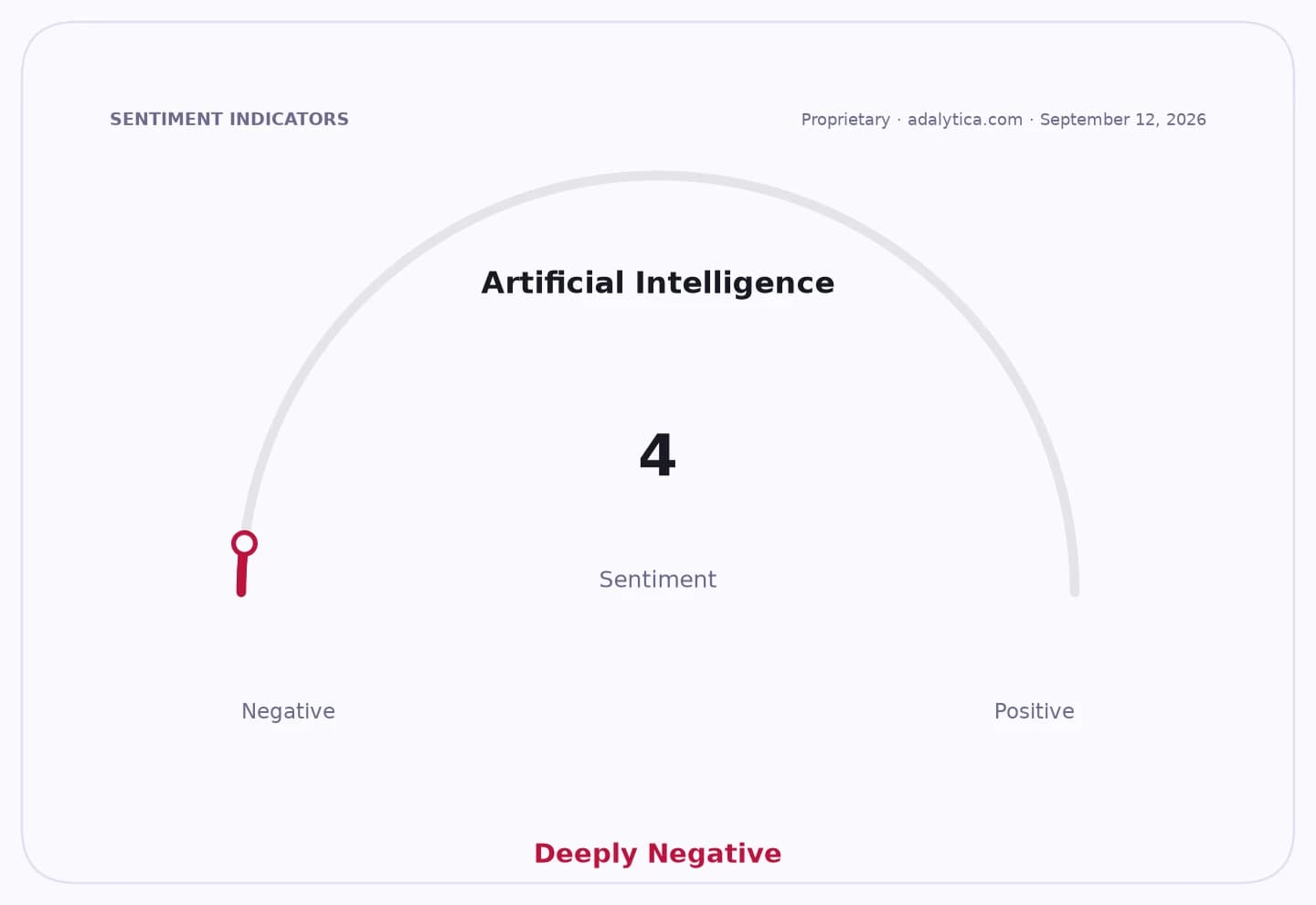
The issue lands as sentiment around AI remains split. Adalytica’s AI snapshot shows extreme fear on sentiment even as awareness remains elevated, suggesting the labor and regulatory debate is increasingly part of the market narrative. At the same time, NVIDIA and Microsoft remain central beneficiaries of AI investment, with both stocks still trading well above their 200-day moving averages despite recent pullbacks.
That makes the Warsaw protest another reminder that the AI boom is colliding with a labor-policy conversation that could influence everything from product approvals to enterprise adoption. If the EU and national governments tighten rules further, the biggest winners may be firms able to absorb compliance costs, while smaller developers and companies betting on rapid automation could face a slower rollout.
| Entity | Gains | Losses |
|---|---|---|
| EU regulators | ▲More leverage over AI rollout | ▼Pressure to balance jobs vs innovation |
| Human workers | ▲Stronger job protections | ▼Faster automation if rules lag |
| Large AI firms | ▲Clearer rules over time | ▼Higher compliance costs |
| Small AI developers | ▲Public attention to labor concerns | ▼More regulatory burden |