Port of Colombo Gets U.S. Funding for Digitization
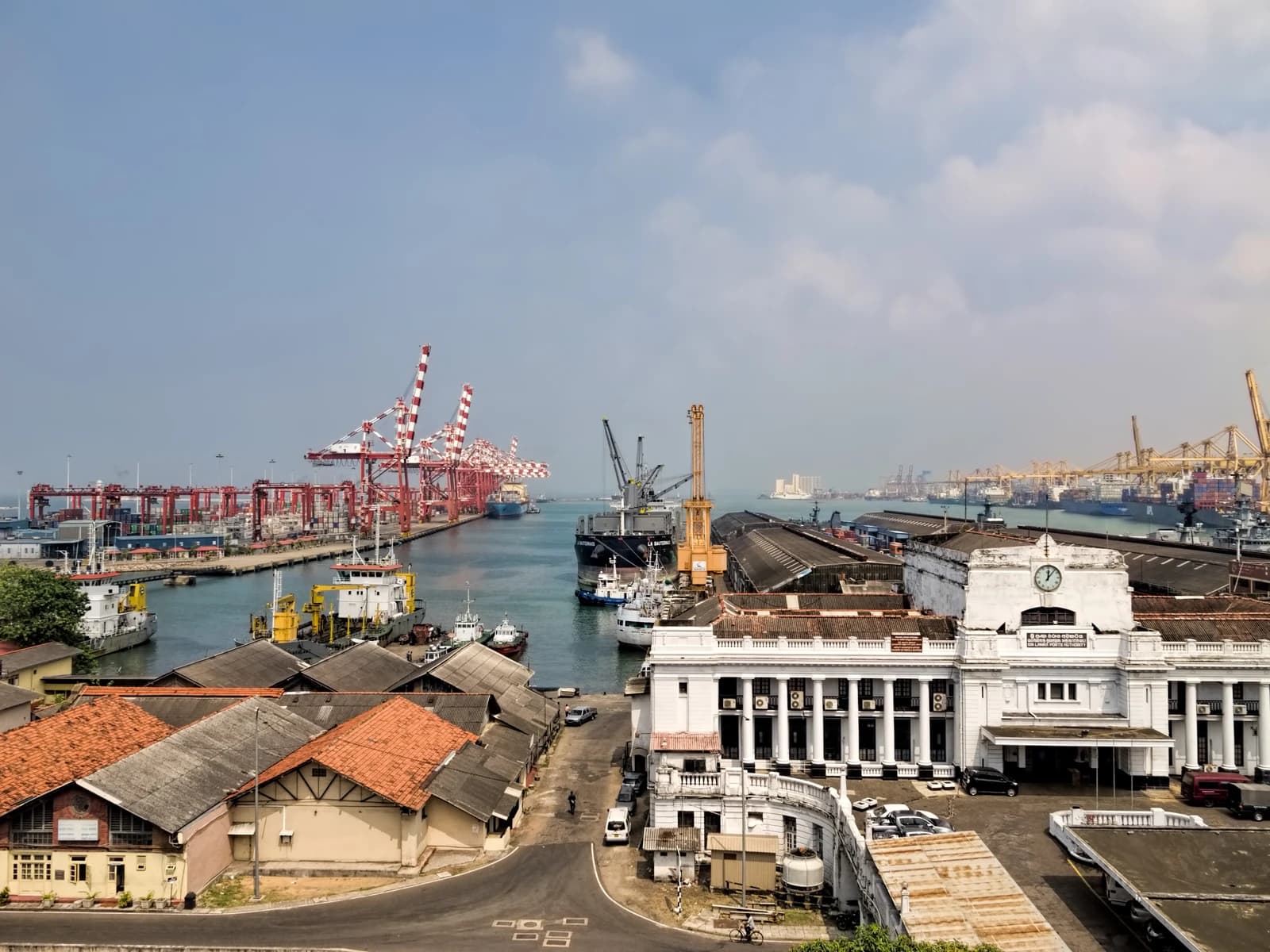
The United States has cleared a major hurdle toward providing $15 million in financing for digital infrastructure at the Port of Colombo, a move that could speed vessel handling, reduce turnaround times and strengthen one of South Asia’s most strategic transshipment hubs.
Laura DiBella, chair of the US Federal Maritime Commission, said the State Department has approved the funding, with formal announcement expected after congressional approval in the coming weeks. For Sri Lanka, the support is more than a technical upgrade: it is a signal that Washington sees the port as commercially and geopolitically important at a time when maritime routes are under pressure and regional competition for cargo is intensifying.
The funding is aimed at accelerating port digitization and improving operational efficiency, which matters directly to trade costs. Faster processing at the Port of Colombo would lower delays for shipping lines, reduce congestion and make the port more attractive relative to rival hubs in the Indian Ocean. That can translate into higher throughput, better revenue capture and stronger downstream activity across logistics, warehousing and related services.
The announcement also fits into a broader effort by Sri Lanka to modernize its maritime sector. Port and aviation minister Anura Karunathilaka said the government is seeking international support for further development, while also moving to strengthen the Merchant Shipping Secretariat into a more powerful authority. That suggests the digital funding is being paired with regulatory and institutional reform, which investors will read as a bid to improve governance and execution rather than rely on ad hoc upgrades.
For shipping operators and cargo owners, the key economic issue is time. Ports that can cut dwell times and improve predictability tend to win business when global supply chains are looking for resilience as well as cost efficiency. Colombo already serves traffic linked not only to Sri Lanka but also to US-related cargo flows, making any improvement in processing systems potentially valuable beyond the domestic economy.
There are still execution and financing risks. The US assistance has not yet received congressional clearance, and Colombo’s wider expansion needs, including work tied to the second west terminal and breakwater development, will require additional funding and international backing. That means the $15 million package is best viewed as an enabling step rather than a full solution.
Even so, the deal matters because it reinforces Colombo’s position in a competitive port market where efficiency, security and digital visibility are becoming as important as berth capacity. If the upgrade proceeds as planned, the winners are likely to be the port authority, shipping lines and exporters using faster services; the losers are rival regional ports that depend on operational friction elsewhere to retain cargo.
| Entity | Gains | Losses |
|---|---|---|
| Port of Colombo | ▲Faster operations, stronger competitiveness | ▼ |
| Sri Lankan exporters and importers | ▲Lower delays, better logistics efficiency | ▼ |
| Shipping lines | ▲Shorter turnaround times | ▼Congestion-driven margins |
| Rival Indian Ocean ports | ▲ | ▼Potential cargo diversion |