Pound Outlook Weakens as Dollar Demand Stays Firm

The pound’s next move may be dictated less by the Bank of England than by a resurgent dollar, and that is a problem for sterling bulls.
Crédit Agricole now sees GBP/USD sliding to 1.31 by December, even if the BoE delivers a widely expected November rate hike, because it believes US economic outperformance and steady capital inflows will keep the dollar bid for the next three to six months. That matters because the market is still treating higher UK rates as an automatic support for sterling, when in reality the currency is being pulled by a stronger global macro force: dollar demand.

Sterling ended Friday around 1.3395, after rising 0.29% on the day but losing almost 1% over the week. That leaves Crédit Agricole’s year-end target roughly 2.2% below the latest close, underscoring how little room the pound has to absorb another round of policy hawkishness without broader support from growth and risk appetite.
The investment case is simple: if US data stay firmer than Britain’s and capital keeps flowing into dollar assets, the pound can weaken even with higher UK rates. Crédit Agricole says persistent UK inflation combined with weak growth could also erode confidence in Britain’s fiscal and economic outlook, turning rate support into a short-lived reprieve rather than a durable trend. Goldman Sachs and Citi both lean toward a November BoE hike, but even that consensus call does not change the bigger picture if the dollar remains the market’s preferred safe and yield play.
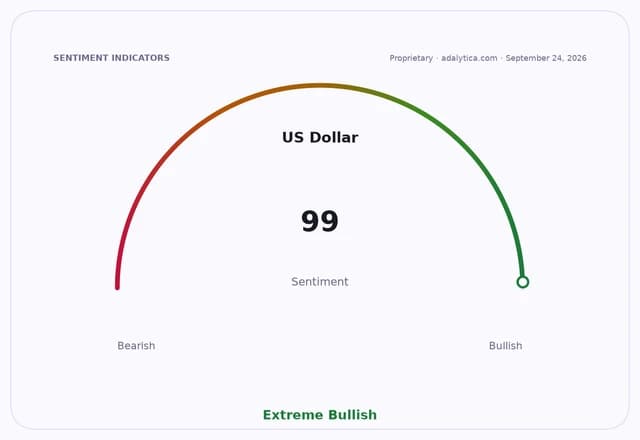
The central bank itself has not given sterling a clean signal. The BoE’s 6-3 decision to hold Bank Rate at 3.75% left the tightening path uncertain, while changes to its bond-selling programme muddied the message further. Goldman sees a quarter-point move to 4% in November, while Citi says the outcome could hinge on energy prices and the Gulf conflict. In other words, the rate debate is real, but it is not the only variable — and it may not be the one that matters most for FX.
That is why the pound’s downside risks remain asymmetrical. FXB, the Invesco CurrencyShares British Pound Sterling Trust, has slipped to 127.36 from 129.68 in mid-July, with its 14-day RSI at 25.2, a sign the ETF is oversold by conventional technical measures even as the broader trend stays weak. An oversold reading does not make sterling cheap enough to rally on its own; it just tells investors the currency may need a catalyst stronger than another BoE hike to turn.
Crédit Agricole’s longer-dated view is more constructive, but only gradually. It sees GBP/USD at 1.32 in March, 1.34 in June and 1.37 in September 2027, reaching 1.39 by year-end as US growth cools and dollar support fades. The bank also notes that sterling already looks oversold and global investors are underinvested in UK assets, which leaves the door open to a recovery later — just not one driven by rate hikes alone.
For investors, that argues against chasing a sterling rebound on the back of November BoE speculation. The better trade may be to respect the dollar’s near-term dominance, stay cautious on UK FX exposure and wait for a clearer inflection in US growth before betting on a sustained pound recovery. When the dollar tide eventually turns, sterling can recover — but until then, higher UK rates may prove to be a secondary story.
| Entity | Gains | Losses |
|---|---|---|
| US dollar | ▲Near-term demand, yield support | ▼Later-cycle cooling risk |
| British pound | ▲Potential 2027 rebound if dollar fades | ▼Near-term downside from strong USD |
| BoE hawks | ▲A November hike narrative | ▼Influence if growth weakens |
| UK exporters | ▲More competitive currency | ▼Importers and foreign-currency borrowers |