Morgan Stanley is recommending investors short the pound ahead of Britain’s budget, betting that fiscal uncertainty and the market’s sensitivity to any sign of looser policy will weigh on sterling in the near term.
Pound short call before UK budget

The call matters because the pound has already drifted back toward the lower end of its recent range, leaving it vulnerable if the budget disappoints investors who have been looking for reassurance on borrowing and spending. With GBP/USD around 1.33, below its 50-day moving average of 1.35, the technical picture also points to weakening momentum rather than a stabilizing trend.
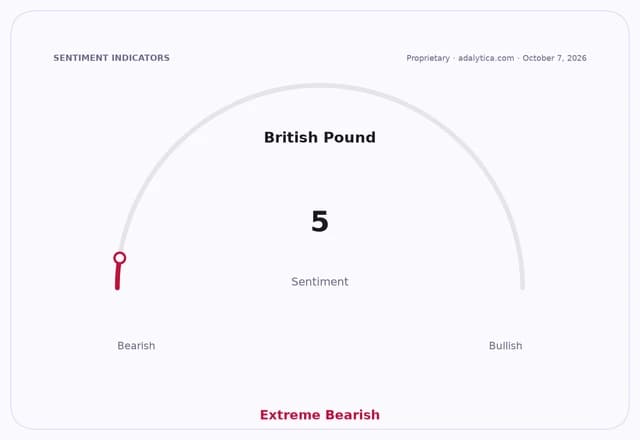
Sentiment IndicatorsⓘProprietary · adalytica.com · October 7, 2026
This is a snapshot — live sentiment, awareness and momentum for 130+ markets update continuously in the dashboard.Open AlphaPulse

For markets, the budget is not just a political event but a test of the government’s willingness to defend fiscal discipline at a time when growth remains fragile and debt dynamics remain under scrutiny. Any hint that spending pressures are rising faster than revenue, or that ministers are prepared to lean more heavily on borrowing, could revive selling in sterling and push up risk premia across UK assets.
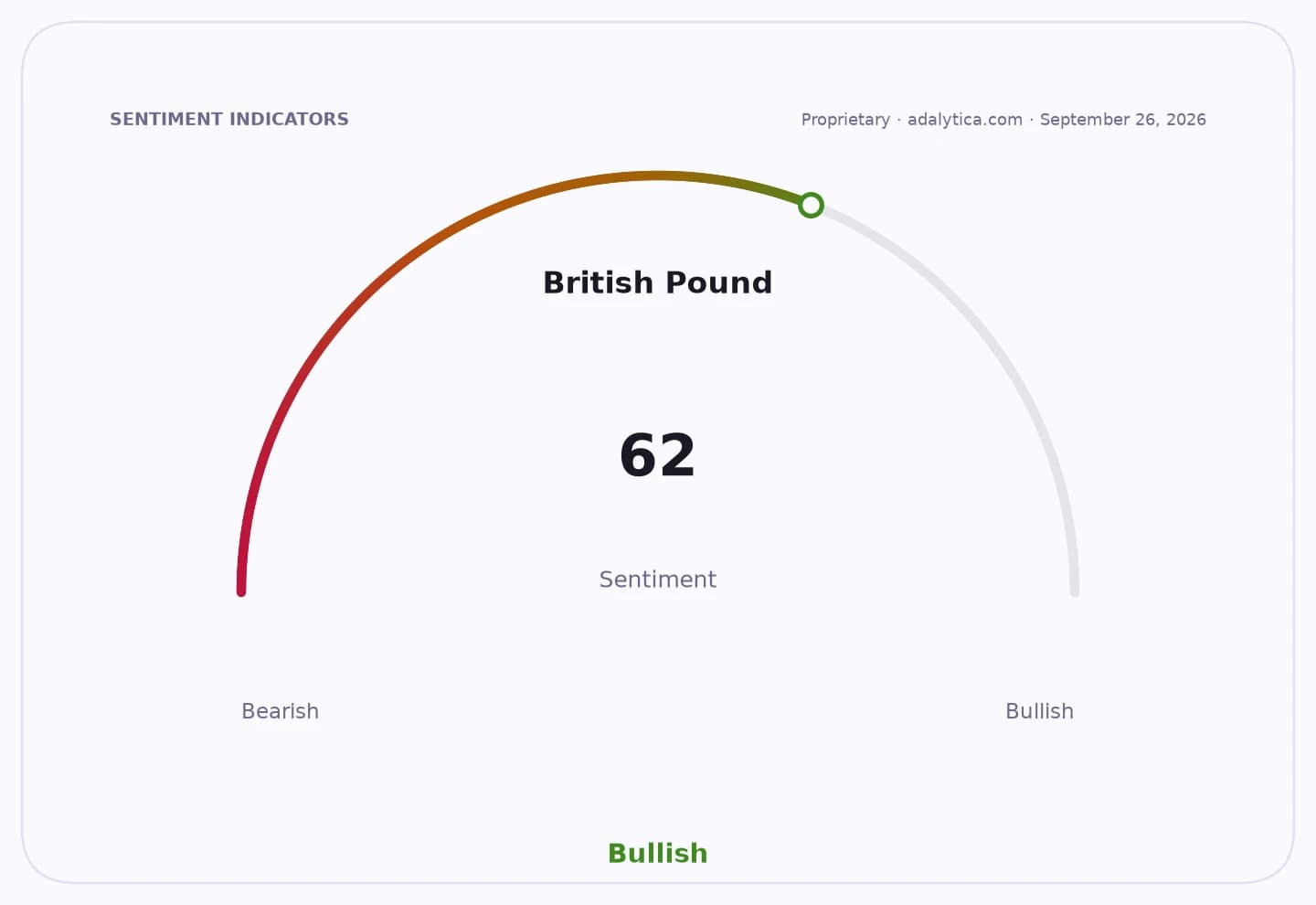
That helps explain why bearish positioning is building. Adalytica’s British pound trade signals show extreme fear, with sentiment at 5, while the broader FX volatility gauge is also flashing fear, suggesting traders are braced for policy-driven swings rather than calm price discovery. The pound’s 30-day change in those signals has deteriorated sharply, underscoring how quickly confidence has evaporated.
British Pound vs GBPUSD=Xadalytica.com
Explore this data interactively — full history, time series and cross-market comparisons.Open AlphaPulse
The macro backdrop is also less supportive than it was earlier in the year. GBP/USD is trading below its 200-day moving average of 1.34 and its MACD remains negative, while RSI readings in the high 30s suggest the currency has room to weaken further without yet looking overstretched. By contrast, the pound-backed FXB exchange-traded fund has slipped to 127.11, also below its 50-day average, showing that dollar-based investors have not been immune to the same pressure.
The bear case is straightforward: a budget that leans even modestly toward higher borrowing could intensify concerns about the UK’s medium-term fiscal path, encourage investors to demand a cheaper pound, and keep the Bank of England facing a difficult mix of sticky inflation risk and soft growth. The bull case is that a credible budget, with clear spending restraint and no surprise giveaways, could force short sellers to cover and allow sterling to recover part of its recent losses.
For investors, the key question is whether the budget confirms the market’s worst fears or restores confidence in the government’s fiscal stance. If it does the former, the pound may struggle to regain traction; if it does the latter, the current short trade could unwind quickly.
| Entity | Gains | Losses |
|---|---|---|
| Short sellers | ▲Benefit from pound weakness | ▼Suffer if budget reassures markets |
| UK exporters | ▲Gain from weaker sterling | ▼Lose if currency rebounds |
| UK consumers | ▲Gain little directly | ▼Face pricier imports |
| UK gilt holders | ▲Gain if fiscal discipline holds | ▼Lose if borrowing worries rise |