Prime office leasing improves in central locations

Prime office space is getting absorbed again, and that matters because it suggests the worst of the post-pandemic vacancy shock may be giving way to a more selective recovery rather than a broad rebound.
The latest example is the full leasing of an 800 square metre space at Mästerhuset by Pembroke Kontor, a deal that fits a wider pattern of tenants locking in premium offices in central locations. That kind of demand is economically important because office leasing drives rental income, supports asset values and improves financing conditions for landlords whose balance sheets have been pressured by higher interest rates and weaker occupancy.
The broader leasing backdrop is improving as well. Industry commentary points to leasing activity hitting its strongest level in nearly eight years, helped by longer lease commitments and more financing for investment deals. For owners, that is a crucial shift: longer-duration leases can stabilise cash flows and make refinancing less punitive, especially when debt costs remain elevated.
The macro setting is also turning a little less hostile. The U.S. unemployment rate is forecast to edge down to 4.09% in August from 4.1% in July, while the 10-year Treasury yield is hovering around 4.65%, near a level that still keeps cap rates under pressure but no longer looks as disorderly as the peak rate shock. For office landlords, that combination does not create a boom, but it can help sentiment if tenants remain willing to commit and lenders become incrementally more comfortable.
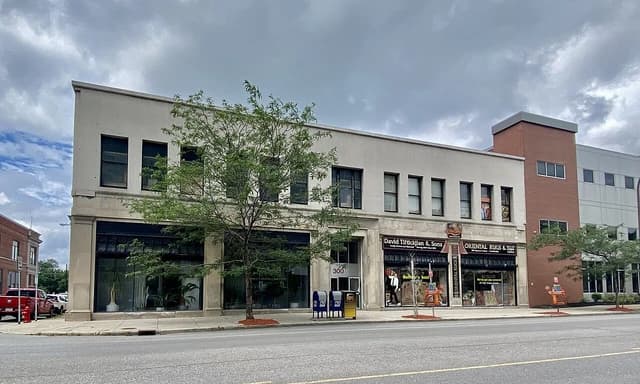
Investors have been pricing that tension unevenly. Mall and apartment-oriented names have shown resilience, but office REITs remain more sensitive to every leasing headline because balance-sheet leverage and asset-quality dispersion still dominate valuation. Shares of Manhattan-centric owners such as SL Green and diversified landlords such as Vornado have recovered from earlier weakness, yet their technical setups suggest caution: both stocks are above their 200-day moving averages, but recent momentum has softened, implying investors are still debating whether the rebound is durable or just a relief rally.
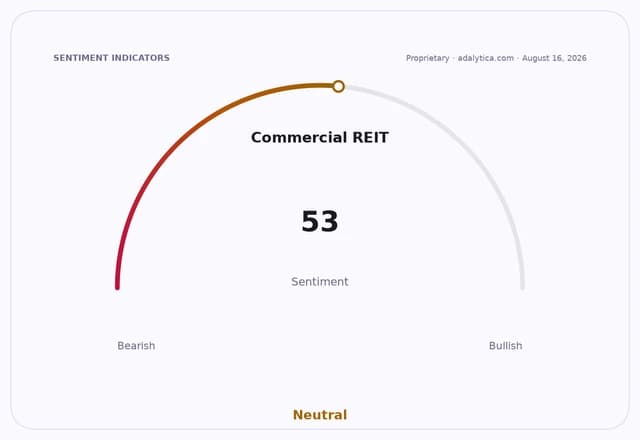
Adalytica’s Commercial REIT Sentiment gauge sits at neutral overall, while its housing-and-rent inflation reading shows extreme fear, underscoring a market that is still uncertain about rent growth even as attention around commercial property has improved. In that environment, a fully let premium office may matter less as a single transaction than as evidence that the market is bifurcating: top-tier space in strong locations is leasing, while weaker stock continues to struggle.
For landlords at prime assets, the implication is straightforward: occupancy and pricing power can keep improving if tenants keep prioritising quality and certainty. For investors, the key question is whether those gains can spread beyond trophy buildings into the broader office market, where refinancing risk, tenant downsizing and still-elevated borrowing costs remain the main bear case.
| Entity | Gains | Losses |
|---|---|---|
| Prime office landlords | ▲Higher occupancy, stronger rents | ▼ |
| Tenants in premium locations | ▲Better space certainty | ▼Smaller firms facing higher costs |
| SL Green, Vornado and peers | ▲Evidence of leasing recovery | ▼Office assets with weaker demand |
| Lenders and bondholders | ▲Better cash-flow visibility | ▼Borrowers needing refinancing |