Private Debt Faces Higher Refinancing Risk
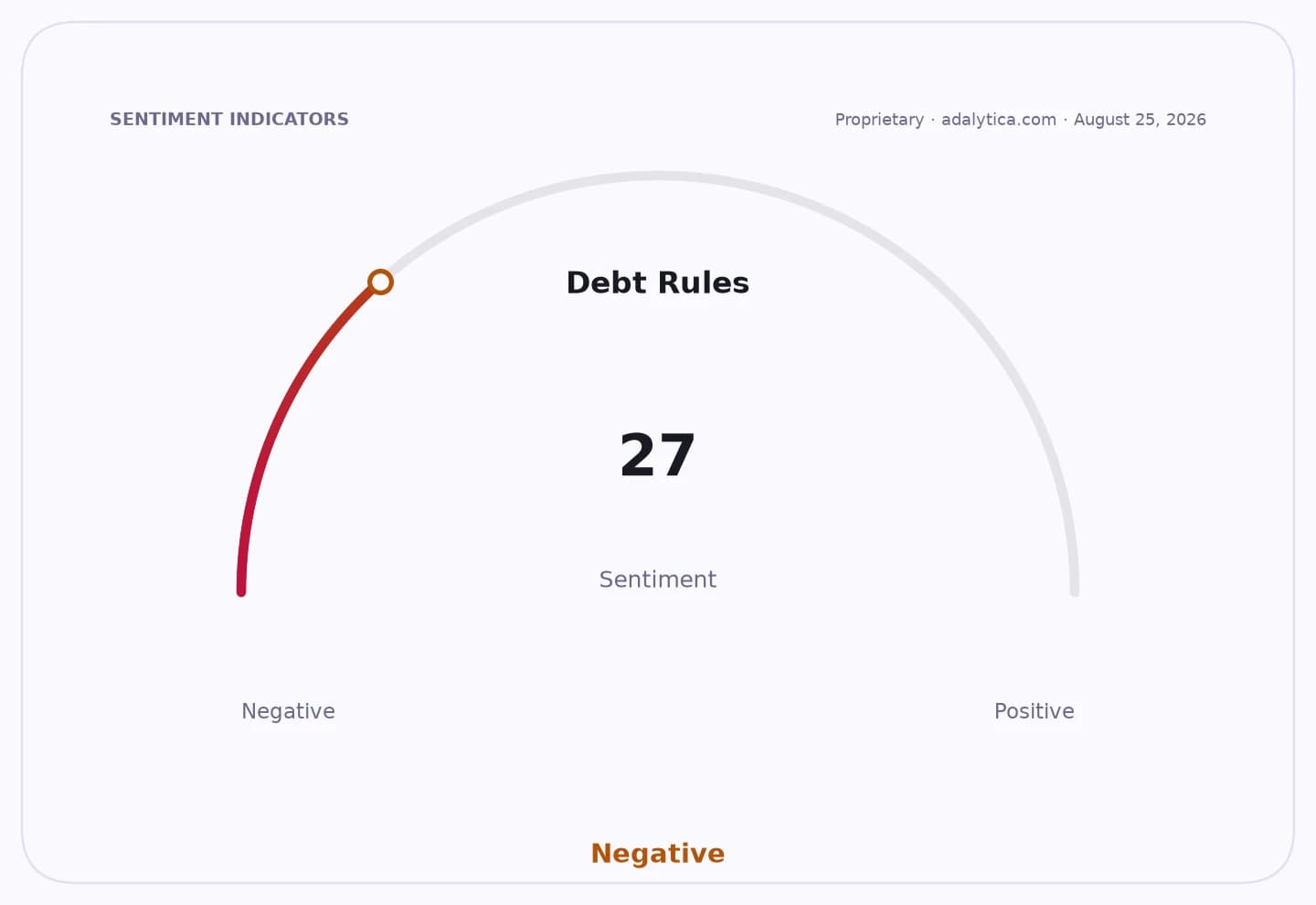
The private debt market is entering a more demanding phase, and the investors most exposed are those betting that easy refinancing and benign credit conditions will last. With the Federal Reserve funds rate still at 3.63% and the U.S. unemployment rate hovering near 4.1%, the macro backdrop is no longer the free-money environment that helped private credit balloon into one of Wall Street’s fastest-growing asset classes.
That matters because private debt is built on leverage, floating rates and the assumption that borrowers can keep servicing elevated interest costs. When benchmark rates stay high, borrowers feel the squeeze first, and lenders eventually do too. The latest data show a labor market that is still intact but cooling, a setup that is generally supportive of consumer and corporate repayment capacity for now, yet not strong enough to erase the risk that underwriting assumptions from the zero-rate era are too optimistic.
For investors, the key signal is that credit markets are not offering much margin for error. The high-yield credit spread has narrowed to about 2.73 percentage points, which suggests complacency rather than panic. That can be a dangerous mix for private debt managers, because tight public-market spreads often tempt capital into lower-quality deals just as defaults begin to normalize. The market is effectively pricing in resilience even as the cost of capital remains meaningfully above the levels that fueled the last cycle of aggressive borrowing.
That tension is visible in financials tied to consumer credit. Capital One has recovered sharply from its earlier lows and now trades around $216, with the stock above both its 50-day and 200-day moving averages, while Synchrony Financial is back near $80, also reclaiming key trend lines. But the operating backdrop is still delicate. Capital One’s latest filing showed net charge-offs easing from a year earlier, yet the broader message from card lenders is not that credit stress has disappeared — it is that underwriting is being tested by a slower economy and expensive debt service. That is exactly the kind of environment that can expose weak private borrowers, especially in consumer-linked and lower-rated corporate credit.
The narrative is bigger than one sector. Private debt has become a financing valve for companies shut out of traditional bank lending or public bond markets, and that makes it both a beneficiary of tighter banking standards and a potential casualty of prolonged restraint. As long as policymakers keep rates above pre-pandemic norms, the industry can still collect attractive yields. But the next leg of returns will depend less on coupon income and more on loss control, borrower selection and the ability to refinance maturities without forcing restructurings.
I believe the market is still underestimating how much dispersion will matter in private credit from here. Managers with conservative underwriting, senior secured exposure and disciplined sector selection should keep outperforming, while funds chasing yield in weaker credits are the ones most likely to get hit when growth slows further. The opportunity is not to avoid private debt, but to own the parts of it that behave like toll roads in a high-rate world: senior claims, short duration and strong collateral coverage. That is where the asymmetric upside lies if spreads widen and defaults finally separate the winners from the pretenders.
| Entity | Gains | Losses |
|---|---|---|
| Senior private lenders | ▲Higher yields | ▼Refinancing risk |
| Weak private borrowers | ▲Easier access to capital | ▼Higher debt-service burden |
| Banks | ▲Reduced direct exposure | ▼Lost lending share |
| Investors in high-yield credit | ▲Carry income | ▼Spread compression risk |