Public Wage Increases Raise Inflation and Budget Risks
Raising wages without lifting production can erode purchasing power and strain public finances, according to economist Suleiman Al-Maghrabi, underscoring a familiar problem in economies where pay is rising faster than output and foreign-currency earnings.
Al-Maghrabi’s warning matters because wage increases by themselves do not create real income gains. If higher public-sector pay is financed without a corresponding rise in productivity, tax receipts or external revenue, the state can end up with a larger wage bill, more pressure on the budget and a weaker currency in real terms as prices adjust upward.
He pointed to the basic arithmetic of inflation: a salary increase from 1,000 dinars to 1,500 dinars does not automatically improve living standards if prices rise at the same time or the currency loses value. In that case, nominal gains can be absorbed by higher import costs and broader price inflation, leaving households no better off in real terms.
That argument lands in a broader macro backdrop where labor-market conditions are improving but not enough to justify unchecked wage growth. The unemployment rate is projected at 4.02% in September, down from 4.1% in August, suggesting a relatively tight labor market. But tighter labor conditions do not necessarily translate into stronger productivity, especially when the economy depends heavily on state spending and imported goods.
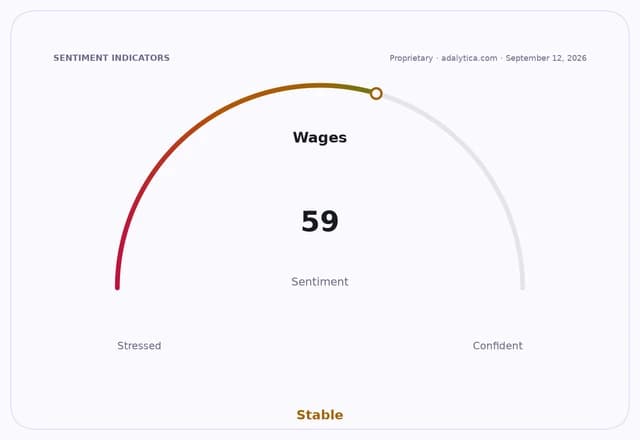
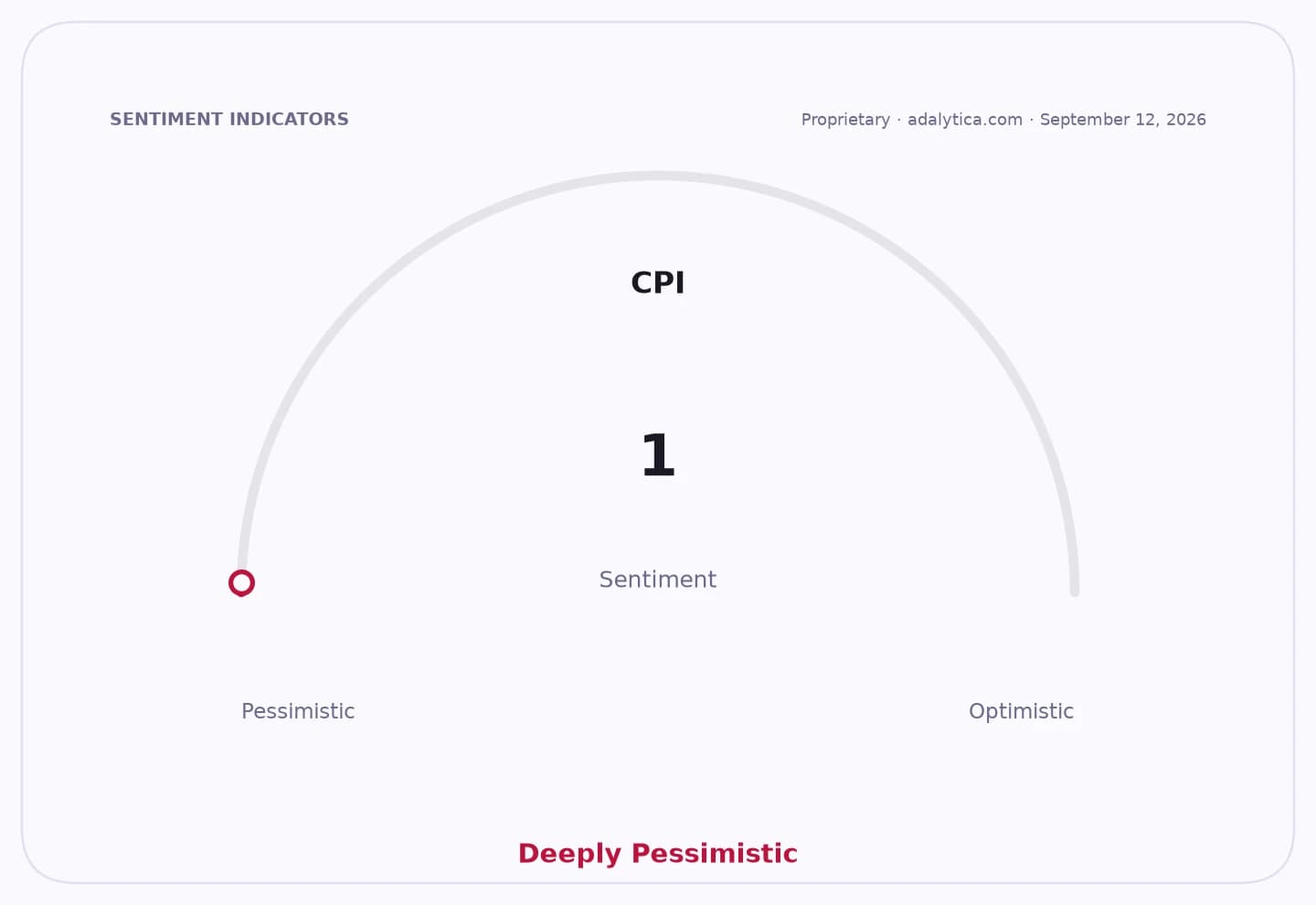
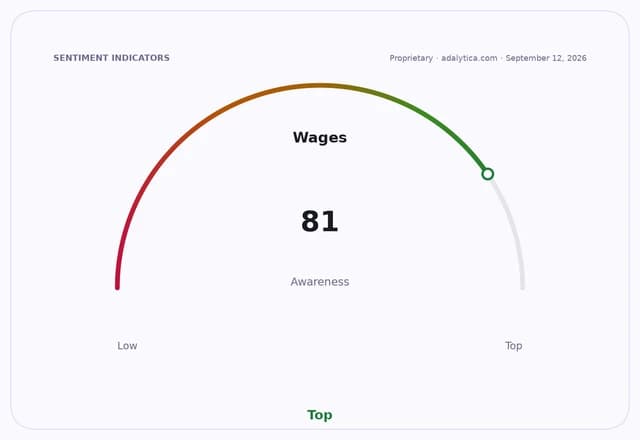
The risk is that wage policy becomes inflationary rather than supportive of demand. Adalytica’s wage inflation gauge shows sentiment at 59, in neutral territory, while awareness is elevated at 81, indicating the issue is drawing more attention. At the same time, the CPI sentiment reading sits at 1, or “Extreme Fear,” a sign that investors and consumers are highly sensitive to any policy mix that could worsen inflation or currency weakness.
The economist’s prescription is also telling. He said sustainable gains in living standards require diversification of income sources, more foreign-currency inflows, foreign investment and a stronger private sector — especially if those investments come with local hiring and training. That points to the core constraint: without more productive capacity and hard-currency earnings, wage increases largely redistribute existing income rather than expanding it.
For investors, the message is that wage policy is not just a social issue but a macro risk factor. Higher salaries can support consumption in the short term, but if they are not matched by productivity, they can widen budget deficits, force more monetization or debt issuance, and pressure the exchange rate. The bull case is that carefully targeted wage reform could ease household strain and support demand. The bear case is that broad pay increases in a low-output economy accelerate inflation and weaken real returns across local assets.
The key question now is whether policymakers pair any wage adjustment with measures that raise output, attract foreign exchange and expand private-sector employment. Without that, Al-Maghrabi’s warning suggests any pay rise may prove temporary in real terms and costly for the currency.
| Entity | Gains | Losses |
|---|---|---|
| Public workers | ▲Higher nominal pay | ▼Real wages if inflation rises |
| Households | ▲Short-term income relief | ▼Purchasing power if currency weakens |
| Government | ▲Social pressure relief | ▼Budget balance, fiscal space |
| Importers / local currency holders | ▲— | ▼Currency value, imported goods affordability |