A British couple’s accidental discovery of 260 gold coins under a kitchen floor has turned into an $852,380 windfall, underscoring how scarcity, provenance and collector demand can overpower even an initial valuation and drive prices far beyond metal content.
Rare Gold Coins Sell for $852,380 in North Yorkshire
The hoard, found during home renovations in Ellerby, North Yorkshire, is economically significant because it shows how the market for rare gold is not simply a proxy for bullion prices. In this case, age, condition, historical linkage and minting errors mattered more than the gold itself. The coins dated from 1610 to 1727 and were traced to the Fernley-Maister family, a wealthy Hull trading dynasty whose name gave the collection a provenance premium that helped push the auction result well above the initial $231,390 appraisal.
Sentiment Indicators
For investors, the sale is a reminder that the gold market has two distinct engines. One is the macro hedge against inflation, currency debasement and geopolitical stress, which has helped keep demand for bullion resilient. The other is the asset-quality premium in numismatics, where rarity and narrative can create outsized returns independent of spot prices. That second market is thin, global and highly discretionary, but when competition is broad enough, it can produce record results.
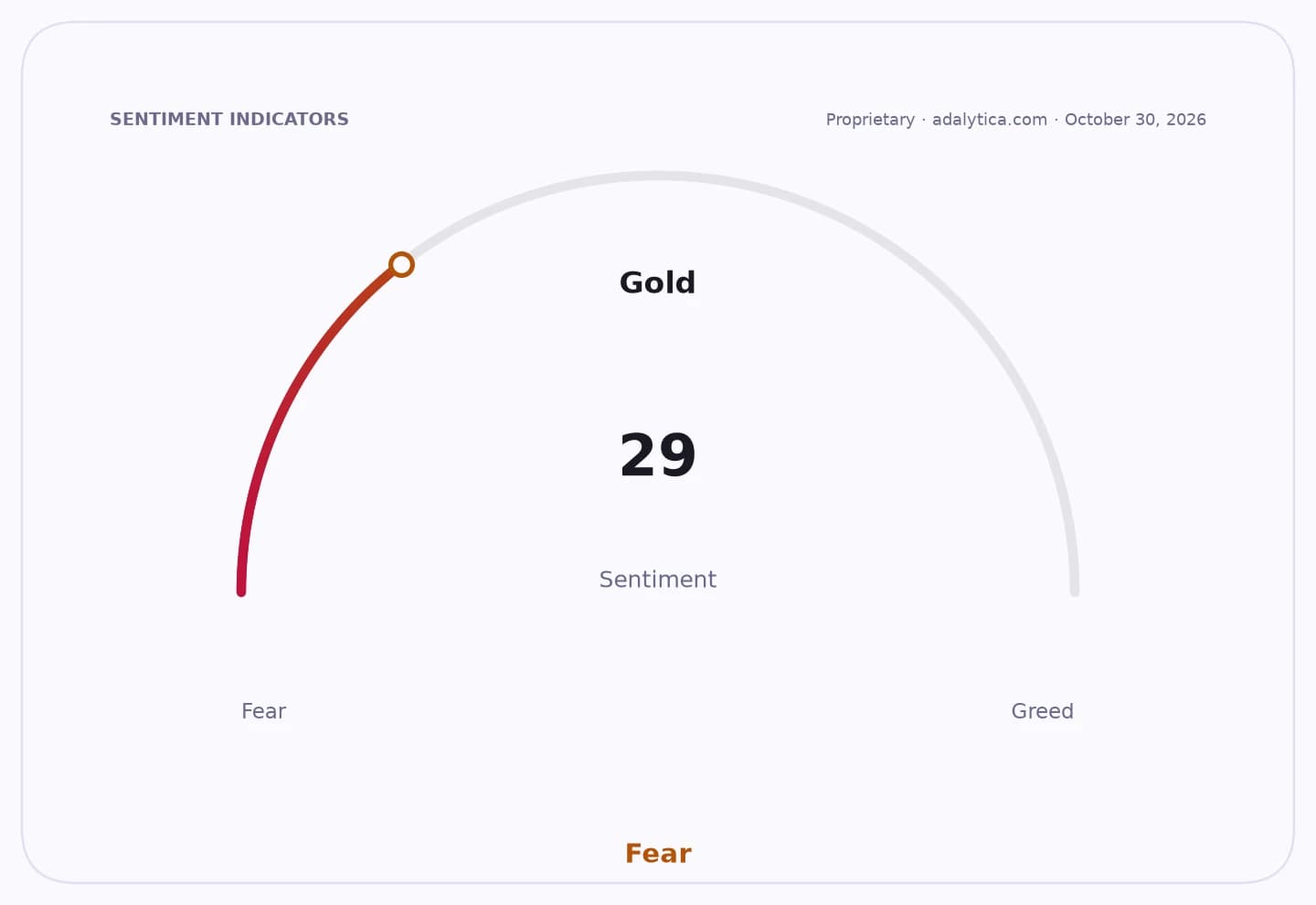
The auction also fits a broader backdrop of elevated interest in precious metals. Gold-linked funds such as GLD have been trading with strong underlying momentum, while the Adalytica Gold Fear & Greed Index shows sentiment at 81, or “Greed,” with awareness at 94, “Extreme Greed.” Conventional technical indicators for GLD show the fund back above its 50-day moving average, with RSI readings near neutral and momentum recovering after a sharp selloff earlier in the year. That combination suggests investors are still treating gold as a strategic hedge even as positioning has become more crowded.
The coin sale itself was unusual enough to capture global collector interest from the U.S., Europe, Australia, China and Japan. A Charles II guinea with a minting error — “CRAOLVS” instead of “CAROLVS” — and a rare Scottish coin added further appeal, showing how minor production anomalies can become major value drivers in the antiques and collectibles market.
For bullion investors, the lesson is not that hidden treasure is a repeatable strategy. It is that the gold market remains supported by both macro anxiety and a deeper cultural willingness to pay for hard assets with history attached. As long as that dual demand persists, rare coins, bars and ETFs will continue to attract buyers — though with very different risk and return profiles.
| Entity | Gains | Losses |
|---|---|---|
| Rare coin collectors | ▲Scarcity and provenance | ▼Higher auction prices |
| UK couple | ▲$852,380 windfall | ▼Missed earlier valuation upside |
| Gold bullion investors | ▲Safe-haven demand | ▼Crowded positioning risk |
| Auction house | ▲Record-setting sale | ▼Limited supply of comparable lots |