RBI warns Indian banks on AI failure accountability
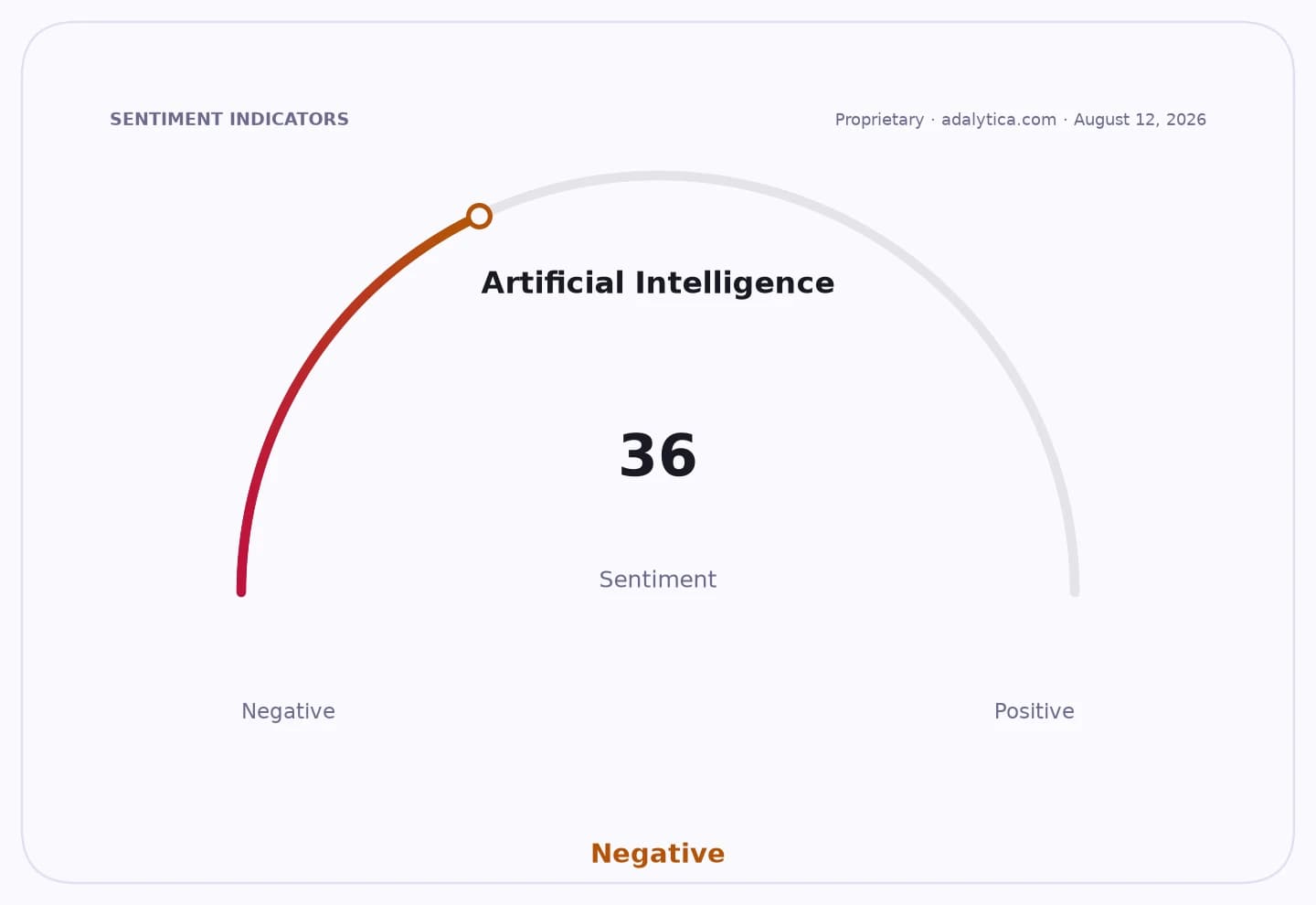
Indian lenders can no longer assume artificial intelligence-related failures will be treated as a technological glitch rather than a management lapse, after Reserve Bank of India Governor Sanjay Malhotra warned banks they would not be able to shrug off losses or misconduct as simply “AI’s fault.”
The warning matters because it shifts AI from a productivity story to a governance and liability issue. For banks, the commercial case for deploying machine learning, automated underwriting and customer-service tools is still compelling, but the costs of error are rising as regulators demand clearer accountability for fraud, model risk, mis-selling and operational breakdowns.
That is especially relevant as global lenders pour money into AI infrastructure and controls at the same time. JPMorgan, the largest US bank by assets, has seen its shares climb to about $362, above its 50-day and 200-day moving averages, while Bank of America and Wells Fargo have also rallied to $64 and $87.45 respectively, reflecting investor confidence in profitability and balance-sheet strength. But those shares are also trading near technically stretched levels, with JPMorgan’s RSI in the mid-60s and Bank of America’s close to 68, suggesting the market is already pricing in a good deal of optimism.
The RBI’s message underscores a broader point investors are watching: AI adoption may lift efficiency, but it will not reduce the burden of accountability. Banks still need human oversight, stronger audit trails and fraud detection systems to police increasingly sophisticated scams, including AI-generated text-message fraud and other impersonation attacks. In that environment, the real winners are lenders that can prove robust controls, not just fast deployment.
The timing is important because the sector has been leaning into AI as a cost and revenue lever. JPMorgan has been one of the most aggressive spenders in the area, and peers including Bank of America and Wells Fargo have emphasized responsible deployment rather than wholesale job cuts. That reduces the chance of a near-term employment shock from AI, but it raises a different concern for investors: compliance spending, legal exposure and remediation costs could climb if systems fail or are not properly supervised.
For shareholders, the implication is twofold. In the bull case, AI remains a source of lower processing costs, better risk scoring and stronger customer retention. In the bear case, the next big expense line may not be headcount reduction but controls, testing and enforcement after an incident. The RBI’s stance suggests regulators will be less forgiving when models misfire, making AI governance a competitive differentiator as much as an internal-control exercise.
Investors should watch for more explicit disclosures on AI oversight in earnings and regulatory filings, as well as any rise in fraud, complaints or model-risk provisions. The banks most likely to benefit are those that can scale AI without creating a regulatory target on their backs.
| Entity | Gains | Losses |
|---|---|---|
| Banks with strong AI controls | ▲Lower risk, better trust | ▼Higher compliance costs |
| Banks relying on weak oversight | ▲Faster automation gains | ▼Regulatory scrutiny |
| JPMorgan, Bank of America, Wells Fargo | ▲Efficiency upside from AI | ▼Liability from errors |
| Regulators and customers | ▲More accountability, safer systems | ▼Slower AI rollout |