RBI drains liquidity to steady rupee
India’s central bank has moved decisively to drain surplus cash from the banking system, absorbing about ₹1.10 lakh crore in a single day and signaling that it will not let easy liquidity fuel excess risk-taking in money markets.
That matters because liquidity is the plumbing of the financial system. When too much cash sits idle in banks, overnight rates can fall too far, distort borrowing costs and loosen financial conditions just when the Reserve Bank of India wants steadier control over inflation and the rupee. A fast pullback in excess funds also tells investors the RBI is willing to act aggressively to keep short-term rates anchored around its policy stance.
The market backdrop helps explain why this is important now. The rupee has been under pressure, with the currency trading around 95.37 against the dollar in recent sessions and technical readings showing it holding near its 50-day moving average. That does not spell crisis, but it does show a market that is still sensitive to global dollar moves and domestic liquidity swings. A system flush with cash can amplify currency weakness if participants chase higher-yielding assets or hedge aggressively; draining cash gives the RBI another lever to defend stability.
For investors, the bigger message is that India’s policy environment is still being actively managed, not left to drift. Tightening liquidity can support money-market discipline and reduce volatility in funding costs for banks and non-bank lenders. But it can also be a headwind for rate-sensitive parts of the market if the squeeze persists, especially for leveraged borrowers and businesses that rely on short-term financing.
The move also fits a broader pattern of central banks using liquidity operations as a first line of defense before changing the policy rate. That usually means the RBI is trying to fine-tune conditions rather than launch a dramatic tightening cycle. In practical terms, that is often better for long-term investors than a blunt policy shock: it reduces the odds of overheating without necessarily derailing growth.
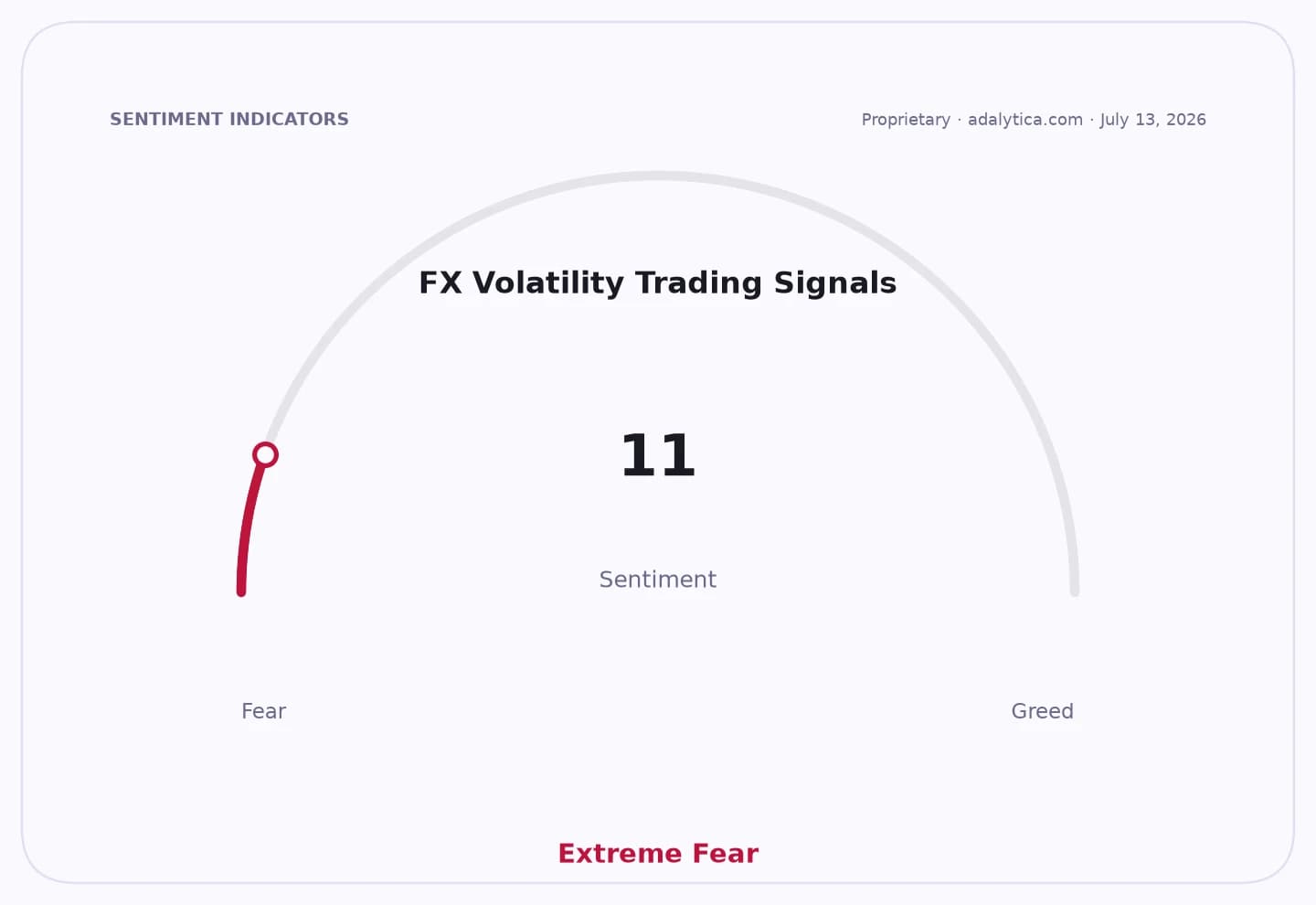
The warning sign for markets is that foreign-exchange volatility remains elevated. Adalytica’s FX Volatility Trading Signals show extreme fear, while its U.S. dollar gauge points to fear as well, suggesting the rupee is still navigating a choppy global backdrop. In that kind of environment, investors should expect the RBI to stay active in cash management and to intervene when needed to keep liquidity from becoming a source of instability.
For long-term investors, the takeaway is simple: this is a stability trade, not a growth story. The RBI is trying to preserve the conditions that let India’s banking system, bond market and currency function smoothly over time. That usually rewards patient investors who focus on resilient lenders, strong cash generators and diversified exposure to India’s growth rather than trying to trade every liquidity swing.
| Entity | Gains | Losses |
|---|---|---|
| RBI | ▲More control over short rates | ▼Less room for passive liquidity |
| Banks | ▲Cleaner funding conditions | ▼Tighter cash balances |
| Borrowers | ▲Stable policy signaling | ▼Higher short-term funding pressure |
| Rupee bulls | ▲Support from firmer liquidity management | ▼Less speculative easing in FX |