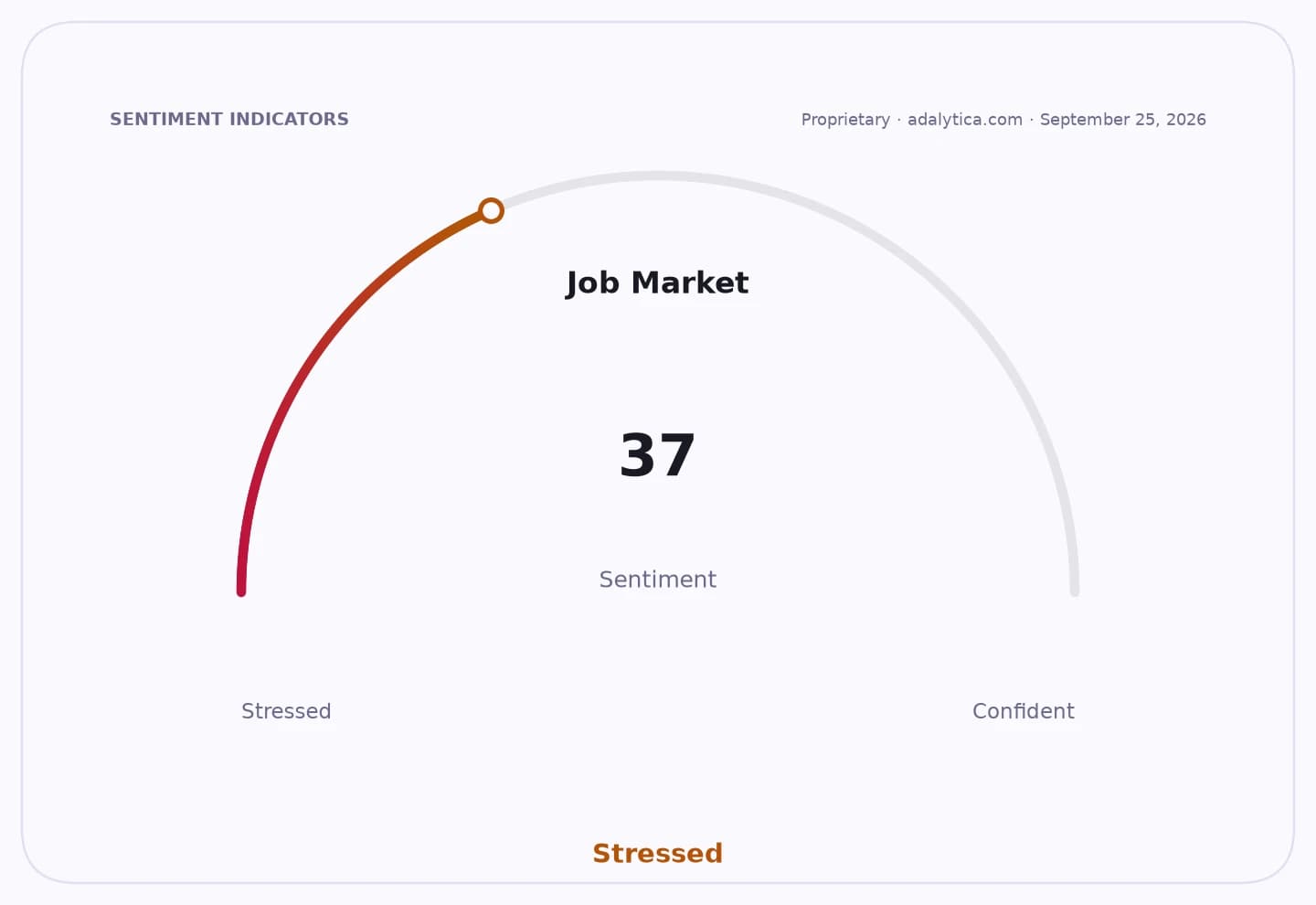
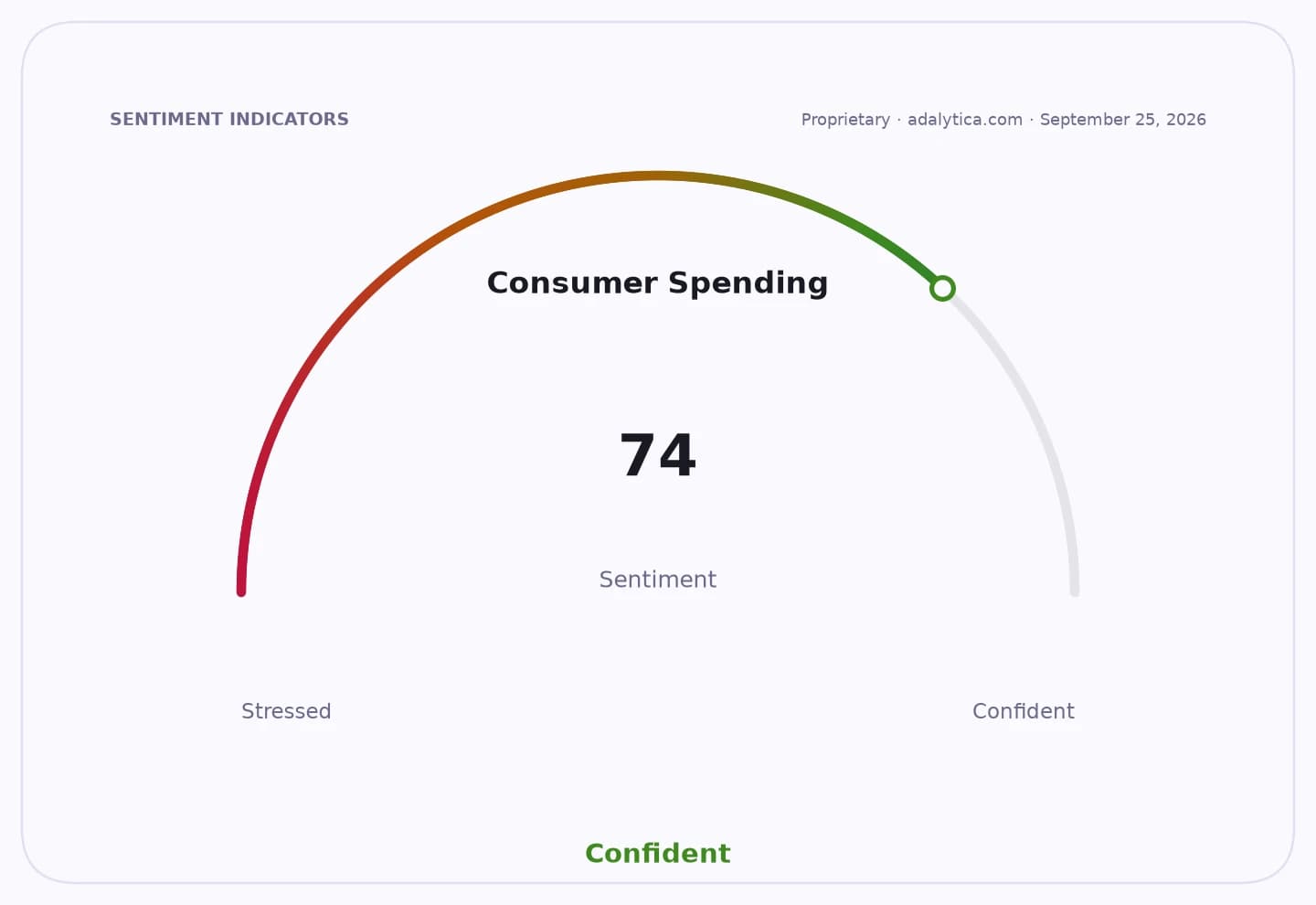
The Reserve Bank of New Zealand’s signal that further tightening is likely matters because it tells markets the inflation fight is being re-opened at a time when energy shocks and conflict are threatening to push prices higher again.
RBNZ Hawkish Bias Supports Kiwi
That is the key economic shift: the RBNZ is no longer talking only about steady normalization, but about the need to preserve anti-inflation credibility if imported price pressures worsen. In a small, trade-exposed economy, the central bank cannot ignore a jump in oil prices or a broader geopolitical risk premium. Those forces feed quickly into transport costs, food prices and inflation expectations, making policy more likely to stay restrictive for longer even if domestic activity softens.
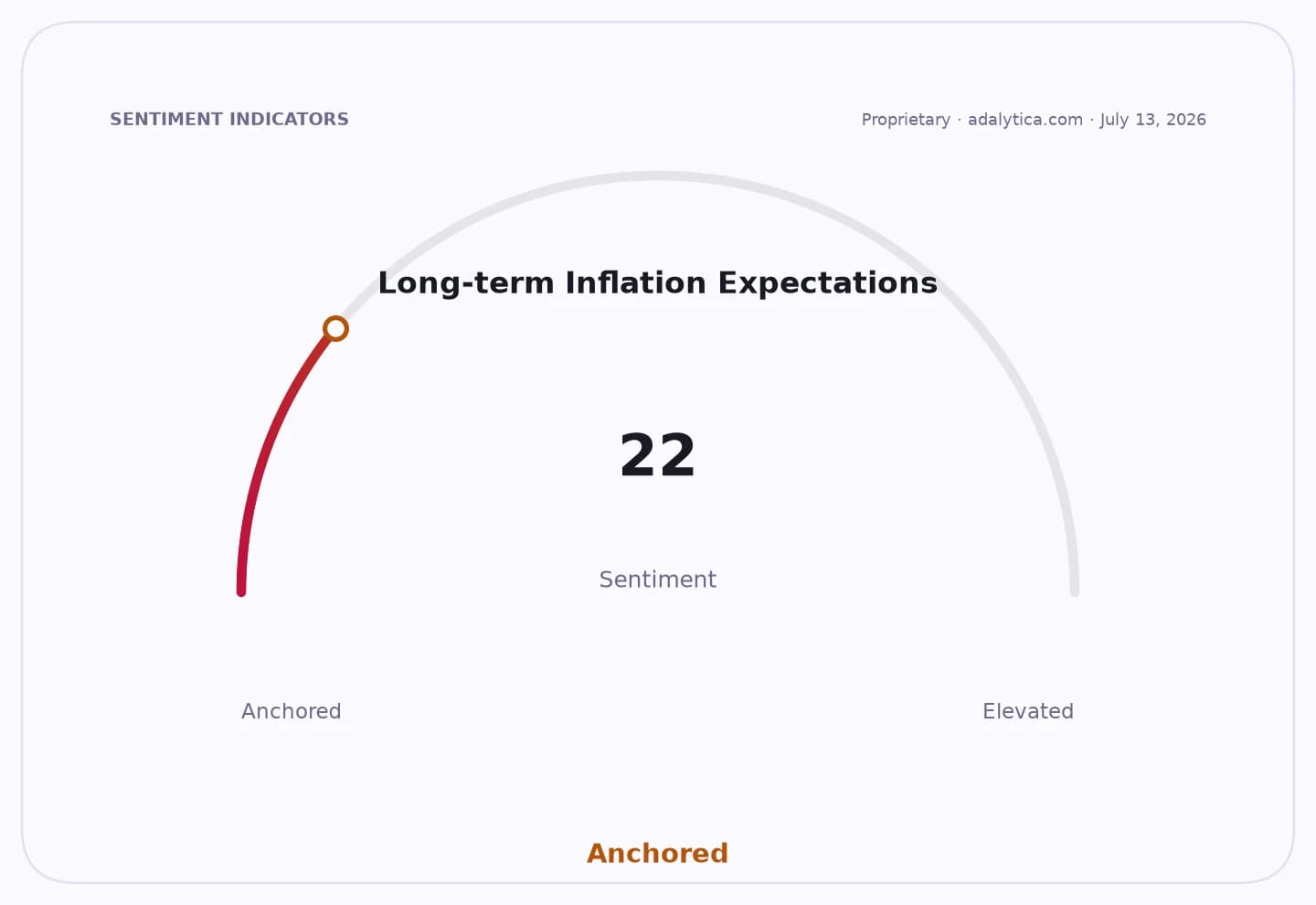
Sentiment IndicatorsⓘProprietary · adalytica.com · July 13, 2026
This is a snapshot — live sentiment, awareness and momentum for 130+ markets update continuously in the dashboard.Open AlphaPulse
The data context points to exactly that dilemma. Brent-linked crude has rebounded sharply from around $69 a barrel in early July after surging above $109 in May, underscoring how quickly conflict can transmit into headline inflation. At the same time, U.S. Treasury yields have drifted higher, with the 10-year near 4.56% and the 2-year around 4.21%, reflecting a global rates backdrop that keeps financial conditions tight. For New Zealand, where the policy rate is already above neutral in many estimates, the room for patience is limited.
Currency markets appear to be reading the message. The New Zealand dollar has held around 0.58 against the U.S. dollar and 1.74 against the Australian dollar, with the 50-day and 200-day moving averages converging near current levels, a sign of consolidation rather than a decisive trend breakout. RSI readings near the high-40s to high-50s suggest the currency is not overbought, leaving scope for further gains if the RBNZ maintains a hawkish bias. That matters because a firmer kiwi can help contain imported inflation, giving the central bank a little more cover to keep policy tight.
Long-term Inflation Expectations vs NZDUSD=Xadalytica.com
Explore this data interactively — full history, time series and cross-market comparisons.Open AlphaPulse
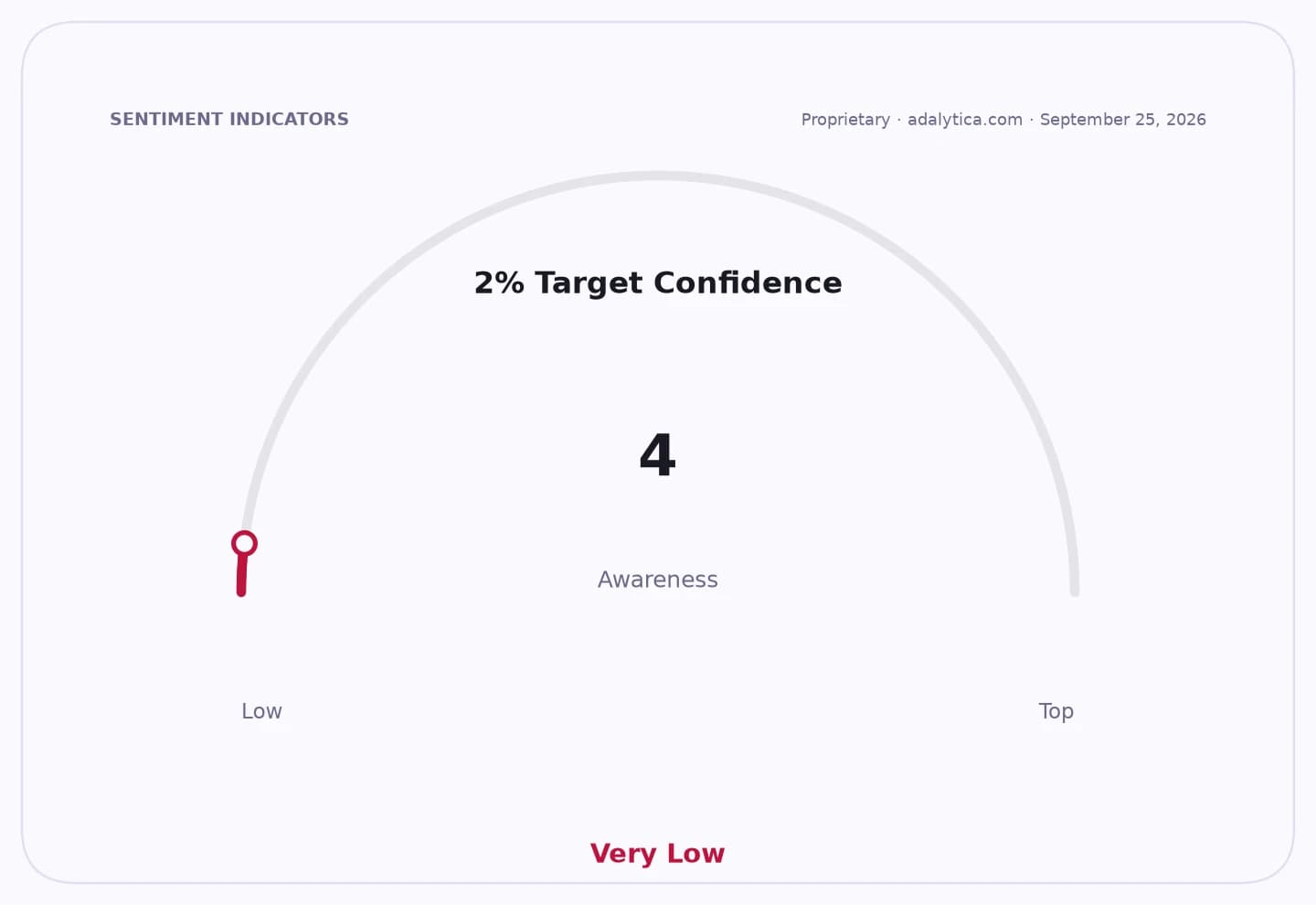
Investor positioning is also being shaped by the inflation narrative itself. Adalytica’s long-term inflation expectations sentiment has fallen sharply into fear territory, while confidence in the Fed’s 2% target and the 5-year breakeven gauge also remain deeply depressed. Even if those are global indicators, they point to a market environment in which inflation credibility is fragile and any renewed energy shock can reprice rate expectations quickly. For New Zealand asset markets, that raises the risk of higher bond yields and a stronger currency, both of which can pressure domestic growth sectors and rate-sensitive equities.
The bull case for the RBNZ’s stance is straightforward: acting early can prevent a second-round inflation problem and anchor expectations before temporary commodity shocks become entrenched. The bear case is that tighter policy risks amplifying a slowdown just as external demand is uncertain and households are already facing higher borrowing costs. For investors, the balance of risks points to continued support for the kiwi and relatively firm front-end yields, while exporters, leveraged borrowers and domestic cyclicals may face the greater strain if the bank follows through with more hikes.
The next catalyst is whether oil and broader conflict-driven price pressures persist long enough to force the RBNZ into another move. If they do, markets will increasingly price a longer period of restrictive policy rather than a short tightening cycle — and that is likely to matter more for New Zealand assets than the hike itself.
| Entity | Gains | Losses |
|---|---|---|
| RBNZ | ▲Inflation credibility | ▼Growth flexibility |
| NZD bulls | ▲Firmer currency | ▼Less easing support |
| Exporters | ▲— | ▼Stronger kiwi |
| Borrowers | ▲— | ▼Higher funding costs |