Reflection AI is making its biggest bid yet to matter in enterprise AI by launching Beam, a 501-billion-parameter open-weight model designed to do coding and agentic work with far less compute than many rivals. For investors, the real story is not just another model release — it is the growing race to control the open-model stack, where cost, sovereignty and deployment flexibility may matter as much as raw benchmark scores.
Reflection AI launches Beam open-weight model
Artificial Intelligence
That matters because the open-weight market is no longer a sideshow. Chinese developers now dominate much of the ecosystem used by enterprises and software teams, and that has created both commercial pressure and political concern in the U.S. Beam is Reflection’s attempt to offer a Western alternative for companies that want to keep data and model weights under their own control while still building autonomous software tools.
Sentiment Indicators
The Brooklyn startup, founded in 2024 by former Google DeepMind researchers Misha Laskin and Ioannis Antonoglou, says Beam activates only 23 billion parameters per token through a sparse mixture-of-experts design. In practical terms, that is the kind of architecture that can lower inference costs, improve efficiency and make large models more usable in real enterprise workflows. Reflection says Beam matches the reasoning performance of Z.ai’s GLM-5.2 while using roughly three to four times less inference compute, though the company also acknowledges those figures do not capture all serving overhead.
That tradeoff is exactly why Beam matters. The model is not trying to win every benchmark outright. On coding and agent tests, it still trails several leading Chinese systems, but it is aiming at a different prize: a lower-cost path to deployment for enterprises that care about hosting control, data ownership and predictable operating expenses. If it works, that could help shift AI buying decisions away from the biggest closed-model providers and toward open infrastructure that companies can run themselves or on preferred cloud partners.
The scale behind Beam also shows how capital-intensive this race has become. Reflection says it pre-trained the model on 23.8 trillion tokens across 6,144 Nvidia GB300 NVL72 GPUs in under four weeks, then used 10,500 Nvidia GB300 GPUs for reinforcement learning. The company has raised $4.7 billion at a $25 billion valuation, including an $800 million investment from Nvidia, and it has already signed more than $7 billion in compute deals with SpaceX and Nebius through 2029.
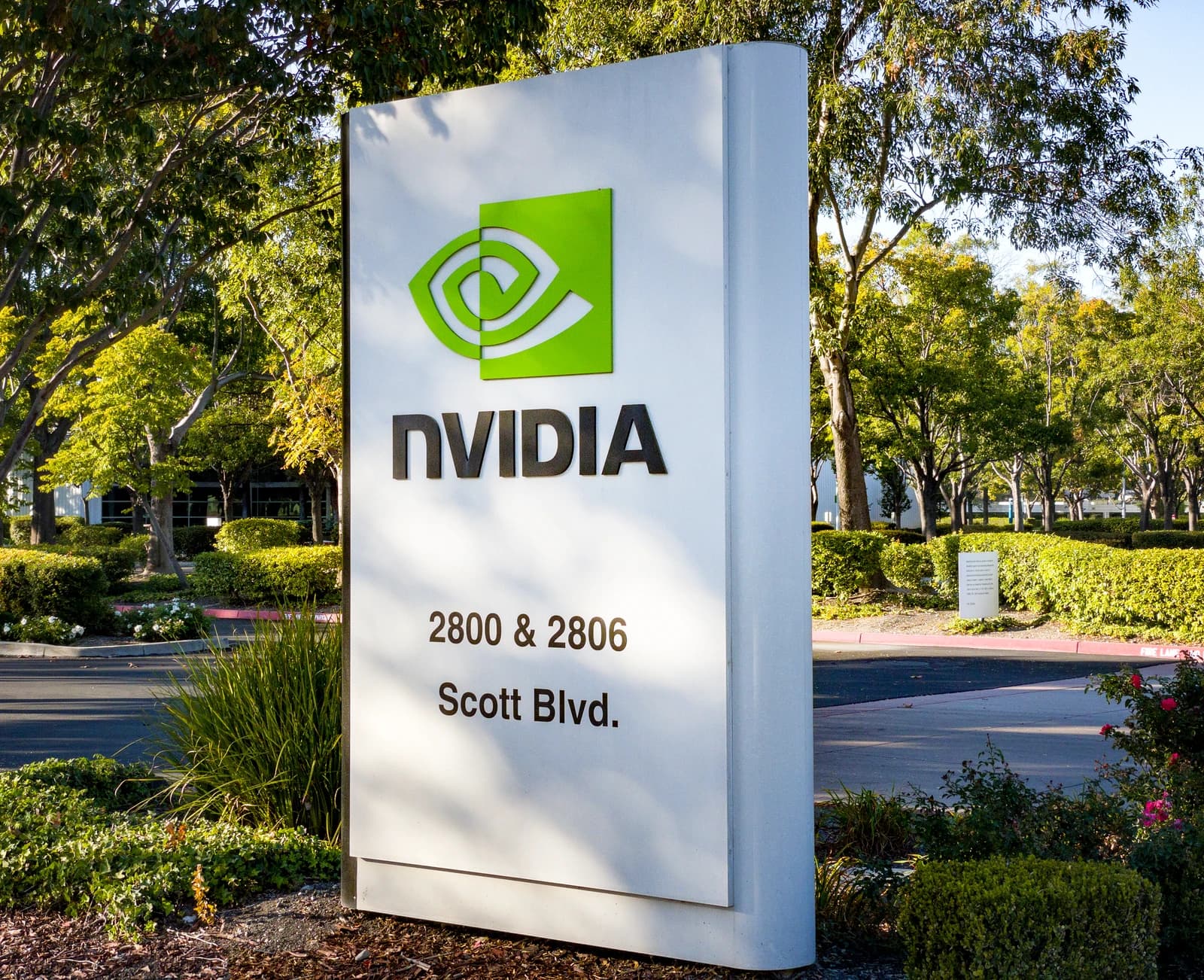
For Nvidia, that is a reminder that even as model makers talk about efficiency, the arms race still feeds demand for high-end chips and cloud-scale infrastructure. The stock has remained strong, with shares recently trading well above both the 50-day and 200-day moving averages, while enthusiasm around AI remains near euphoric levels. But the open-model push could broaden the market for Nvidia hardware rather than narrow it, because lower-compute models still require enormous training runs and a lot of specialized silicon to get built in the first place.
There is also a geopolitical undertone here. Washington is increasingly sensitive to the possibility that U.S. enterprises may build critical AI systems on foreign open models, even if those tools are technically cheap and flexible. Reflection is explicitly pitching Beam as a sovereign alternative, and that language is likely to resonate with governments, regulated industries and large companies that do not want their foundational AI layer tied to overseas developers.
For investors, the key takeaway is that this is still an early innings story. Beam could become a useful benchmark in the enterprise coding and agent market, but buyers will need to look beyond parameter counts and headline efficiency claims. The real test will be cost per completed task, latency, reliability and how easily the model can be hosted securely. In other words, this is not about whether open models are winning — it is about which businesses can turn open models into durable products and recurring cash flow.
That makes Reflection worth watching, and it keeps Nvidia in the center of the AI buildout even if the software stack gets more crowded. Long term, the winners are likely to be the firms that combine technical credibility, distribution and infrastructure access. For patient investors, this is the kind of secular trend that can reward staying power more than trading around the latest release.
| Entity | Gains | Losses |
|---|---|---|
| Reflection AI | ▲Enterprise credibility | ▼Benchmark leadership |
| Nvidia | ▲More GPU demand | ▼Some margin pressure from efficiency |
| Chinese open-weight rivals | ▲Continued benchmark dominance | ▼Western challenger gains attention |
| Enterprises | ▲More model choice | ▼More evaluation complexity |