Retail pricing power fades as consumers grow selective
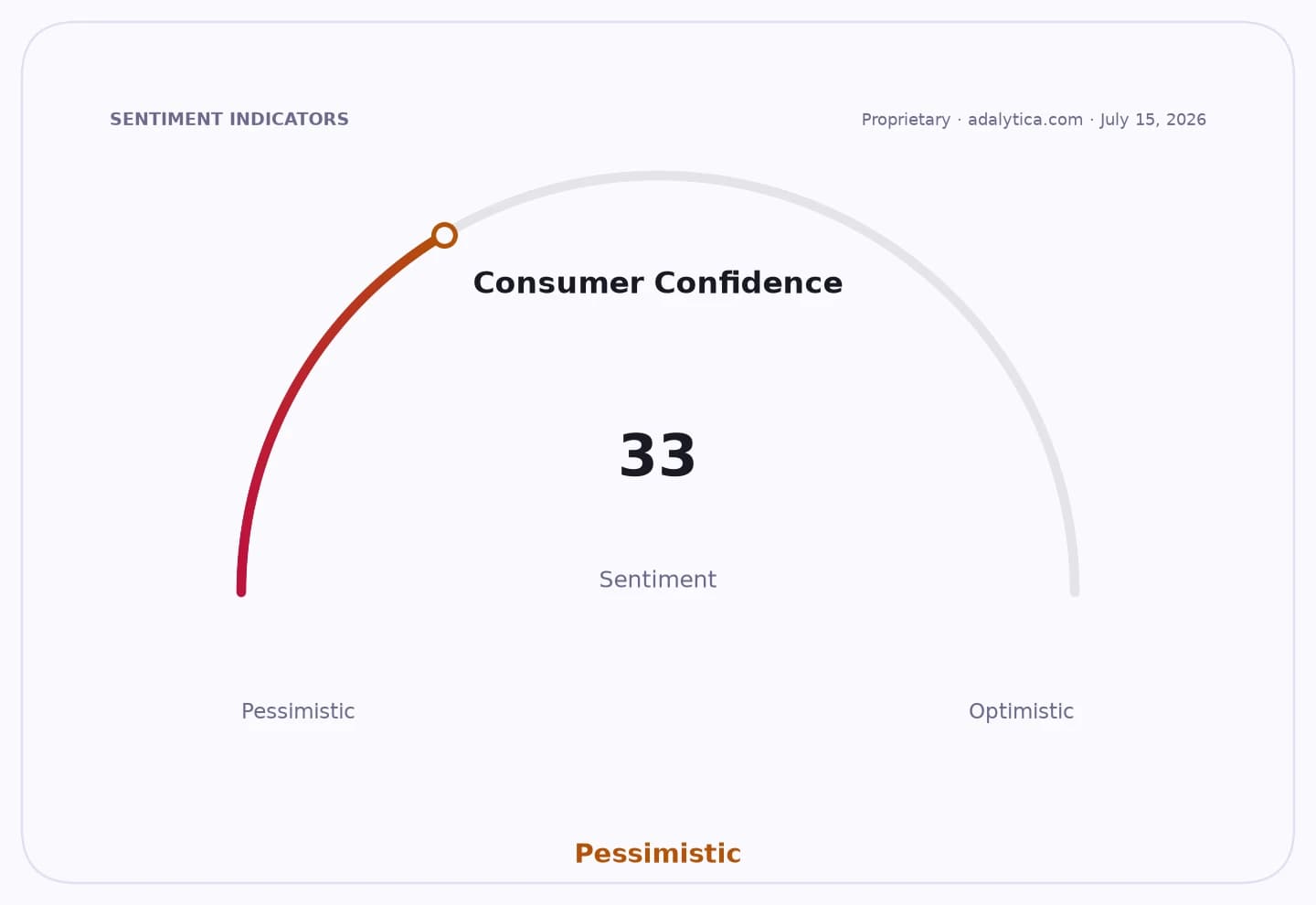
Retailers are being forced back into a harder sell, with weakening consumer confidence and still-elevated prices making shoppers more selective just as the sector’s pricing power fades.
That shift matters because it points to a more competitive phase for U.S. retail after years in which inflation, stimulus and sturdy nominal spending allowed chains to pass through higher costs. Now, despite retail spending still trending higher in nominal terms, households are showing more caution: consumer sentiment has fallen sharply in recent months, with the University of Michigan index sliding to 44.8 in May from 49.8 in April and 53.3 in March. At the same time, CPI remains far above pre-pandemic levels, at 333.979 in May, meaning consumers are paying more for the same basket even as their willingness to spend is weakening.

For investors, the combination is a warning that revenue growth will increasingly depend on volume, mix and share gains rather than broad-based price increases. That is good news for the strongest operators and private-label heavy chains that can pull traffic with value, but it raises the bar for retailers that rely on discretionary spending or lack scale in procurement and logistics. The pressure is already visible in market performance: Walmart has held up relatively well, Amazon has recovered, while the SPDR S&P Retail ETF has been more volatile, reflecting an industry where winners are taking share but the average retailer is under strain.
The numbers also suggest the battle for basket share is intensifying. U.S. retail sales excluding autos and fuel, the RSXFS series, rose to 662,752 in May from 621,713 in December and are forecast to reach 670,839 in June, showing consumers are still spending in nominal dollars. But that growth is modest relative to the price level and comes alongside more defensive sentiment readings. In practical terms, retailers need more promotions, tighter inventory control and better omnichannel execution to protect traffic and margins.
That is the backdrop for Walmart and Amazon, which have both been rewarded for scale, convenience and low-price positioning. Walmart’s stock has climbed to 113.62 from 99.81 in September before retreating from its February peak, while Amazon is back near 255 after a sharp spring selloff. Both remain well above their 200-day moving averages, a sign that investors still prefer retailers with the balance sheet and logistics network to absorb weaker demand and still compete on price.
By contrast, the broader sector looks more fragile. The XRT retail ETF has been battling to hold gains, with its 50-day and 200-day moving averages converging around the mid-84 area, a technical sign of a market still searching for direction rather than pricing in a clean cyclical rebound. That lines up with the macro picture: spending is not collapsing, but it is becoming harder to monetize.
The bull case is that retailers with scale can use this environment to widen the gap, taking share from smaller chains and pushing more customers into loyalty programs, app ecosystems and private-label assortments. The bear case is that aggressive discounting becomes contagious, compressing margins across apparel, general merchandise and home goods just as households become more value-conscious.
For investors, the key question is no longer whether consumers are still spending, but who can win that spend without sacrificing profitability. The next catalysts will be summer retail results, inventory commentary and any sign that weaker confidence is turning into outright volume fatigue. If it does, the sector’s strongest names should keep outperforming — but the average retailer will keep fighting harder for every sale.
| Entity | Gains | Losses |
|---|---|---|
| Walmart | ▲traffic and share | ▼less efficient rivals |
| Amazon | ▲online spend and basket share | ▼discretionary retailers |
| Value-focused chains | ▲promotion-led demand | ▼margin pressure |
| Broad retail sector | ▲little from nominal spending | ▼pricing power |