Ripple is deepening its push into crypto market infrastructure, taking an investment stake in exchange OKX just as hedge fund Brevan Howard starts using the platform, a sign that digital-asset trading is moving further into the institutional mainstream.
Ripple takes stake in OKX as Brevan Howard uses it

That matters because the crypto industry’s next phase is less about retail speculation and more about durable plumbing: exchanges, liquidity, custody and settlement that can handle large, sophisticated flows. For Ripple, the deal broadens its reach beyond payments into the trading ecosystem. For OKX, it brings a well-known strategic backer and a marquee customer that can help validate its bid for more institutional business. And for investors in the sector, it reinforces the idea that the winners may be the firms that make crypto easier to trade, move and finance at scale.
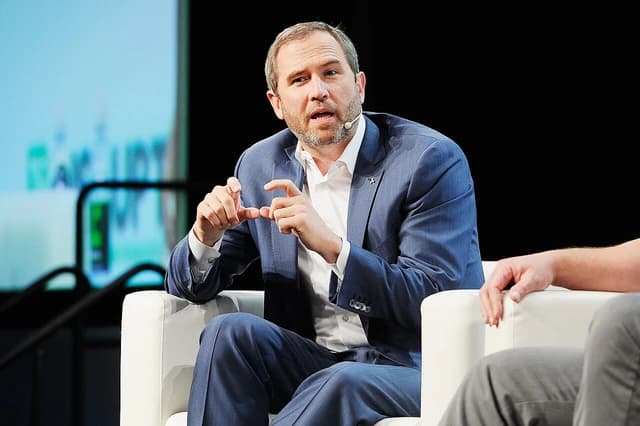
The timing is notable. Coinbase, the best-known listed crypto exchange, has seen its shares swing sharply with the market, and its recent price action reflects how dependent the business remains on trading activity and market sentiment. COIN closed at $178.45 on Oct. 7, below both its 50-day moving average of $174.01 and its 200-day moving average of $184.49, while RSI readings around 53 suggest the stock is neither deeply oversold nor overbought. XRP, meanwhile, ended the same day at $1.42, still well below its recent highs and trading near its lower Bollinger Band, with RSI at 35.9 — a reminder that crypto assets can stay volatile even when the industry story improves.
For long-term investors, the bigger takeaway is that institutional adoption is continuing to build beneath the headlines. Brevan Howard’s move to become a customer suggests that more professional money managers are comfortable using crypto-native venues, not just holding token exposure indirectly. That is important for revenue growth because institutional clients tend to trade larger sizes, demand better execution and stick around if the platform meets compliance and liquidity standards.
Ripple’s investment also fits its broader strategy. The company has long positioned itself as a bridge between traditional finance and blockchain-based payments. Backing OKX gives it a foothold in one of the busiest parts of the crypto economy: exchange activity. If more institutions follow Brevan Howard onto similar platforms, the opportunity is not just transaction fees but a wider network effect around custody, settlement and cross-border flows.
There are still obvious risks. Crypto exchanges remain exposed to regulation, market volatility and reputational shocks, and institutional adoption can slow quickly if liquidity dries up or policy tightens. But for investors willing to think in years rather than weeks, this is the kind of development that matters: a strategic alliance between a crypto infrastructure player and an exchange, paired with a blue-chip hedge fund customer, points to a market that is still early in building its institutional backbone. That makes the sector worth watching, and for diversified investors, worth keeping on the long-term watchlist.
| Entity | Gains | Losses |
|---|---|---|
| Ripple | ▲Broader market reach | ▼Cash deployed in deal |
| OKX | ▲Institutional credibility | ▼Greater scrutiny |
| Brevan Howard | ▲Direct exchange access | ▼Exposure to crypto volatility |
| Coinbase | ▲Industry validation | ▼Competitive pressure |