Romania cash savings lose value as inflation persists

A Romanian household with 10,000 euros sitting in cash or a bank deposit is losing about 680 euros of purchasing power a year to inflation, while also giving up roughly 256 euros in potential returns by not investing the money, according to a new Revolut wealth-drain index.
That is the economic point behind the data: Romania’s household savings are large, but much of them are parked in low-yield overnight deposits that do little to preserve real wealth. Revolut says Romanian households hold 200.7 billion lei, or 38.2 billion euros, in demand deposits, and that moving those balances into diversified capital markets could generate about 5.1 billion lei a year in growth capital for the economy. In other words, the issue is not just what savers earn, but how much domestic capital is being left idle at a time when inflation is still chewing through purchasing power.
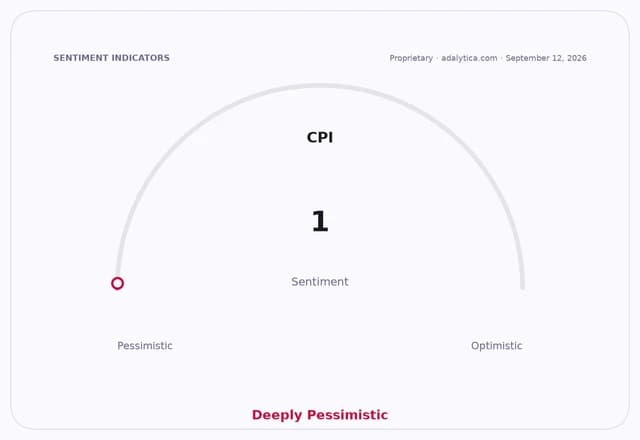
The numbers point to a broader structural weakness in household finance across the country. Revolut’s survey found 28% of Romanian respondents have no traditional savings at all, while more than 38% either misjudge inflation-adjusted returns or lack enough information to calculate them. Half of respondents said they would start investing if they could do so with small amounts, suggesting the barrier is less a lack of willingness than a mix of risk aversion, low financial literacy and fragmented access.
That matters for Romania’s economy because household savings are one of the cheapest and most durable sources of investment capital. When money stays in sight deposits, banks fund themselves more easily but the broader economy loses a channel for long-term wealth creation through equities, ETFs, bonds and money-market funds. Revolut argues that if Romanian households’ cash and deposits, which it puts at 360.5 billion lei in total, were better mobilized, more money could be directed toward productive investment rather than sitting dormant against inflation.
For investors, the message cuts two ways. On one hand, the persistence of large cash balances and low participation in capital markets supports the long-term case for platforms that can convert savers into investors, particularly digital banks and brokerages offering simple access, small-ticket investing and education. On the other, it highlights the continued appeal of inflation hedges and real-return assets, because the real yield on idle cash remains negative for many households once price growth is taken into account.
The backdrop is still one of elevated inflation sensitivity. Conventional market indicators in the data show long-end U.S. Treasury prices remain under pressure, gold has held near high levels after a strong run, and the euro has been relatively steady, underscoring a global environment in which investors continue to look for stores of value. In that context, the Romanian case is less a country-specific curiosity than a reminder of a wider European problem: households may feel safe in cash, but safety in nominal terms can mean a steady loss in real terms.
The key watchpoint is whether higher digital access and lower-cost investing tools can shift behavior at scale. If they do, banks may face slower deposit growth but capital markets could deepen. If they do not, Romanian households will keep subsidizing liquidity while inflation quietly transfers purchasing power away from savers and toward borrowers and asset owners.
| Entity | Gains | Losses |
|---|---|---|
| Revolut and similar platforms | ▲More users and assets | ▼Traditional bank inertia |
| Romanian savers who invest | ▲Better real returns | ▼Cash drag from inflation |
| Romanian banks | ▲Cheap deposit funding | ▼Higher-fee migration risk |
| Asset markets and the economy | ▲More domestic capital | ▼Idle savings in deposits |