Rupee slips near year lows as dollar holds firm

The rupee slipped 3 paise against the U.S. dollar, but the bigger story for investors is that India’s currency remains trapped near its weakest levels of the year even as the dollar steadies and volatility in foreign exchange stays unusually subdued.
That combination matters because a softer rupee feeds directly into imported inflation, lifts the local cost of crude and other dollar-priced inputs, and keeps the Reserve Bank of India under pressure to manage disorderly moves without choking growth. For markets, it is a reminder that India’s macro backdrop is no longer just about domestic demand and policy support — it is also being shaped by a firmer greenback and persistent capital-flow sensitivity.
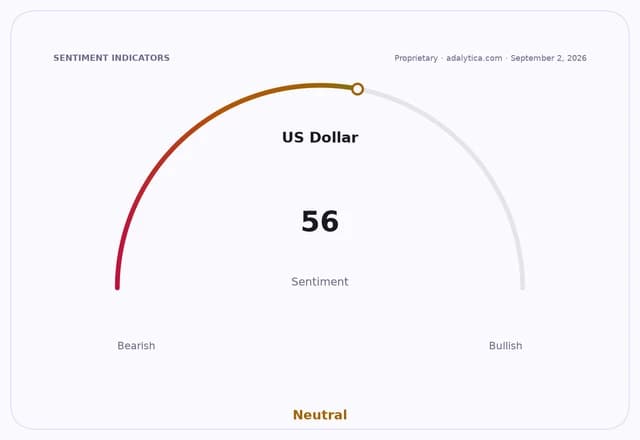
The move was small on the day, but it comes against a broader pattern of rupee weakness that has left the currency close to the lower end of its recent range. The dollar’s resilience is visible across FX markets, while Adalytica’s U.S. dollar trade signals show neutral sentiment but a 7-day improvement, underscoring how the greenback has regained traction even without a full-blown risk-off surge.
That matters for Indian assets. A weaker rupee can support exporters in sectors such as software and manufacturing, but it also squeezes import-heavy businesses and raises the rupee cost of energy, fertiliser and industrial raw materials. For investors, the immediate question is not whether the rupee moves a few paise either way, but whether the currency is entering a zone where imported inflation becomes a larger part of the policy and earnings equation.
Exchange-traded funds tied to Indian equities reflect that tension. The INDA ETF, which tracks large-cap Indian stocks, has stabilized near 50 after a sharp drawdown earlier in the year, while the FXI China ETF shows how Asian markets are still wrestling with uneven capital flows and shifting dollar conditions. In India, the market has so far treated currency weakness as manageable. That view can change quickly if the rupee’s drift turns into a more persistent break lower.
For now, FX volatility remains contained, but that is exactly why the move in the rupee deserves attention. Quiet depreciation often does the most economic damage because it is easy to ignore until it starts filtering into fuel costs, margins and inflation prints. If the dollar stays firm, the rupee’s next move will matter less as a daily headline and more as a margin test for India Inc. and a policy test for the RBI.
| Entity | Gains | Losses |
|---|---|---|
| U.S. dollar | ▲Stronger relative demand | ▼Emerging-market currencies |
| Indian exporters | ▲Better rupee realizations | ▼Import-heavy companies |
| Oil and commodity importers | ▲— | ▼Higher input costs |
| RBI | ▲More flexibility to manage flows | ▼Greater inflation pressure |