Rupiah Falls to Record Low on Dollar Demand
The rupiah sank to Rp17,547 per dollar on Thursday, its weakest close in the data provided, as renewed concern over conflict in the Middle East pushed investors toward the U.S. currency and away from riskier Asian assets.
The move matters because it ties Indonesia’s exchange rate directly to a broader global repricing of risk: higher geopolitical tension has lifted crude oil and strengthened the dollar, a combination that typically hits energy-importing economies and leaves emerging-market currencies vulnerable. For Bank Indonesia, a weaker rupiah raises the odds of imported inflation and can complicate policy just as domestic demand is showing signs of stabilization.
Bloomberg data showed the currency ended 36 points, or 0.26%, lower. Market participants cited both geopolitically driven dollar buying and profit-taking after recent moves. That left the rupiah under pressure even though July retail sales rebounded after two straight months of contraction, a sign that domestic activity has not deteriorated sharply enough to offset external shocks.
The backdrop in Asia was mixed but broadly defensive. Taiwan’s dollar led losses in the region, while the Indian rupee and South Korean won also weakened. A handful of currencies, including the Malaysian ringgit and Thai baht, managed gains, but the pattern suggested selective risk reduction rather than a clean flight to safety.
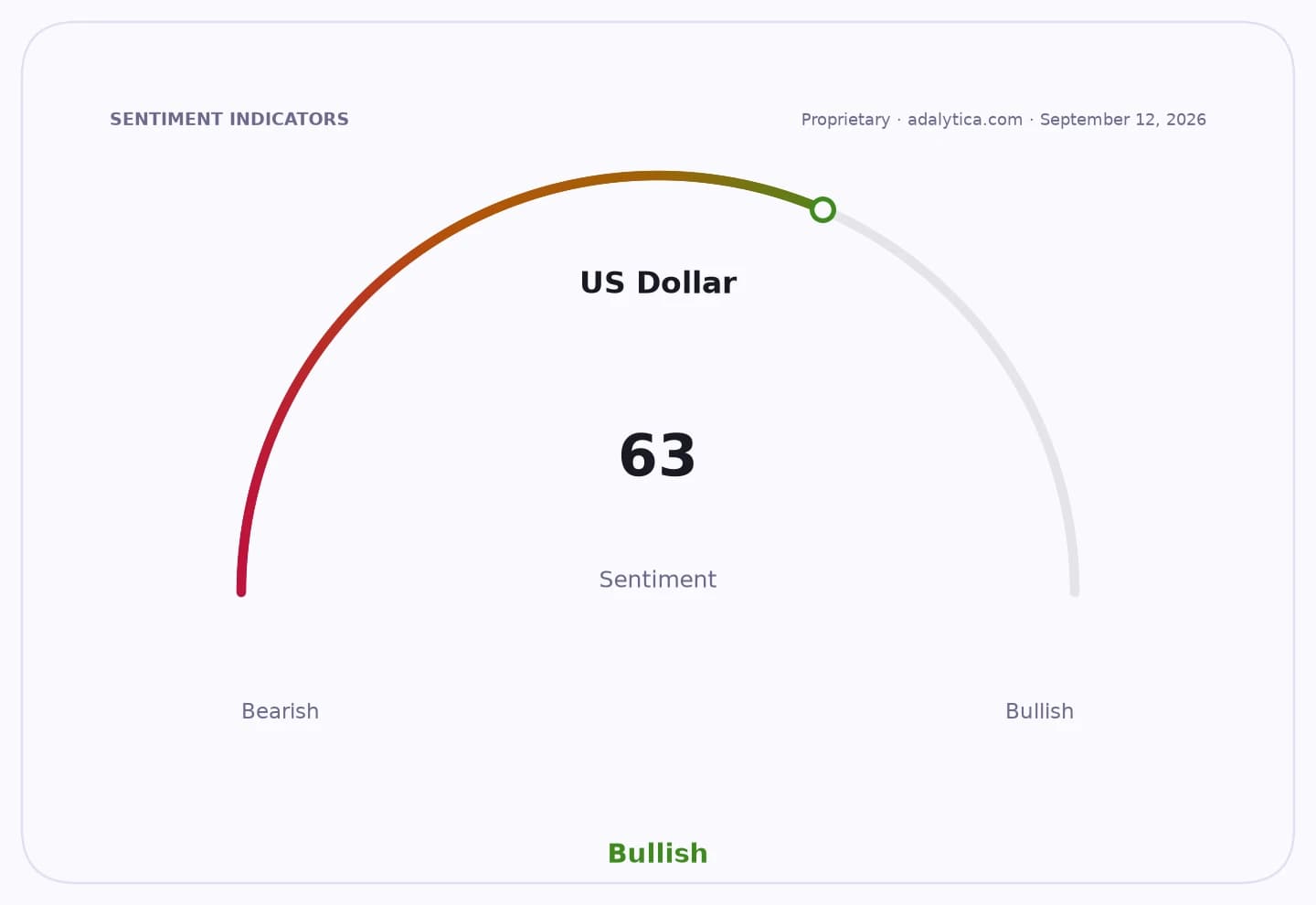
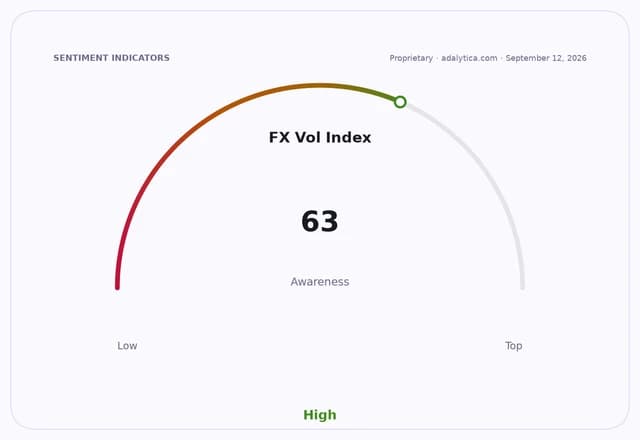
For investors, the key question is whether the rupiah’s slide becomes a sustained trend or a short-lived response to a geopolitical spike. The dollar itself remains firm, with Adalytica’s U.S. Dollar Trade Signals showing neutral but still elevated positioning, while the firm’s Global Stability Sentiment gauge sits in “Fear,” underscoring the market’s nervous backdrop. FX volatility signals also remain elevated. That combination leaves Indonesian assets exposed if oil prices keep climbing or if U.S. inflation data reinforce expectations for higher-for-longer rates.
The near-term path for the rupiah will hinge on two external catalysts: whether the Middle East situation worsens further and whether upcoming U.S. inflation readings keep the dollar supported. Until then, the currency is likely to remain more sensitive to global headlines than to domestic improvement, with any further gains needing a calmer geopolitical setting and a softer greenback.
| Entity | Gains | Losses |
|---|---|---|
| U.S. dollar | ▲Safe-haven demand | ▼Emerging-market FX |
| Indonesian importers | ▲None | ▼Higher import costs |
| Indonesia Energy / oil producers | ▲Higher oil price backdrop | ▼None |
| Rupiah bulls | ▲Domestic retail rebound | ▼Geopolitical and dollar pressure |